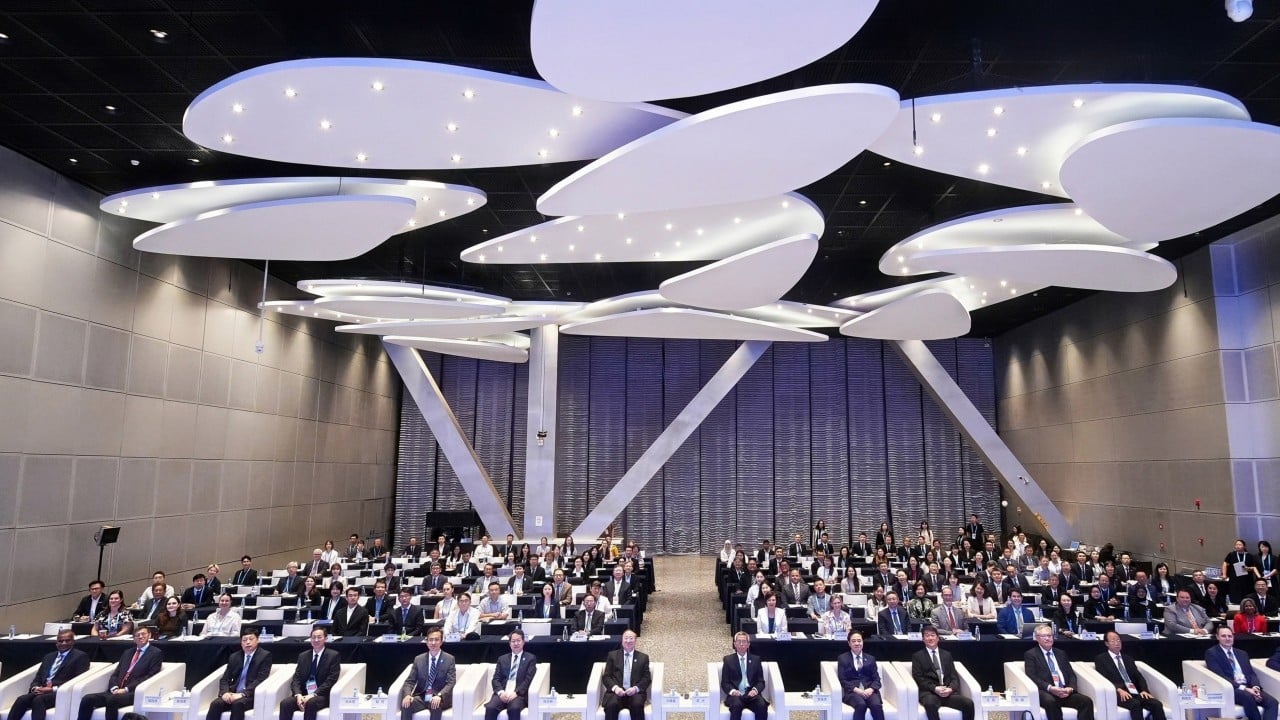
The air inside the convention center smelled of expensive espresso, ozone, and quiet desperation. Outside, the San Francisco fog pressed against the tinted glass like a damp hand, erasing the city skyline and leaving behind a gray, featureless void. Inside, men in dark, perfectly tailored suits adjusted their cuffs. They spoke in low, measured cadences, guarding their words the way a jeweler guards raw diamonds.
They were drafting the architecture of the future.
To watch them from the gallery was to witness a masterclass in choreographed theater. Microphones clicked on. Statements were read from heavy cream-colored paper. Hands shook for the cameras. But beneath the polished veneer of diplomatic handshakes, a heavy, unyielding iron curtain was being lowered. It was not made of concrete or barbed wire. It was made of supply chains, microchips, tariffs, and absolute economic dominance.
Washington had arrived at the Asia-Pacific Economic Cooperation summit with a singular, unblinking mandate. America First.
Consider what happens when two economic heavyweights collide in a crowded room. The floor trembles. The smaller nations—the ones whose economies depend entirely on the steady flow of trade from both giants—hold their collective breath. They know the math. Choose the wrong side, and the lights go out.
To understand this high-stakes standoff, imagine a bustling night market in a coastal Southeast Asian city. Stalls overflow with glowing screens, smartphones, and lithium batteries. Every single component in those devices tells a story of global cooperation. The rare earth minerals were mined in one province, refined in another, shipped across an ocean, assembled by thousands of hands, and finally packaged for a consumer thousands of miles away. It is a fragile, breathtakingly complex dance of human labor.
Now, imagine someone drawing a sharp, permanent marker straight down the middle of that market.
That is what Washington attempted to codify during the summit meetings. The official communiqués spoke of trade frameworks, resilient supply chains, and digital economies. But translation software was not required to decode the underlying message. The United States was drawing a line in the Pacific sand, quietly preparing the ground ahead of a highly anticipated visit from the Chinese leader.
Power is rarely loud when it matters most. It whispers.
Down in the subterranean corridors of the summit, away from the flashing strobes of the press corps, trade delegates crunched numbers that kept them awake until dawn. Let us look at a hypothetical scenario, grounded entirely in the cold realities of modern trade negotiations. Picture Elena, a mid-level trade strategist whose eyes carry the permanent shadow of three straight nights without sleep. She has spent her entire professional life believing in the church of globalization. To her, open borders and frictionless commerce were the natural evolution of human society.
Now, her job is to figure out how to decouple a nation from its largest trading partner without triggering a recession.
"We are not trying to close the door," a senior administration official told reporters off the record, sipping lukewarm water from a paper cup. "We are simply installing a very heavy lock."
That lock has a name, even if nobody wants to say it out loud. Economic nationalism.
For decades, the narrative was simple. Trade brought peace. Commerce dissolved borders. If you bought your neighbor's goods, you were unlikely to point a missile at their backyard. But somewhere along the way, the ledger cracked. Workers in the industrial heartlands of the West looked at hollowed-out towns, rusted assembly lines, and opioid-ravaged Main Streets, and they asked a brutal, unforgiving question: Who actually benefited from this grand design?
The answer was cold comfort. The wealth had pooled at the very top, while the disruption had been absorbed by the people least equipped to weather it.
So the political winds shifted. They always do when the bottom falls out.
When the American delegation pushed its agenda across the APEC negotiating tables, they were answering a domestic ghost. They were playing to voters back home who measure the health of the nation not by stock market indices, but by the price of groceries and the security of a paycheck. Every policy paper, every tightened export control on advanced semiconductors, every insistence on friend-shoring manufacturing was designed to answer that singular populist demand.
Security over synergy. Resilience over efficiency.
Yet, the rest of the world watched with profound unease. Nations that bridge the Pacific do not want to choose between the technological might of the United States and the manufacturing gravity of China. Doing so is the geopolitical equivalent of asking a person to choose which lung they can live without.
During a tense coffee break in the grand atrium, a diplomat from a Southeast Asian nation stared into his cup as if reading tea leaves. He spoke off the record, his voice barely audible over the hum of the air conditioning.
"You talk about decoupling," he murmured, shaking his head. "For you, it is a strategy document. For us, it is a structural earthquake. When elephants fight, the grass gets crushed. We are the grass."
And that is the invisible tragedy of the summit. Every grand geopolitical maneuver carries a human toll that never makes it onto the evening news. It manifests in canceled expansion plans for a small factory in Vietnam. It appears in the sudden hesitation of a venture capitalist in Singapore wondering if the software they are funding will be banned across half the globe tomorrow. It lives in the quiet anxiety of a young engineer in Shenzhen looking at a blocked shipment of microchips.
The summit ended with the customary photographs. Smiles were plastered across faces. Hands gripped each other tightly for the lenses. Declarations of mutual respect echoed through the cavernous hall, transcribed by journalists who had heard the exact same script a hundred times before.
But the air had changed. The baseline of global commerce had shifted on its axis.
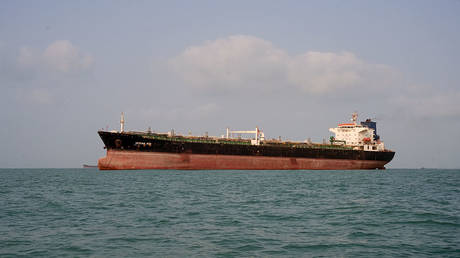
As the delegates packed their leather briefcases and headed for the tarmac, the fog outside finally began to lift, revealing the cold, indifferent expanse of the bay. The ships moved slowly through the gray water, their hulls heavy with containers, carrying goods across a divided sea. The old world of frictionless trade was gone, replaced by a guarded, suspicious new reality where every transaction is a test of loyalty and every border is a fortress waiting to be manned.
The leaders have flown home now. The conference halls are empty, the bright lights turned off. But down on the docks, where the cranes lift steel boxes into the damp morning air, the weight of the iron handshake remains.