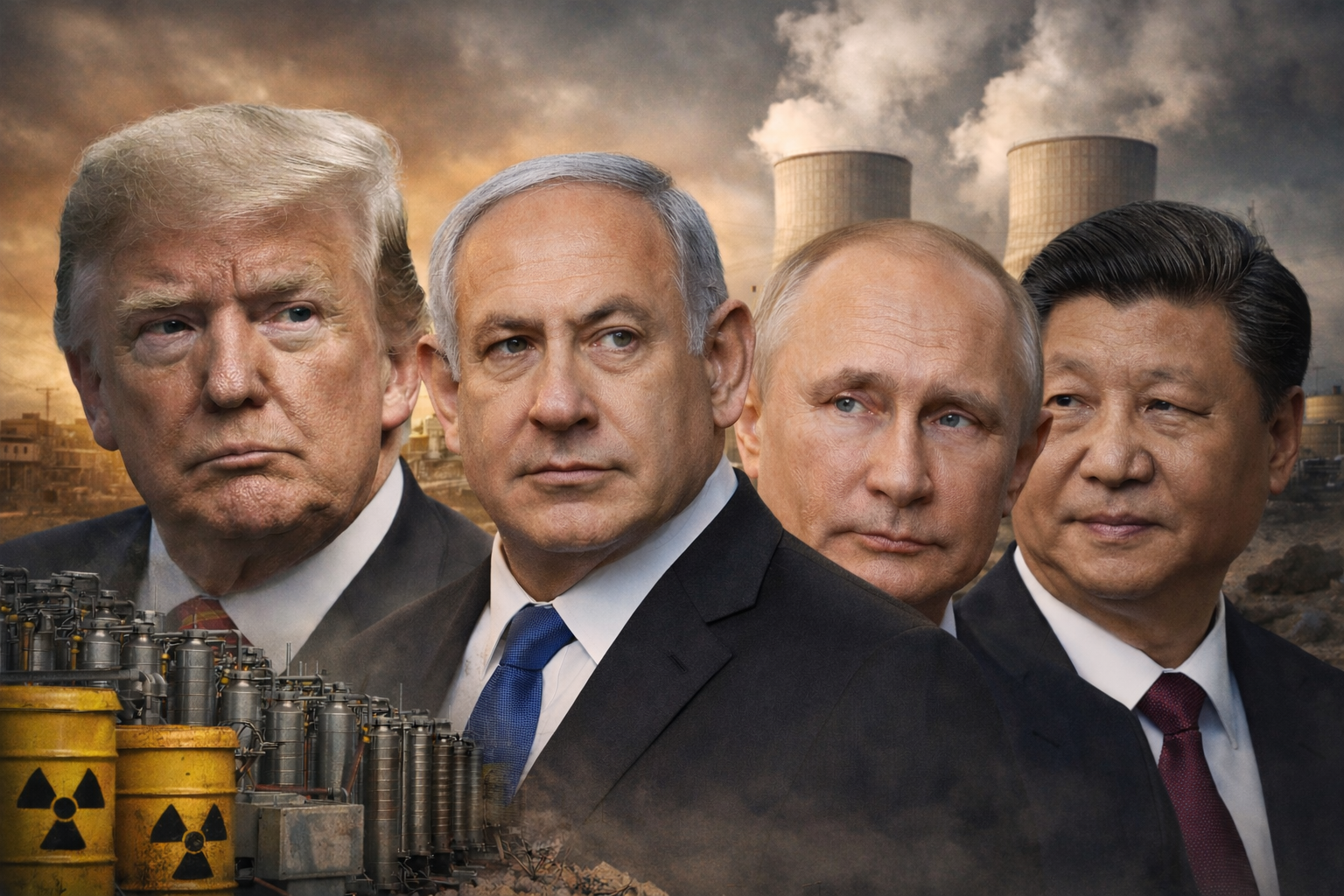
Iran’s uranium isn't just a collection of radioactive isotopes sitting in a lab. It’s the ultimate piece of strategic leverage in a high-stakes game of global poker. Right now, the United States, Russia, and China are all eyeing that stockpile, and it’s not because they’re short on fuel for their own power plants.
The real reason? Control over Iran’s enriched uranium dictates the pace of war and peace in the Middle East. If you control the stockpile, you control Iran’s ability to build a nuclear weapon. For Washington, getting that material out of the country is about survival for its allies. For Moscow and Beijing, it’s about becoming the indispensable power broker that the West can't ignore.
The Math Behind the 60 Percent Threshold
Most people hear "enriched uranium" and think it's all the same. It isn't. Natural uranium is basically useless for anything other than a paperweight until you spin it in a centrifuge. To run a typical power plant, you only need about 3% to 5% purity.
Iran has gone way beyond that. They’ve successfully pushed their stockpile to 60% purity.
Here is the kicker: the jump from 60% to 90% (weapons-grade) is technically tiny. Think of it like a marathon where 99% of the work is already done. If you have 450 kilograms of 60% enriched uranium, you’re basically standing at the finish line.
- The 3% mark: Getting here takes a massive amount of energy and time.
- The 20% mark: This is the "danger zone" where the material can be used for research reactors but is easily boosted.
- The 60% mark: This is essentially "pre-weapons" material.
- The 90% mark: This is the trigger.
According to latest IAEA reports from early 2026, Iran’s stockpile of 60% material has grown to roughly 450 kilograms. In technical terms, that’s enough for about nine nuclear warheads if it’s put back into centrifuges for just a few weeks. That’s why the U.S. is suddenly talking about "excavating" it.
Why the Big Three Want It
You might wonder why Russia or China would care. Don't they have enough of their own? It isn't about the physical atoms; it's about the diplomatic "seat at the table."
The United States: Prevention and PR
The U.S. wants the uranium gone. Period. President Trump’s recent mentions of "nuclear dust" and using "big machinery" to dig it out might sound like hyperbole, but it points to a very real fear. If the material stays in Iran, the "breakout time"—the time it takes to make a bomb—is effectively zero. By removing or diluting it, the U.S. buys years of security.
Russia: The Indispensable Middleman
Moscow has a history of taking Iranian uranium and sending back nuclear fuel rods in return. This makes Iran dependent on Russia and makes the U.S. dependent on Russia to keep Iran in check. It’s a classic power play. In 2026, with global tensions at a boiling point, being the "custodian" of Iran’s nuclear ambitions gives Putin a massive chip to trade in other negotiations, like those over Ukraine or Eastern Europe.
China: Energy and Stability
Beijing is Iran’s biggest oil customer. They don't want a nuclear-armed Iran because that leads to a regional war that shuts down the Strait of Hormuz. If China takes custody of the uranium, they look like the "responsible global leader" compared to the more aggressive U.S. stance. Plus, it secures their energy supply lines.
The Reality of Nuclear Dust
There's been a lot of chatter about "nuclear dust" lately. This isn't a scientific term you’ll find in a textbook. It’s a political way of describing the mess left behind after military strikes on nuclear facilities.
In June 2025 and again in early 2026, Iranian sites like Fordow and Natanz were reportedly hit. When a facility is bombed, the uranium doesn't just vanish into thin air. It stays there—buried under tons of concrete, stuck in broken pipes, or stored in hardened canisters in deep tunnels.
This "dust" is still highly enriched material. You can’t just walk away and leave it. If you don't recover it, someone else will. The technical challenge of "excavating" this material from a damaged, radioactive site is what’s driving the current debate. It’s a cleanup job with the highest possible stakes.
Why Iran Won’t Let Go
If you’re Iran, that uranium is your only insurance policy. The Iranian leadership knows that as long as they have that 60% stockpile, the world has to talk to them. It’s their "sovereignty in a bottle."
The Iranian Foreign Ministry has been blunt: they aren't handing it over. To them, the stockpile represents years of scientific progress and national pride. Giving it to the U.S. would look like a total surrender.
Instead, Tehran is playing the "dilution" card. They’ve offered to blend the 60% material back down to 5% or 20%. It’s a smart move. It keeps the material in Iran but "proves" they aren't making a bomb right now. But for the West, that’s not enough. Blending it down is reversible; taking it out of the country isn't.
What Happens Next
We’re at a point where a "two-week ceasefire" is the only thing keeping the region from a full-scale explosion. The deadline of April 21, 2026, is looming. Here is what you should watch for:
- The Shipping Maneuver: Watch if a third-party country—likely Oman or Kazakhstan—is proposed as a neutral storage site. This is a common "middle ground" in nuclear diplomacy.
- IAEA Access: If Iran allows inspectors back into the "affected" sites (the bombed ones) to verify the status of the "nuclear dust," it’s a sign they’re ready to deal.
- Sanctions vs. Stockpile: The U.S. is reportedly dangling $20 billion in frozen funds. In the past, Iran has traded material for money. With their economy struggling after the 2025 strikes, they might be more inclined to take the deal this time.
If you’re tracking this, don't get distracted by the political rhetoric. Look at the numbers. Until that 450kg of 60% uranium is either out of the country or blended into a form that can't be easily enriched, the threat of a "breakout" remains.
Keep an eye on the Isfahan Fuel Enrichment Plant (IFEP). It’s the newest piece of the puzzle and the one the IAEA knows the least about. That’s where the real "hidden" stockpile might be growing.