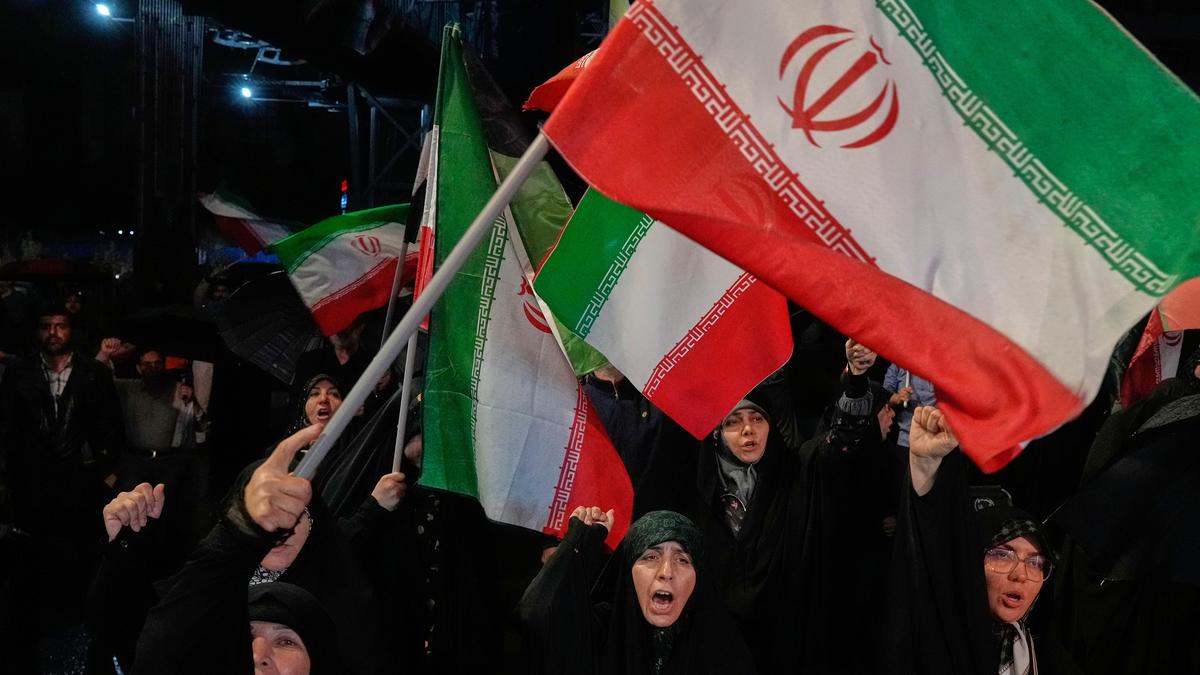
The fragile diplomatic dance between Washington and Tehran just hit a massive brick wall. Iranian Supreme Leader Ayatollah Mojtaba Khamenei reportedly issued a strict directive banning the export of the country's near-weapons-grade enriched uranium stockpile. This directly defies a non-negotiable demand from US President Donald Trump and Israeli Prime Minister Benjamin Netanyahu.
If you think this is just another round of Middle Eastern political theater, think again. This move fundamentally alters the leverage dynamics of the ongoing peace negotiations following the brutal conflicts of the past year. Oil markets are already reacting, with US crude jumping over 2.4% to top $100 a barrel.
Understanding this sudden hardening of Iran's stance requires looking past the daily headlines. The underlying mechanics of the decision reveal why a deal just became exponentially harder to reach.
The Friction Over Sixty Percent Purity
The core issue involves Iran's stockpile of uranium enriched to 60% purity. For context, commercial nuclear power reactors usually require uranium enriched to around 3% to 5%. Highly enriched uranium at 60% sits just a short technical step away from the 90% threshold needed for a nuclear weapon.
According to International Atomic Energy Agency (IAEA) data, Iran accumulated over 440 kilograms of this highly enriched material. Much of it survived the heavy US and Israeli airstrikes on Iranian nuclear facilities back in June 2025. It currently sits hidden deep within reinforced underground tunnels, primarily at the Isfahan and Natanz complexes.
Uranium Enrichment Levels Comparison
--------------------------------------------------
Standard Civilian Power:  3% - 5%
Medical/Research Level:   20%
Iran's Current Stockpile: 60% (Near-Weapons-Grade)
Military Weapons-Grade:   90%+
--------------------------------------------------
Before the recent escalation of threats, Tehran dropped subtle hints that it might ship out about half of this 60% stockpile to jumpstart a diplomatic breakthrough. That flexibility is completely gone. Trump's aggressive rhetoric and explicit guarantees to Israel that any final deal must involve the total removal of that uranium backfired. Instead of bending, Tehran locked the doors.
Strategic Paranoia Drives the Export Ban
The reasoning among Iran's ruling elite isn't a secret. Senior Iranian officials speaking anonymously admitted that they view the uranium stockpile as their ultimate insurance policy. The prevailing consensus within the establishment holds that shipping this material out of the country would leave Iran entirely exposed to a combined US and Israeli military campaign.
There's deep institutional suspicion in Tehran that the current pause in open hostilities is a tactical deception. The leadership genuinely believes Washington wants to create a false sense of security, strip Iran of its atomic leverage, and then launch fresh waves of airstrikes. In their eyes, keeping the uranium inside Iran is the only thing deterring an outright invasion.
Netanyahu made his position clear. The war won't officially end until Iran's enriched uranium is gone, its ballistic missile programs are dismantled, and its regional proxy groups are defunded. By drawing a hard line in the sand, Mojtaba Khamenei essentially told the US and Israel that their baseline conditions for peace are dead on arrival.
The Subtle Art of the Downblending Alternative
Interestingly, a senior Iranian official publicly pushed back against the initial Reuters report, labeling the narrative of a total export ban as "enemy propaganda." But looking closely at the language used reveals a highly calculated semantic game. The denial didn't say Iran would hand over the uranium. It stated that Iran would continue downblending the material domestically.
This points to a potential technical compromise that some pragmatists in Tehran are quietly floating to avoid a total collapse of negotiations. Instead of exporting the 60% stockpile, Iran could dilute it back down to lower civilian enrichment levels under direct IAEA supervision.
This alternative creates a massive problem for the White House. Trump promised Israel that the material would leave Iranian soil entirely. A domestic dilution process leaves the infrastructure intact, meaning Iran could simply re-enrich the material later if a deal falls apart. Netanyahu is highly unlikely to accept a solution that relies on Iranian compliance and IAEA inspections, given the historic friction between Jerusalem and the UN nuclear watchdog.
Market Ripple Effects and Immediate Next Steps
Geopolitical instability in the Persian Gulf always carries an economic price tag. The moment news of Khamenei's directive leaked, Brent crude prices climbed near $107 a barrel. Traders are pricing in the reality that a permanent ceasefire is much further away than previously hoped. If negotiations completely break down, the risk of renewed strikes on energy infrastructure rises dramatically.
If you are tracking these developments for risk management or investment purposes, ignore the public posturing and watch these specific indicators over the next few weeks:
- IAEA Monitoring Logs: Watch for any official statements from Rafael Grossi regarding changes to inspector access at Isfahan or Natanz. If Iran limits inspections to protect its hidden stockpiles, the likelihood of a military escalation spikes.
- The Pakistani Diplomatic Conduit: Watch the upcoming meetings in Tehran involving Pakistan's Army Chief, Asim Munir. Pakistan has been attempting to bridge the diplomatic gaps between the US and Iran. Any joint statements coming out of those meetings will signal whether a technical dilution compromise is actually viable.
- Trump's Public Response: Look for whether the US administration doubles down on its absolute removal demand or begins shifting the goalposts toward verifiable destruction of the material.
The strategy in Tehran shifted from potential compromise to absolute deterrence. By locking down the uranium stockpile, the new Supreme Leader wants to prove he won't be bullied by Western economic or military pressure. It's a high-stakes gamble that could either force Washington to accept a weaker deal or trigger another devastating round of regional warfare.