Every talking head on cable news right now is suffering from the exact same institutional hallucination.
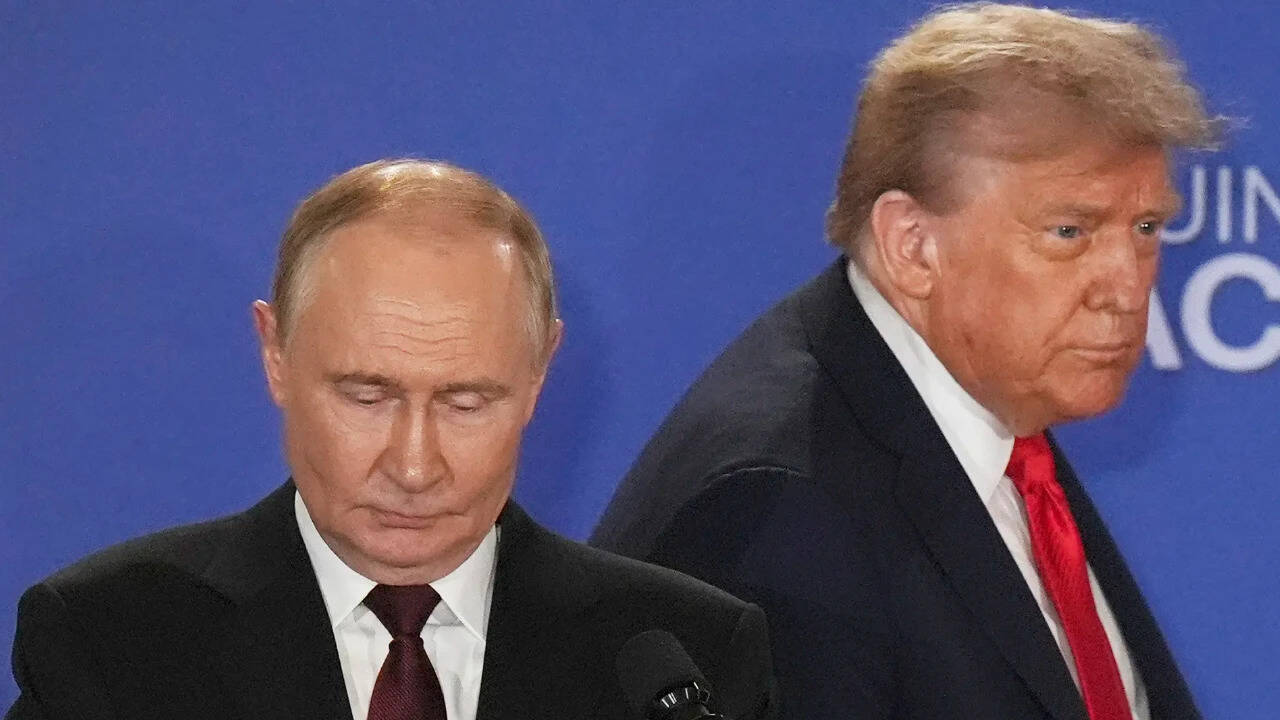
When Secretary of State Marco Rubio confirmed that Washington formally invited Vladimir Putin to the G20 summit in Miami, the commentariat split instantly into two equally hysterical camps. One side shrieked about moral surrender, waving bloody flags and predicting the immediate collapse of Western resolve. The other side dusted off their rose-colored glasses, dreaming up fairy tales about sudden peace accords brokered over a round of resort golf.
Both reactions are aggressively, dangerously wrong.
They misunderstand how great powers interact, they misread the current balance of attrition, and they mistake the tools of risk management for signs of affection or defeat.
Let us strip away the moral posturing and look at the actual machinery of statecraft.
The Infantilization of Foreign Policy
The primary misconception driving the panic is the childish notion that inviting an adversary to a multilateral summit constitutes an endorsement of their behavior. This view assumes that foreign policy functions like a high school cafeteria, where you refuse to sit with the bad kids to show moral purity.
Realpolitik operates on a completely different frequency.
Diplomacy with hostile nuclear-armed states has never been about liking the person across the table. It is about preventing miscalculation. When great powers stop talking entirely, the margin for catastrophic error shrinks to zero. A stray drone, a misunderstood signal, a cyberattack crossing an invisible tripwire—these are the sparks that turn localized attrition into generalized conflagration.
By putting Putin in a room in Florida, Washington is not handing out a reward. It is dragging an isolated autocrat back into the glaring light of multilateral friction. When you want to pressure an adversary, you do not banish them to a vacuum where they can spin any narrative they choose without contradiction. You trap them in a space where every ally, every opponent, and every domestic camera forces them to answer for their choices in real time.
The mainstream media treats this invitation as a historic concession. It is nothing of the sort. It is a tactical imposition of visibility.
The European Panic and the Myth of Unity
Look at how European capitals reacted to the announcement. Behind closed doors in Brussels and Berlin, diplomats are sweating through their tailored suits. Their anxiety has nothing to do with human rights and everything to do with abandonment.
For years, European security architecture has relied on a comfortable fiction: that the transatlantic alliance would indefinitely underwrite an endless war of attrition without any diplomatic off-ramps or independent maneuvering from Washington. When the White House pivots toward direct, face-to-face friction with Moscow, European leaders realize they might be left holding the bill for a reconstructed continent they cannot afford to finance alone.
This panic exposes a structural weakness in Western strategy. For months, leaders in Kyiv and various European ministries have demanded absolute ideological purity while their domestic populations tire of inflation and energy shocks. President Zelenskyy rightly noted that substance matters more than public theater, signaling readiness to attend. Yet, the broader European strategy has been built on an unsustainable premise: that you can indefinitely sustain a high-intensity war next door without ever sitting down with the architect of that war.
That illusion is shattering. The Miami invitation forces a reckoning. Either the West possesses a coherent strategy to end the conflict through a mix of force and hard-nosed bargaining, or it is merely drifting along on autopilot, hoping nothing goes wrong until the next election cycle.
Washington chose to force that question. That makes the foreign policy establishment deeply uncomfortable.
The Economics of Attrition Do Not Care About Optics
To understand why this summit invitation makes sense from a cold-eyed strategic perspective, look at the underlying math of the conflict.
Moscow is running a war economy fueled by high oil revenues and forced industrial mobilization. Kyiv is absorbing unprecedented infrastructural damage, relying on volatile foreign aid packages and increasingly aggressive drone strikes on Russian energy nodes. Both sides are battered. Both sides are grinding down their human and material capital.
Yet, neither side is close to a total collapse that would force unconditional surrender.
The lazy consensus in Washington and European think tanks has long been that sanctions and battlefield support alone will magically produce a cinematic moment where the Kremlin simply collapses from within. History offers very few examples of nuclear-armed authoritarian states imploding cleanly because of economic pressure alone. Usually, they hunker down, adapt their supply chains through third-party intermediaries, and shift the burden entirely onto their civilian populations.
Waiting for a miraculous internal collapse is not a strategy; it is wishful thinking disguised as moral rigor.
Bringing Putin to the table does not mean Washington is handing him a victory trophy. It means the United States is testing the actual elasticity of Moscow's position. Does the Kremlin want an exit ramp, or are they genuinely committed to a multi-year slog that risks dragging NATO directly into the firing line? You cannot test that hypothesis by issuing press releases from five thousand miles away. You have to put the principals in a room, look at the body language, test the red lines, and see if the stated intransigence survives direct, face-to-face pressure.
Why the Venue and the Timing Matter
Setting the summit in Miami in December is not a random logistical choice. It is a deliberate stage management strategy.
Hosting a major international summit on American soil puts the entire apparatus of American power on display. It shifts the psychological home-court advantage. When an adversary travels to your turf, the baseline security arrangements, the media framing, and the peripheral bilateral meetings all occur under your watch.
Furthermore, timing it for mid-December places it right at the threshold of a brutal winter. Both Moscow and Kyiv know that winter weather changes the tactical calculus on the ground. Energy infrastructure becomes the primary battleground. Civilian suffering spikes. The pressure to secure some form of temporary energy ceasefire or stabilization mechanism becomes acute.
Critics argue that hosting Putin in Florida normalizes his regime. This argument ignores reality. The regime is already normalized by the sheer fact that it controls thousands of nuclear warheads and dictates energy flows across Eurasia. Pretending a leader does not exist does not make their military power vanish. Normalization is not conferred by shaking hands at a G20 summit; it is conferred by the brutal, unyielding facts on the ground.
By bringing him to Miami, Washington is asserting control over the diplomatic calendar. It tells the world that the United States dictates when and how great power competition is managed, rather than reacting passively to events dictated by others.
The Uncomfortable Downsides of Direct Engagement
A rigorous analysis must acknowledge the risks of this approach, because contrarian takes built on blind optimism are worthless.
Engaging directly carries two massive dangers.
First, it opens the door for psychological warfare and public relations stunts. Autocrats love international summits because they provide visual equality on the world stage. A photograph of Putin shaking hands with American leadership can easily be weaponized by state media in Moscow to project an image of diplomatic rehabilitation and broken isolation, playing directly to domestic audiences who are told that Russia remains a global superpower dictating terms to the West.
Second, if the summit collapses in spectacular failure—with neither side budging an inch on territorial integrity, security guarantees, or sanctions relief—it locks both sides into even more rigid positions. Failed diplomacy often hardens domestic political constraints, making future compromise politically toxic for leaders who invested their personal credibility in the meeting.
These are genuine hazards. But compare them against the alternative: a stagnant, permanent war of attrition where escalation ladders climb higher every month with zero communication channels open at the leadership level. The risk of miscalculation in a silent, hostile vacuum far outweighs the public relations risks of a difficult summit in Florida.
The Real Question Nobody Is Asking
The debate over the G20 invitation is entirely focused on the wrong variable.
People are arguing over whether Putin deserves to come to Miami. They are arguing about optics, etiquette, and historical precedent.
That is toddler logic.
The only question that matters is whether the United States and its partners can use direct exposure to shatter the Kremlin's calculus of endless endurance. If Putin arrives believing he can simply wait out Western political cycles, a face-to-face confrontation with an American administration shifting the terms of engagement is the fastest way to disabuse him of that illusion.
Diplomacy is a weapon. Used correctly, it cuts deeper than sanctions and hits harder than a stalled offensive.
Bring him to Florida. Put him in the room. Let the reality of American power and allied pressure collide with Moscow's rigid delusions.
Stop treating dialogue like a reward for good behavior. Treat it like a trap for an adversary who thinks they can outlast the rest of the world.