The alarm does not always sound like a siren. Sometimes, it smells like a freshly cleaned kitchen floor multiplied by ten thousand, sharp enough to make your eyes water before your brain even registers danger.
At 2:00 AM along the Oregon coast, the fog rolls off the Pacific with a heavy, salt-laden chill. Inside a sprawling seafood processing facility, the night shift is usually a symphony of rhythmic, cold efficiency—steel blades meeting flash-frozen salmon, the hum of industrial compressors, and the steady drip of melting ice. Then, a pipe groans. A weld gives way. Or a fire sparks in the electrical room, licking at the insulated arteries of the building’s cooling grid.
Smoke is visible. Flames are loud. People know how to run from fire.
What drove residents out of their warm beds and into the damp Oregon night during the seafood plant blaze was not the orange glow against the low clouds. It was what the fire threatened to set free.
The Price of Freshness
To understand why a fire at a fish plant triggers a multi-block evacuation order, you have to understand the quiet bargain we make every time we buy a fillet of wild-caught salmon at a grocery store miles away from the ocean.
Freshness is an illusion maintained by extreme, artificial cold. To keep tons of Pacific catch from spoiling between the dock and the dinner plate, commercial plants rely on massive, closed-loop refrigeration systems. And the lifeblood of almost every industrial freezer on the West Coast is anhydrous ammonia.
It is a chemical workhorse. Cheap, remarkably efficient at absorbing heat, and used for over a century to keep the world’s food supply intact. Yet, stripped of its industrial utility, anhydrous ammonia is a ruthless adversary to the human body.
"Anhydrous" literally means without water. Because the chemical is desperately thirsty, the moment it escapes a ruptured pressurized pipe as a gas, it hunts for moisture. When it drifts into a neighborhood, the nearest source of water is not the rain puddle on the asphalt. It is the human eye. The lining of the throat. The delicate, wet tissues of the lungs.
Consider a hypothetical scenario to grasp the speed of this reaction. Imagine a retired fisherman—let’s call him Arthur—living four blocks downwind of the cannery. Arthur wakes up to the distant wail of fire engines. He steps onto his porch in his slippers to look at the smoke. If the fire compromises the plant’s pressurized ammonia tanks, an invisible plume moves with the coastal breeze. Within seconds of inhaling a concentrated pocket, the gas reacts with the moisture in Arthur’s airways to form ammonium hydroxide—a corrosive caustic solution that burns tissue on contact.
He wouldn't see a green cloud rolling down his street like a scene from an old war movie. Ammonia gas is colorless. His first warning would be a sudden, violent constriction in his chest, a sensation like inhaling shards of glass, followed by an involuntary spasm of the vocal cords that slams the airway shut.
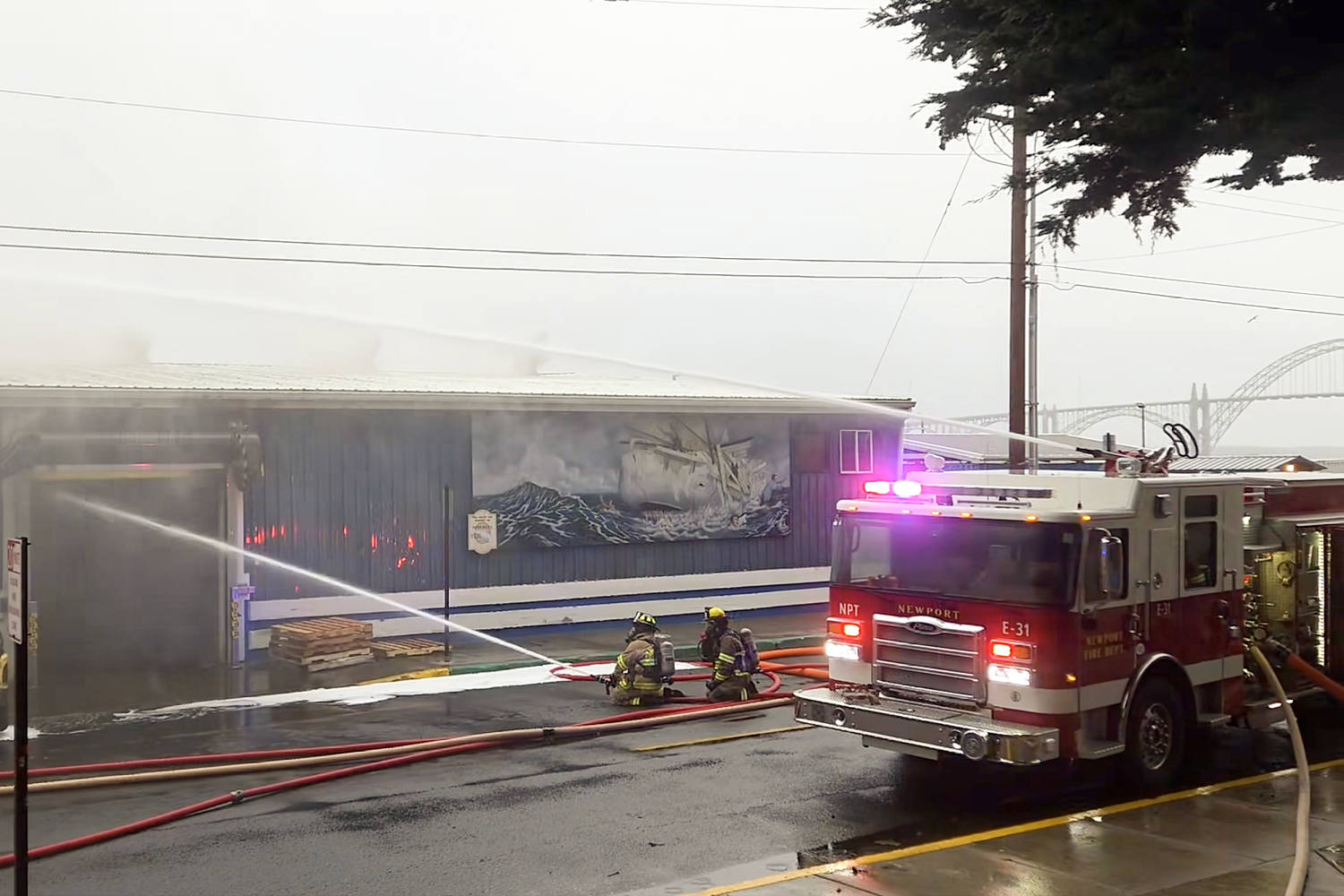
This is why first responders in Oregon towns like Astoria, Newport, or Coos Bay treat a seafood plant fire differently than a burning warehouse. When firefighters arrive at a standard structure fire, they pull hoses and advance toward the heat. When they arrive at a facility holding thousands of pounds of pressurized refrigerant, they stop at the perimeter, check the wind sock, and start knocking on doors.
Waiting in the Headlights
There is a particular kind of helplessness that settles over a town during a chemical evacuation. I remember standing on the shoulder of a coastal highway during a similar industrial scare years ago, watching the taillights of neighbors’ cars bleed into the mist. You leave your house with whatever is on your back—a fleece jacket thrown over pajamas, a dog shivering on the passenger seat, a half-charged phone—and you park two miles upwind at a high school gymnasium or a grocery store lot.
You sit with the engine idling, watching the local emergency management feed on your screen, waiting for the wind to shift.
In those hours, the abstract concept of industrial safety becomes intensely personal. Coastal towns are tight-knit ecosystems. The people running the hoses outside the burning plant are often the brothers, cousins, and neighbors of the workers who clocked out just before the fire started. And the plant itself is usually the economic anchor of the waterfront—the place that pays the mortgages, funds the little league teams, and keeps the local diner open through the gray winter months.
Nobody wants the plant to burn. Everyone wants the jobs to survive. Yet, sitting in that cold car, you realize how thin the steel walls really are between community livelihood and community catastrophe.
According to federal workplace safety data, anhydrous ammonia incidents remain one of the most persistent hazards in the food processing sector. The Occupational Safety and Health Administration (OSHA) strictly regulates facilities holding more than 10,000 pounds of the chemical under its Process Safety Management standards. Many coastal seafood plants hold three or four times that amount in rooftop condensers and engine rooms.
When a fire breaks out near those systems, emergency crews face a terrifying math problem. Heat causes the liquid ammonia inside steel vessels to expand rapidly. If the pressure relief valves do their job, they vent gas into the sky to prevent a catastrophic tank explosion—intentionally releasing a toxic plume to stop a deadly blast. If the valves fail or the fire weakens the steel, the result is a Boiling Liquid Expanding Vapor Explosion, a violent rupture that sends shrapnel and a wall of caustic gas across the surrounding streets.
The Anatomy of an Evacuation
People often wonder why emergency officials seem overly cautious during these events, sometimes ordering evacuations for a mile radius only to lift them four hours later without a single reported injury. To an outsider reading a brief news wire, it can look like an overreaction.
It isn't. It is a race against physics.
Because ammonia is lighter than air when warm, a leak from a burning building initially rises with the thermal updraft of the fire. That buys firefighters precious minutes. But as the gas cools in the damp night air—or if water from fire hoses hits the plume—the ammonia becomes heavier, sinking back toward the ground and pooling in low-lying neighborhoods, basements, and drainage ditches.
Firefighters on the scene cannot simply spray water wildly onto a burning ammonia plant. Water reacts with liquid ammonia, generating more heat and accelerating vaporization. Instead, hazmat teams have to use precision fog nozzles to knock down airborne vapors while simultaneously trying to cool adjacent tanks without flooding the containment basins.
Meanwhile, police officers move street by street with megaphones and sirens. They aren't just looking for people who are awake; they are accounting for the elderly resident who turned off her hearing aid before bed, the night-shift nurse sleeping with earplugs, the tourist in a rented cottage who doesn't recognize the local emergency alert tone.
During the Oregon plant fire, that choreography played out in real time. Evacuation zones were drawn based on real-time meteorological readings—wind speed, humidity, barometric pressure. Every ten degrees the wind shifted, another block of families had to pack up and move.
What Lingers After the Smoke Clears
Eventually, the flames die down. The hazmat teams, encased in bulky, air-supplied Level A protective suits that make them look like deep-sea divers, walk slowly through the charred ruins with handheld photoionization detectors. They check every flange, every valve, every darkened corner of the compressor room until the digital readouts drop to zero.
The all-clear is given. Residents drive back down their streets, unlock their front doors, and air out rooms that smell faintly of wet ash and diesel exhaust. The local news moves on to the next story.
But the memory stays lodged in the floorboards of a coastal town.
We rarely think about the infrastructure of cold. We walk past the refrigerated aisles at the supermarket, pick up a shrink-wrapped package of fillets, and toss it into the cart without considering the pressurized chemistry required to keep it from rotting on its journey from the Pacific. We assume the systems holding back those invisible gases are infallible, inspected, and maintained to perfection—even when profit margins tighten, even when equipment ages, even when a stray spark finds a frayed wire in the dark.
The workers who return to clean up the scorched metal of the Oregon plant know better. The firefighters who stood at the edge of the hot zone, squinting into the fog to watch the direction of the smoke, know better too. They understand that the line between a routine night shift and a town-wide emergency is measured in millimeters of steel, a shift in the coastal wind, and the quiet discipline of people who know how to respect a ghost you cannot see.