The decision by Islamabad to extend the closure of its airspace to Indian flights is not a simple administrative delay. It is a calculated move in a long-running psychological and economic war. While the surface narrative focuses on immediate border tensions and diplomatic friction, the reality is far more expensive and strategically complex. Every hour a flight is diverted around the vast expanse of Pakistani territory, the financial burden on Indian carriers grows, and the logistical map of Asian aviation shifts.
Pakistan’s civil aviation authority has repeatedly pushed back the reopening of its skies since the Balakot airstrike and subsequent aerial skirmishes. This is a deliberate tightening of a geographical noose. By forcing Indian airlines to take massive detours, Islamabad isn't just sending a political message; they are attacking the balance sheets of their neighbor's most prestigious commercial fleets.
The Massive Cost of Shunning the Shortest Path
Commercial aviation relies on the efficiency of the "Great Circle" routes. These are the shortest paths between two points on a sphere. When you look at a map, a flight from Delhi to London or New York should logically pass directly over Pakistan and Central Asia. By blocking this corridor, Pakistan forces aircraft to fly south over the Arabian Sea and then hook back up toward Europe.
This is not a minor inconvenience.
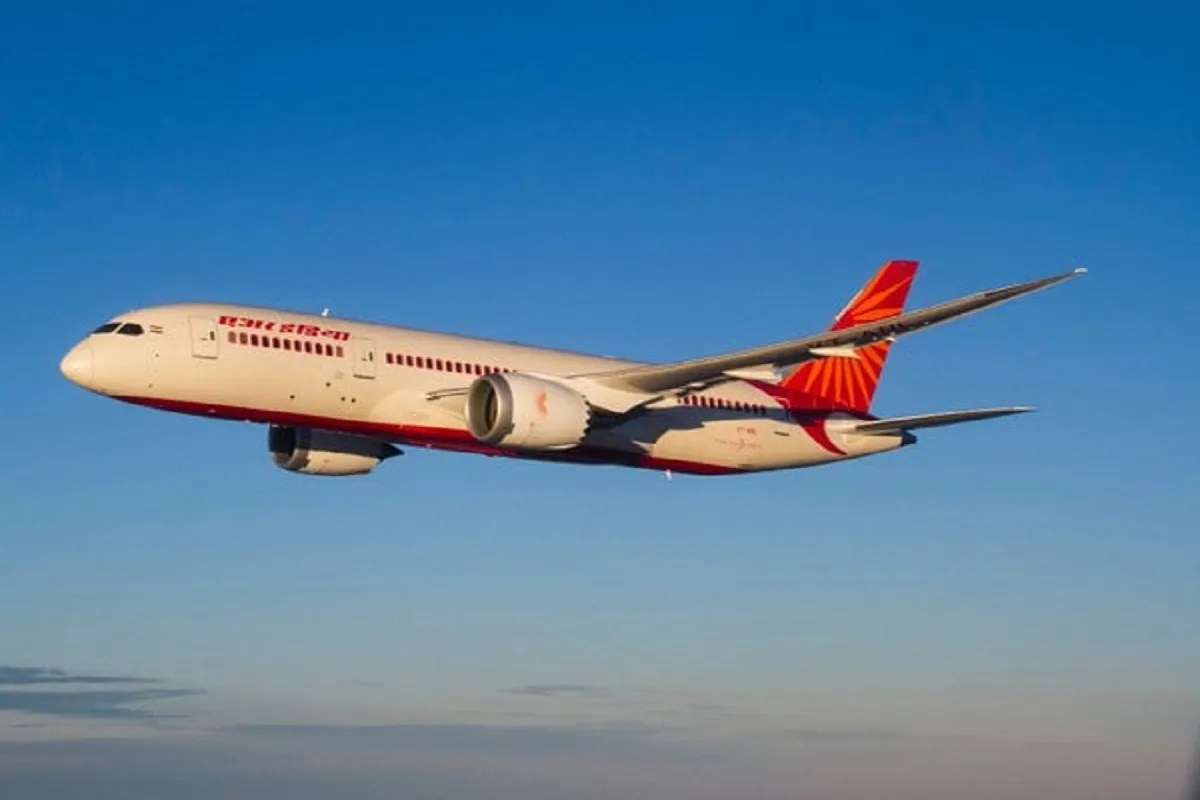
A flight from New Delhi to London now takes roughly two hours longer than it did previously. For a Boeing 777 or a Dreamliner, two extra hours in the air is a catastrophe for profitability. You are looking at thousands of liters of extra fuel per flight. At current global jet fuel prices, a single round trip can cost an airline an additional $15,000 to $30,000. When you multiply that by the dozens of daily flights operated by Air India and other private carriers, the "airspace tax" imposed by Islamabad reaches into the hundreds of millions of dollars.
It isn't just the fuel.
Flight crews have strict duty-time limitations. An extra two hours often pushes a crew past their legal working limit, necessitating longer rest periods or even entirely new crews stationed at mid-point hubs. This creates a ripple effect throughout an airline’s entire schedule. A plane that arrives late in London cannot depart on time for its return leg, leading to missed connections and compensation claims from thousands of passengers.
Why Islamabad is Willing to Lose Money Too
Critics often point out that Pakistan is shooting its own economy in the foot. This is technically true. Every time a foreign aircraft flies through a country’s airspace, that country collects "overflight fees." These are essentially tolls for using the sky. By closing its airspace to India, Pakistan is forfeiting millions of dollars in hard currency revenue—something their struggling economy desperately needs.
However, the military establishment in Rawalpindi views this as a secondary concern. To them, the strategic value of hurting India's civil aviation sector outweighs the loss of overflight fees. It is a war of attrition. They are betting that they can endure the loss of revenue longer than Indian airlines can endure the skyrocketing operational costs.
Furthermore, this closure allows Pakistan to maintain a high state of military readiness. By clearing civilian traffic from certain corridors, their air defense systems have a "cleaner" picture of the skies. It reduces the risk of accidental engagement during periods of high tension and allows for unrestricted military maneuvers along the eastern border.
The Global Impact on International Carriers
This isn't just an Indo-Pakistani spat. The global aviation industry is caught in the crossfire. Major international carriers like United Airlines, Lufthansa, and Thai Airways have all had to scramble to adjust their routes. Some flights from Southeast Asia to Europe have become so fuel-heavy that they can no longer carry a full load of passengers or cargo.
When an aircraft has to carry more fuel to cover a longer distance, it becomes heavier. A heavier plane burns even more fuel just to stay in the air. More importantly, every kilogram of extra fuel is a kilogram of cargo or a passenger that cannot be boarded due to maximum takeoff weight restrictions. For long-haul carriers, this translates to "weight penalties," where they are forced to leave seats empty to ensure the plane can make the detour.
The diplomatic fallout is equally messy. International aviation is governed by the Chicago Convention, which generally promotes the freedom of the skies. However, "national security" is the ultimate trump card. Pakistan uses this clause to justify the closure, and while organizations like the ICAO (International Civil Aviation Organization) can protest, they have very little power to force a sovereign nation to open its borders—even the ones in the sky.
The Technical Reality of Rerouting
Rerouting a flight isn't as simple as turning a steering wheel. It involves intense coordination with the air traffic control (ATC) of multiple countries. When Pakistan shuts its doors, the traffic doesn't just disappear; it moves into the airspace of Iran or Oman.
This creates massive "traffic jams" in the sky. The Muscat and Tehran flight information regions have seen a sudden surge in traffic, leading to delays as controllers struggle to maintain safe separation between aircraft. Indian carriers are now heavily dependent on the Iranian corridor. This creates a new geopolitical risk. Should tensions rise in the Persian Gulf, Indian aviation could find itself squeezed from both sides, with no viable northern or southern route to the West.
The Breakdown of Added Flight Times
- Delhi to Frankfurt: Extra 90 to 110 minutes.
- Mumbai to New York: Extra 45 to 60 minutes (depending on wind).
- Delhi to Kabul: A near-total disruption, often requiring stops in third countries or massive loops.
A New Era of Aviation Diplomacy
The persistence of this closure suggests we have entered a period where "airspace sovereignty" is being used as a primary weapon of statecraft. In the past, these closures were brief, lasting a few days or weeks during active conflict. Now, we are seeing a semi-permanent blockade.
India has attempted to counter this by fast-tracking the privatization of Air India and seeking new bilateral agreements that bypass the traditional hubs. There is also increased pressure on international bodies to recognize that using civil airspace for political leverage sets a dangerous global precedent. If every nation began closing its skies based on diplomatic slights, the global economy would grind to a halt.
For now, the passengers are the ones paying the price, both in time and ticket costs. The airlines are bleeding cash, and the skies over the subcontinent remain a fractured map of restricted zones and "no-go" corridors.
The extension of the ban is a reminder that in modern conflict, the most effective strikes aren't always delivered by missiles. Sometimes, they are delivered by a simple notice to airmen (NOTAM) that erases a flight path from the map. As long as the trust deficit between New Delhi and Islamabad remains a chasm, the detour will remain the new normal.
Air India’s ultra-long-haul flights to North America are currently the most vulnerable. These routes are operated on razor-thin margins. The airline has already sought government intervention to offset the losses, but subsidies are a temporary fix for a structural geopolitical problem. The industry is watching to see who blinks first: the cash-strapped Pakistan Civil Aviation Authority or the burdened Indian aviation giants.
Stop looking at this as a temporary delay. It is a structural shift in how regional power is exercised. The sky is no longer a neutral highway; it is a contested territory where the toll is paid in fuel, time, and the slow erosion of commercial viability.