Every time Manila fires off another diplomatic protest declaring Beijing's actions illegal, null, and void, a collective groan echoes through serious defense ministries across the Indo-Pacific.
Let us dispense with the polite fiction immediately. Screaming international law at a concrete military base built on a submerged reef is the geopolitical equivalent of bringing a strongly worded petition to a hurricane.
The media cycle follows a predictable, mind-numbing script whenever the Philippines demands an immediate halt to construction on Mischief and Subi reefs. Manila issues a statement invoking the United Nations Convention on the Law of the Sea. Western capitals nod solemnly and mutter about freedom of navigation. Beijing responds with a bureaucratic shrug wrapped in historical claims that stretch back to the Ming dynasty. Then, everyone goes home, nothing changes, and another dredger pumps another ten thousand tons of sand onto an artificial island.
The lazy consensus in mainstream commentary insists that if the Philippines just stays the course of legalism and international pressure, justice will prevail. This is a comforting fairy tale told by people who have never had to manage a balance-sheet of hard power.
The truth is much harsher. Mischief Reef and Subi Reef are not temporary infractions. They are permanent, immovable architectural facts. And chanting about a 2016 arbitral ruling does not wash away reinforced steel and surface-to-air missile batteries.
The Amnesia of 1995
To understand why Manila's current strategy is failing, you have to look at the historical timeline that Philippine officialdom prefers to gloss over.
Back in 1995, during the Ramos administration, Philippine fishermen and military intelligence first noticed strange structures sprouting on Mischief Reef. Beijing claimed they were mere shelters for fishermen caught in bad weather. Manila protested. The international community murmured. While everyone debated whether a collection of wooden huts constituted a military threat, China quietly poured concrete. By the time the Philippine navy realized the scale of the operation, the footings were set.
Fast forward two decades, and Mischief Reef is no longer a cluster of shacks. It is a massive naval and air facility complete with a three-kilometer runway, radar installations, deep-water harbors, and barracks capable of housing thousands of personnel. Subi Reef underwent an identical transformation.
When Manila demands an end to reef construction today, they are shouting at a ghost of a process that finished years ago. The construction phase is over. The occupation phase is absolute. You cannot halt construction on a base that is already operational, armed, and integrated into a multi-tiered regional command structure.
The Fatal Flaw of Legalism
The anchor of Philippine foreign policy rests on the 2016 ruling by the Permanent Court of Arbitration in The Hague, which invalidated China's expansive nine-dash line and ruled that Mischief and Subi reefs are low-tide elevations incapable of generating exclusive economic zones.
On paper, it was a sweeping legal triumph for Manila. In the brutal arena of international relations, it was a piece of parchment tossed into a gale-force wind.
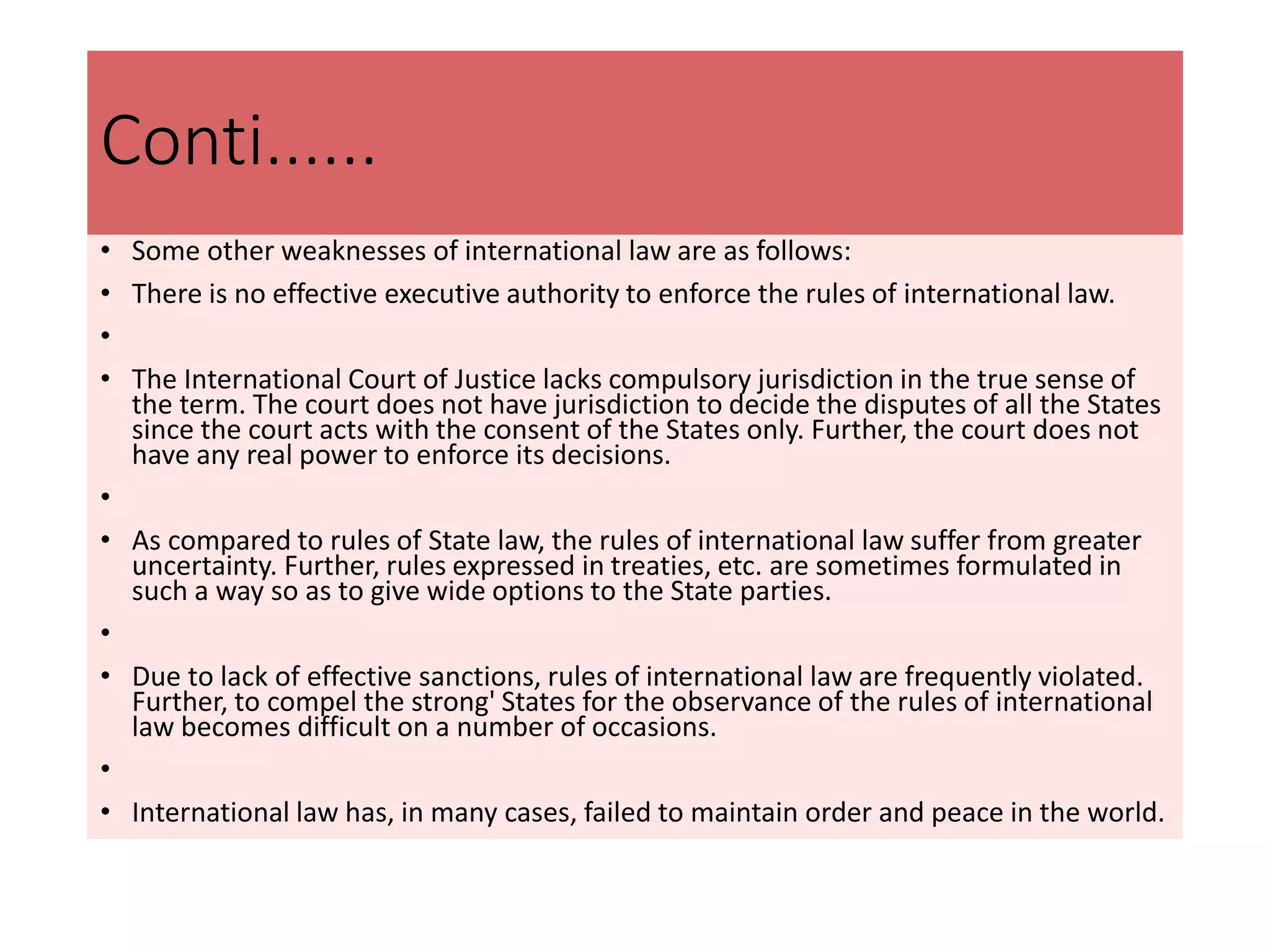
International law possesses one fatal vulnerability: it lacks an independent enforcement mechanism with a monopoly on violence. A treaty is only as strong as the willingness of powerful actors to enforce it at gunpoint. When the United States Navy sails a guided-missile destroyer through the Spratly Islands on a freedom of navigation operation, it makes for great cable news. But it does not deter Beijing from landing military transport planes on Subi Reef.
The legalists in Manila and Washington treat geopolitics like a courtroom drama, expecting the judge to bang a gavel and order the defendant to pack up their dredgers and leave. Statecraft does not work that way. Sovereignty is maintained by physical presence, logistical sustainment, and the credible threat of unacceptable cost to an adversary.
By reducing the dispute primarily to a legal battle, Philippine leadership has allowed itself to fight on terrain where China holds all the cards. Beijing ignores the court because it can. And every time Manila relies on a press release instead of strategic military denial, it signals weakness to domestic audiences and adversaries alike.
The Domestic Trap in Manila
Why does this performative cycle persist? Because outrage is politically cheap, while hard capability is expensive.
Philippine domestic politics demands a tough posture against Beijing. Voters want to see their leaders stand up to the giant neighbor encroaching on their maritime entitlements. Issuing fiery notes verbale and summoning ambassadors costs zero pesos and plays exceptionally well on evening broadcasts.
Purchasing indigenous submarine fleets, anti-ship cruise missile batteries, and advanced coastal radar networks requires billions of dollars, decades of procurement reform, and hard choices about national budgets.
For years, successive administrations in Manila underfunded the Armed Forces of the Philippines while outsourcing national defense to an American security guarantee that has always come with heavy diplomatic caveats. Washington wants a loyal proxy to pin down Chinese naval assets in the South China Sea, but Washington will never go to war with a nuclear-armed superpower over a submerged sandbar in the Spratlys.
Relying on Uncle Sam to rescue Philippine fishermen from China Coast Guard water cannons is a strategy of national self-delusion. The United States will provide intelligence, training, and diplomatic backing, but the blood and treasure—if it ever comes to a shooting match—will belong exclusively to Filipinos.
Dismantling the Myth of Shared ASEAN Solidarity
Another pillar of the mainstream narrative is that ASEAN will eventually rally around Manila to present a unified front against Beijing's maritime expansion.
This is diplomatic fantasy. ASEAN is a consensus-driven organization paralyzed by internal divisions and varying degrees of economic dependence on China. Nations like Cambodia and Laos act as diplomatic speed bumps for any joint communiqué that mentions the South China Sea arbitration.
Expecting a block of ten diverse nations with competing economic interests to risk their export markets and foreign direct investment to back Manila's maritime claims is professional negligence. Small states in Southeast Asia understand balancing and hedging far better than Western pundits give them credit for. They look at the runways on Subi and Mischief Reefs, calculate the distance to Beijing, and realize that economic gravity dictates reality.
When Manila complains about China rejecting its claims, it is looking for solidarity in an empty room. No regional partner is going to send gunboats to evict the People's Liberation Army Navy from the Spratlys.
What Pragmatism Looks Like
If the traditional playbook of legal posturing and diplomatic wringing of hands is bankrupt, what is the alternative? Realism requires trading emotional rhetoric for asymmetric deterrence and economic counter-pressure.
First, stop treating the dispute as a debate over ancient maps or legal technicalties. Treat it as a contest of endurance and localized attrition. Instead of sending lightly armored coast guard vessels to be blasted by high-pressure water cannons, the Philippines needs to invest heavily in shore-based anti-ship missile systems, mobile coastal defense batteries, and swarm-capable patrol craft. Make the cost of operating near the Philippine mainland prohibitively expensive for Chinese naval patrols.
Second, restructure maritime presence. Stop relying solely on government ships that can be easily blocked or rammed. Foster a heavily subsidized, state-backed commercial fishing fleet equipped with encrypted communication gear and integrated into national reconnaissance networks. Saturate the contested waters with civilian hulls that blur the line between commercial activity and sovereign presence, mirroring the exact gray-zone tactics Beijing used to conquer the space in the first place.
Third, weaponize economic dependencies where possible. While China is a massive trading partner, the Philippines holds critical mineral resources and geographic chokepoints that matter. Real statecraft means finding vulnerabilities in the adversary's supply chain and political stability, rather than playing the perpetual victim in international forums.
Mischief and Subi reefs are not going anywhere. The concrete has cured. The runways are paved. The missiles are emplaced.
Until Manila wakes up from the comforting dream that international tribunals and foreign press statements will roll back a decade of geopolitical engineering, Chinese dredgers will keep reshaping the map while Philippine diplomats write letters that nobody in Beijing reads twice.