Western defense analysts are panicking over the wrong metric.
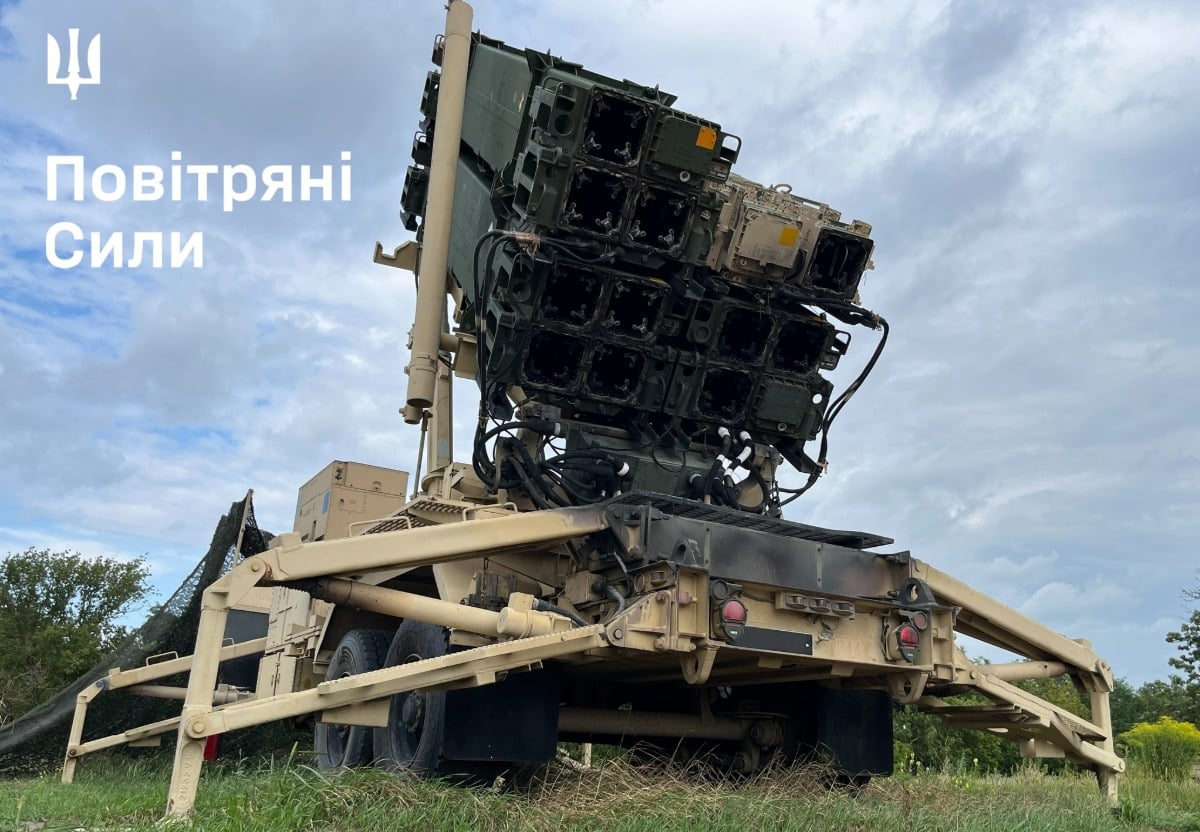
When reports surface that Ukraine intercepted zero ballistic missiles during a recent strike package, the immediate, lazy consensus is always the same: "They are running out of interceptors." The media sounds the alarm, think tanks beg for more Patriot batteries, and politicians promise hardware that takes three years to manufacture.
It is a comforting narrative. It suggests that defense is just a supply chain issue. If we pour enough money into Lockheed Martin and Raytheon, the skies will clear.
That narrative is dangerously wrong.
The zero-percent intercept rate is not a tragedy of empty logistics. It is the logical, mathematically inevitable result of an obsolete air defense doctrine. We are treating multi-million-dollar kinetic interceptors like infinite ammunition in a video game, ignoring the brutal calculus of modern saturation strikes.
Stop counting the interceptors left in the warehouses. Start looking at the fundamental asymmetry of the engagement geometry. The shortage isn't just coming; it was engineered into the system from day one.
The Flawed Premise of the "Perfect Shield"
Every mainstream assessment of air defense operates on a flawed premise: the assumption that every incoming missile must be engaged.
This is defensive theater.
When an Iskander-M or a Kinzhal ballistic missile is detected, the instinct is to fire. But air defense units in high-intensity conflicts do not fail because they run out of missiles in the middle of a Tuesday afternoon raid. They fail because they are forced to make a binary choice under extreme cognitive load: exhaust their entire magazine on a decoy-heavy first wave, or save their teeth and let strategic targets burn.
Consider the reality of a modern ballistic strike. A single incoming ballistic target is rarely just one piece of metal. It is a complex cluster of tracking anomalies. Modern Russian systems regularly deploy penetration aids—decoys that mimic the radar cross-section of a live warhead.
If a battery commander fires two Patriot MIM-104 interceptors at every ghost on the radar, the battery is combat-ineffective within ninety seconds. If they hesitate to verify the target, the hypersonic terminal velocity closes the kill chain before a solution can be programmed.
The media looks at a zero-percent intercept rate and sees a lack of bullets. A cold analysis reveals a command structure that finally realized it cannot afford to shoot at everything.
The Math That Air Defense Grifters Ignore
Let us break down the economic and kinetic asymmetry that no one in Washington or Brussels wants to talk about. This is not a software glitch. It is basic arithmetic.
Imagine a scenario where an adversary launches a strike package consisting of:
- Ten cheap, Iranian-designed delta-wing kamikaze drones to saturate early-warning radars.
- Four cruise missiles flying low to mask their terrain profile.
- Two high-speed ballistic missiles aimed at critical infrastructure.
To guarantee a kill against a single ballistic missile using Western doctrine, you shoot to look, then shoot again. That means two interceptors per target.
Cost of 1x Patriot PAC-3 Interceptor: ~$4,000,000
Cost of 1x Iskander-M Ballistic Missile: ~$3,000,000
The math is immediately broken. You are spending $8 million in high-tech, precision-machined components to stop a $3 million rocket.
But it gets worse. The factory throughput for PAC-3 MSE interceptors is roughly 500 units per year for the entire global market. A heavy bombardment can chew through a month of global production in a single weekend.
Adversary Strategy: Scale production of crude, heavy steel tubes.
Western Strategy: Hand-craft boutique, hyper-complex titanium darts.
When Ukraine hits a zero-percent interception rate on ballistic missiles, it often means the local commander refused to exchange their last remaining strategic assets to protect a non-vital grid node. They saved the battery to protect the leadership command bunkers or the nuclear plants. That isn't a failure; it is cold, brilliant triage.
Dismantling the "Just Send Patriot" Delusion
Whenever the air defense net fails, the public shouting match centers on the Patriot system. "Send more Patriots."
I have spent years watching defense procurement teams throw billions at legacy systems because they are terrified of telling the truth to stakeholders: Fixed-site, long-range air defense is a dying paradigm against near-peer adversaries.
The Patriot is an incredible piece of engineering. Its AN/MPQ-65 radar can track objects that would blind lesser systems. But it is also a massive, glowing electronic target. The moment a Patriot radar switches on, it radiates an unmistakable footprint across the electromagnetic spectrum.
Adversaries do not just try to fly past the Patriot; they hunt it. They use anti-radiation missiles that home in on the radar's exact frequency.
If you pack a theater with more Patriot batteries without an integrated, multi-layered short-range defense (SHORAD) envelope to protect those batteries from cheap drones, you are simply building a bigger target graveyard. The bottleneck isn't the number of launchers. It is the systemic vulnerability of the radar architectures and the absolute physical limits of Western industrial manufacturing.
The Brutal Reality of Triage Architecture
If the current strategy is a dead end, what is the alternative? It is an approach that sounds horrific to politicians but is the only way to survive a long-war attrition scenario: Strategic Acceptance of Impacts.
We must abandon the doctrine of total airspace denial. It is a luxury born from decades of fighting asymmetric campaigns against adversaries with zero industrial capacity. In a high-intensity conflict against a peer state, things are going to get hit. Success is not defined by keeping the skies clean; success is defined by ensuring the adversary spends more energy attacking than you spend absorbing the blow.
An effective defense framework requires three ruthless shifts:
1. Hardening Over Hitting
Instead of spending $4 million to intercept a missile heading for an aircraft hangar, spend $100,000 on reinforced concrete revetments and earthworks. If the missile hits a hardened structure and destroys nothing but cheap gravel, you win the economic exchange. Passive defense scales infinitely; kinetic interceptors do not.
2. Radical Interception Triage
Commanders must explicitly classify entire categories of infrastructure as "unprotected." If a ballistic missile is tracking toward a residential area or a secondary power substation, and interceptor stockpiles are below a critical threshold, the system must remain dark. It sounds monstrous, but saving a power substation today at the cost of losing an airfield tomorrow is how wars are lost.
3. Asymmetric Counter-Battery
The best air defense is an artillery shell or a long-range strike drone hitting the enemy launcher while it is reloading on the ground. Every dollar shifted from defensive interceptors into offensive deep-strike capability creates a compounding return on investment. Stop trying to catch the arrows. Kill the archer.
The zero-percent metric we saw wasn't a symptom of Western betrayal or Ukrainian incompetence. It was a glimpse into the future of peer-on-peer attrition. The side that wins the next major conflict will not be the one with the cleanest radar screens. It will be the side that accepts the limits of technology, stops worshipping the myth of the perfect shield, and builds a war machine designed to take a punch.