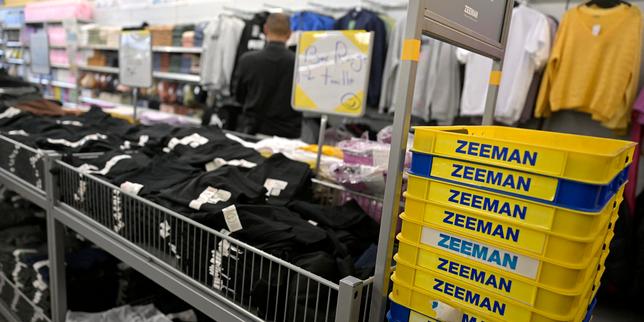
The traditional brick-and-mortar discount model is hitting a wall in Europe. Zeeman, the ubiquitous Dutch textile discounter known for its rock-bottom prices on basic apparel and household textiles, has announced a drastic restructuring plan that includes a complete withdrawal from Portugal and Austria, alongside the shuttering of dozens of stores across France, Spain, and Germany.
By 2028, the retailer will eliminate 127 additional points of sale, following 24 closures executed last year. The aggressive retreat comes on the heels of a widening net loss of 12.5 million euros, more than doubling the 5.5 million euro loss recorded previously. This isn't just a temporary operational hiccup for a retail giant; it is a structural warning shot for the entire European value sector.
The Myth of the Crisis-Proof Discounter
For decades, budget retailers operated under the assumption that economic downturns were good for business. When inflation squeezes middle-class wallets, consumers downmarket to cheaper alternatives. Zeeman built an empire of over 1,200 stores on this exact premise, offering basic socks, underwear, and children's clothing for pennies on the euro.
That playbook no longer works. The macroeconomic environment has shifted so radically that the cost of maintaining a physical footprint is outstripping the margins generated by low-cost goods. Zeeman faces a triple squeeze: soaring overhead costs, systemic supply chain vulnerabilities, and an unprecedented wave of digital competition from ultra-fast fashion players that operate without the burden of physical rent.
CEO Erik-Jan Mares has tried to frame the current situation as a necessary period of transition. The reality is far more punishing. In 2023, Zeeman was still comfortably profitable, pulling in over 10 million euros in net profit. The subsequent collapse into deep red ink within 24 months exposes how quickly a low-margin retail model can unravel when external pressures mount.
Supply Chain Friction and the Death of the Cheap Baseline
To understand why Zeeman is retreating from southern and central Europe, one must look at the backend mechanics of value retail. The business model requires massive volume and flawless logistical efficiency. When you sell a t-shirt for three euros, even a minor disruption in shipping or warehousing erases the profit margin entirely.
Zeeman recently undertook massive capital expenditures to modernize its operations. The company heavily mechanized its main distribution center, upgraded store technology, and overhauled its online platform. Yet, these internal optimizations were undermined by global logistical bottlenecks that depressed overall sales volume. In 2023, the retailer moved 281 million items; by the following year, that volume dropped to 270 million items, triggering an immediate descent into net losses.
When supply chain costs spike, a premium retailer can choose to absorb the hit or pass a small percentage onto the consumer. A discounter cannot. If Zeeman raises the price of a basic cotton pack by 50 cents, it loses its core competitive identity. Stuck between rising wholesale transport costs and a customer base that refuses to accept price hikes, the company chose the only viable mathematical alternative: cutting the physical real estate that eats up cash.
The Invisible Invaders
The most significant driver behind Zeeman's retreat outside the Benelux region is the aggressive market share grab by ultra-cheap digital platforms and aggressive cross-border physical discounters.
Zeeman Financial Performance Over Time
=========================================
Year    Net Performance
-----------------------------------------
2023    +10.0 Million Euros (Profit)
2024    -5.5 Million Euros (Loss)
2025    -12.5 Million Euros (Loss)
=========================================
In markets like France and Germany, the competitive terrain has transformed. Chinese e-commerce giants have completely recalibrated consumer expectations regarding price and convenience. These platforms ship directly from manufacturing hubs to consumers' doorsteps, bypassing European labor laws, commercial rent overheads, and inventory storage liabilities.
Concurrently, European brick-and-mortar competitors like Action and Primark have scaled aggressively, offering larger formats and a broader product mix that turns shopping into an event. Zeeman’s smaller, neighborhood-focused formats are caught in a dead zone. They lack the endless novelty of digital applications and the treasure-hunt scale of larger destination discounters.
The Regional Failure
The decision to completely abandon Portugal and Austria before the end of the year highlights the difficulty of building brand equity in new territories. In recent years, Zeeman viewed southern Europe as its primary growth engine, expecting to open hundreds of stores in Spain and surrounding regions to offset a saturated market in the Netherlands.
That expansion lacked deep cultural penetration. In the Benelux, Zeeman is a cultural institution; consumers know exactly what to expect. In Lisbon or Vienna, it was simply another foreign budget brand trying to compete with entrenched local options and aggressive digital alternatives. Without massive marketing spend to build awareness, those stores quickly turned into capital drains.
Restructuring Under Fire
The strategy going forward is an admission that raw footprint expansion is a liability. Management is tightening profitability metrics for every single location. If a shop cannot meet strict margin thresholds under current macroeconomic conditions, it is marked for liquidation.
The geographical breakdown of the survival strategy reveals where the company thinks it can still fight:
- The Benelux Core: Retaining and defending the highly profitable domestic markets where brand loyalty keeps foot traffic stable.
- Targeted Pruning: Closing 51 underperforming locations across France, Spain, and Germany to protect healthier regional clusters.
- Total Withdrawal: Shuttering all 13 stores in Portugal and Austria immediately to stem systemic cash burn.
While the physical footprint shrinks, the company claims it will reinvest in localized marketing and management structures within its remaining foreign territories. This is a delicate balancing act. Cutting costs while simultaneously trying to buy brand relevance in competitive markets like France is an expensive gamble.
The structural pivot toward e-commerce is equally fraught with peril. E-commerce is notoriously difficult to execute profitably for low-average-ticket-value retailers. The cost of picking, packing, and shipping a five-euro item often exceeds the value of the item itself. While online sales can boost top-line revenue, they rarely solve a fundamental profitability crisis for a textile discounter.
Zeeman's retreat proves that in the modern European retail market, scale alone is no longer a shield against structural disruption. The coming years will determine whether this aggressive downsizing can successfully preserve the company's historic core, or if it is simply the first phase of a broader institutional decline.