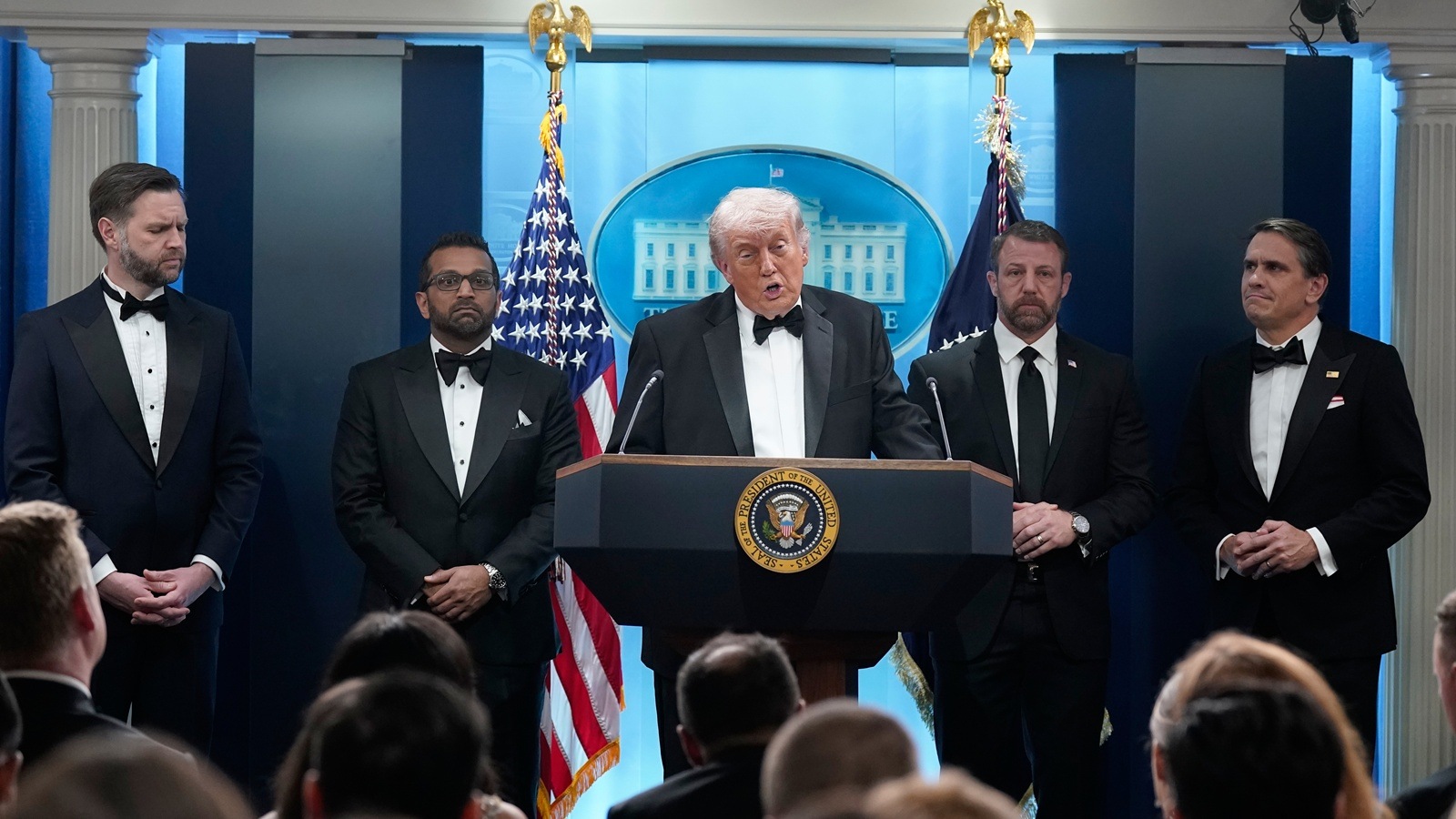
A black-tie event in Washington just turned into a scene out of a thriller. One minute, the room is full of journalists and politicians laughing at a podium; the next, the President and First Lady are being shoved out of the room by Secret Service. If you’re looking for the truth behind the chaos at the White House Correspondents Dinner shooting, you don’t have to look far to find the theories. People are already asking if the administration had a heads-up, especially after a "shots fired" joke from the press secretary went viral at the worst possible moment.
The reality of what happened on April 25, 2026, is a mix of high-stakes security and a country that feels increasingly on edge. Donald Trump didn't hold back his thoughts, quickly labeling the attacker a "lone wolf whack job" and one of the "crazy people" that he claims are the byproduct of a polarized nation.
The panic inside the ballroom
Everything seemed normal until it wasn't. Just after the National Anthem, a series of muffled popping sounds—described by some attendees as sounding like popcorn—echoed near the Hilton ballroom. Within seconds, the mood shifted from celebratory to terrifying. Secret Service agents didn't hesitate. They physically moved the President and Vice President JD Vance so quickly it almost looked like they were being tackled.
While the top brass was rushed to safety, the rest of the room—filled with Cabinet members, senators, and the media—was told to hit the floor. It’s a jarring image: the most powerful people in the country ducking under linen-covered tables.
Who was the shooter and what was the motive
The suspect has been identified as Cole Tomas Allen, a 26-year-old computer programmer and tutor from California. This wasn't some random act of street crime. Sources suggest Allen had a "manifesto" and had been vocal about his grievances against the current administration.
- Weaponry: Allen reportedly had a handgun, a shotgun, and several knives.
- The Warning: His own brother allegedly tried to tip off the police in Connecticut just minutes before the attack began, citing disturbing writings.
- The Breach: Investigations are now focusing on how someone with those weapons could get so close to a secure perimeter. Allen was reportedly apprehended right outside the ballroom after trying to push past a security checkpoint.
Did Trump know about the attack in advance
This is where the internet went wild. Conspiracy theorists point to Press Secretary Karoline Leavitt using the phrase "shots fired" in a rhetorical sense just before the actual gunfire happened. It’s a classic case of bad timing fueling a fire. There is zero evidence that the White House had prior knowledge of Cole Allen’s plan.
Trump’s reaction was more about the optics of strength than a scripted event. He even admitted later in an interview that he "wasn't making it easy" for his detail because he wanted to see what was going on. He’s leaning into the "consequential president" narrative, basically saying that if people are trying to hit you, it means you're doing something big. It’s a bold take, but it’s exactly the kind of rhetoric his base expects.
Security failures and the DHS shutdown
The timing of this shooting couldn't be worse for the Department of Homeland Security. The agency has been in the middle of a partisan stalemate that resulted in a two-month shutdown. Trump wasted no time using the shooting to hammer his political opponents, arguing that the Secret Service agents who saved him aren't even getting paid right now.
"These are strong, solid people who have to get paid," Trump said during a press conference following the event. "The Democrats are holding up their pay while these people are out here taking bullets."
💡 You might also like: The Sovereignty Illusion and the Shadow of War in Cyprus
This incident highlights a massive gap in event security. While the Secret Service is responsible for the "protectees," the event itself is often managed by third-party security or local police. When those layers don't talk to each other, you get a guy with a shotgun standing feet away from a ballroom full of the most guarded people on earth.
What happens next for high-profile events
You can bet that the "bubble" around the presidency is about to get a lot thicker. Trump is already pushing for his own massive ballroom to be built on White House grounds to avoid these kinds of "off-site" security nightmares.
- Stricter Perimeters: Expect a massive increase in the "dead zone" around presidential events, making them even less accessible to the public.
- Intelligence Overhaul: The fact that Allen’s family tried to warn authorities but the message didn't stop him in time suggests a total breakdown in "BOLO" (Be On the Lookout) procedures.
- DHS Funding: The pressure to end the DHS shutdown will reach a breaking point this week as the public demands to know why the people protecting the President are working for free.
If you’re following the fallout, keep an eye on the federal court proceedings in D.C. this Monday. That’s where Allen will be arraigned, and we’ll likely see the full extent of the charges. This wasn't just a security scare; it's a wake-up call that the traditional ways of protecting a president in 2026 are failing. Don't be surprised if the "dinner circuit" in Washington looks very different—or disappears entirely—after this.



