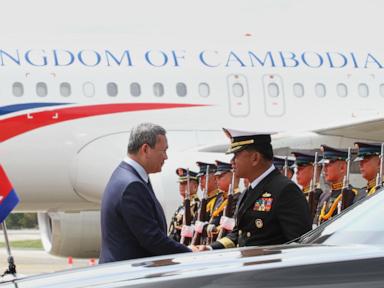
Cambodia has launched a rare legal maneuver under the United Nations Convention on the Law of the Sea, forcing Thailand into compulsory conciliation over a heavily disputed 26,000-square-kilometer maritime territory. Prime Minister Hun Manet announced the filing of formal notice to both Bangkok and the UN Secretary-General, aiming to break a decades-long deadlock over the Gulf of Thailand Overlapping Claims Area. This structural gambit directly targets an estimated $300 billion worth of untapped natural gas and oil reserves, turning a sleepy diplomatic standoff into an acute geopolitical chess match that threatens regional energy markets.
The sudden push for international intervention comes on the heels of Thailand unilaterally tearing up a 25-year-old bilateral agreement designed to explore these shared waters. It is an escalation that lays bare the failure of bilateralism in Southeast Asia when massive resource wealth collides with raw domestic nationalism.
The Collapse of MoU 44
For a quarter of a century, the 2001 Memorandum of Understanding, widely known as MoU 44, served as the primary, albeit completely stagnant, framework for resolving the maritime boundary. The agreement was meant to split the Overlapping Claims Area into two distinct zones: one for definitive border demarcation and another for joint hydrocarbon exploitation.
It produced absolutely nothing.
Last month, Thai Prime Minister Anutin Charnvirakul officially canceled the pact, citing the total lack of progress over the last 25 years. While Bangkok framed the exit as a purely bureaucratic housecleaning measure, the reality on the ground points to a much darker domestic landscape.
The relationship between Phnom Penh and Bangkok disintegrated rapidly last year following severe, bloody military clashes along their land border. Those skirmishes left nearly 150 people dead and forced hundreds of thousands of civilians to flee their homes. Though a delicate ceasefire has held since December, the political fallout inside Thailand remains highly volatile. Rising nationalistic sentiment left the Thai administration with zero political room to compromise with Cambodia, effectively forcing Charnvirakul to kill the maritime treaty to appease hardline factions at home.
With bilateral avenues entirely choked off by politics and blood, Cambodia opted for the nuclear option in international maritime diplomacy.
The Annex V Legal Trap
Phnom Penh is leveraging a specific, rarely used loophole buried deep within the text of the United Nations Convention on the Law of the Sea, specifically Annex V, Section 2.
When both nations ratified the treaty, they chose to opt out of binding, mandatory international arbitration for sea boundary delimitations. They wanted to maintain control over their borders. However, the convention includes a critical proviso: if bilateral talks stall out entirely after a reasonable period, one country can unilaterally force the other into compulsory conciliation.
That is the trap Cambodia just sprung.
Thailand now faces a strict 21-day countdown to appoint its own expert conciliators to a newly formed UN commission. Bangkok cannot simply ignore the notification or refuse to show up. Under international law, the non-participation of one party does not stop the clock or block the proceedings. The commission will form, and it will hear the case regardless of whether Thai lawyers are sitting at the table.
The Myth of Binding International Law
While the process is mandatory, the ultimate outcome is not. This is the central paradox of Cambodia's internationalization strategy.
The UN conciliation panel will spend months, likely years, reviewing maps, historical treaties, and geological data before issuing a final report and set of recommendations. Yet, these findings are completely non-binding. Either nation can look at the UN report, reject it out of hand, and walk away.
Historically, Thailand has harbored deep institutional distrust toward third-party international tribunals. The ghost of a 1962 International Court of Justice ruling, which awarded the ancient, hilltop Preah Vihear temple to Cambodia, still haunts the Thai security establishment. Bangkok viewed that decision as a deep national humiliation, a historical scar that directly fueled last year's border clashes. Prime Minister Charnvirakul has already signaled his displeasure, telling reporters that while Thailand will follow international guidelines, it firmly rejects Cambodia’s attempt to force an external resolution.
Phnom Penh understands this legal limitation perfectly well. The move is not about getting a binding verdict; it is about rewriting the leverage dynamics of the entire dispute. By dragging the fight onto the global stage, Cambodia forces a reluctant Thai government to defend its expansive maritime claims under the harsh glare of international legal scrutiny, stripping Bangkok of the raw economic and military weight it enjoys in bilateral negotiations.
Twelve Trillion Cubic Feet of Urgency
The driving force behind this sudden legal warfare is not abstract sovereignty. It is energy survival.
Beneath the shallow, turquoise waters of the Gulf of Thailand lies an estimated 12 trillion cubic feet of natural gas, alongside vast, unquantified oil deposits. For Cambodia, a nation heavily dependent on expensive energy imports, gaining access to even a fraction of these reserves would radically transform its domestic economy, lowering industrial costs and securing long-term power independence.
Comparative Economic Stakes
| Metric | Cambodia | Thailand |
|---|---|---|
| Primary Energy Driver | Heavy reliance on imported fuels and hydropower | Massive domestic natural gas infrastructure |
| Strategic Vulnerability | Exposed to global price shocks; limited storage | Depleting Erawan and Bongkot gas fields |
| Current Political Objective | Force international legal framework to equalize leverage | Postpone final boundary talk; prefer direct bilateral deals |
Thailand faces its own quiet energy crunch. The country’s domestic gas fields in the Gulf, which have powered its manufacturing boom for decades, are depleting rapidly. Bangkok is increasingly forced to rely on volatile, expensive Liquefied Natural Gas imports to keep its grid online. The overlapping area represents the last major, untapped hydrocarbon goldmine in the region.
The tragedy of the dispute is that the geology itself demands cooperation. The most lucrative gas structures do not care about lines drawn on colonial maps; they straddle the overlapping zones fluidly. Oil majors have spent decades refusing to invest a single dollar into exploration blocks within the contested zone because neither government can guarantee legal title or physical security for their offshore platforms.
The Limits of Gunboat Diplomacy
Despite the intense military rhetoric and the fresh trauma of last year's border war, a full-scale naval conflict over the gas fields remains highly unlikely.
The Gulf of Thailand is a crowded, vital global shipping lane. Any attempt to use naval force to seize offshore drilling sectors would trigger immediate, aggressive pushback from global powers, disrupting commercial supply chains across the Association of Southeast Asian Nations. Instead, the conflict will be fought through bureaucratic attrition, mapping expeditions, and aggressive posturing in international forums.
By initiating this UN action, Hun Manet is testing the institutional resilience of Southeast Asian diplomacy. For decades, regional disputes have been quietly swept under the rug in the name of regional harmony. Cambodia just pulled the rug away, betting that a structured, public legal conflict is safer and more profitable than letting a volatile territorial dispute rot in the dark. The clock is now ticking on Bangkok's 21-day window to respond, and the future of Southeast Asia’s energy independence hangs entirely on how they choose to answer the summons.