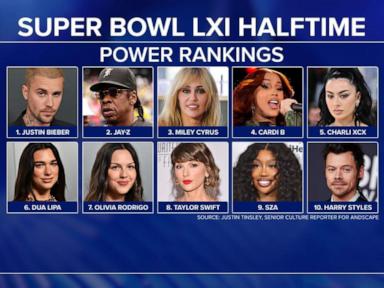
Super Bowl halftime performer speculation heats up every autumn because the NFL treats a twelve-minute television spectacle as a multi-billion-dollar cultural referendum rather than a simple concert booking. In late October 2026, the league, Apple Music, and Roc Nation made Jay-Z official for the Super Bowl LXI halftime show at SoFi Stadium in February 2027, ending weeks of delayed rumor-mongering that had already burned plenty of casual observers. For years, fans and aggregators have chased leaked silhouettes, tour calendars, and whispered wish lists as if those breadcrumbs actually govern who steps onto the turf. In reality, the speculation cycle exists to manufacture free pre-season publicity for the league, its broadcast partners, and its entertainment gatekeepers long before a single rehearsal begins.
Watch enough of these rumor cycles over two decades and a pattern becomes unmistakable. Most coverage of Super Bowl halftime performer speculation treats the booking like a talent-show blind audition where the biggest streaming numbers or loudest fan campaigns win. That framing misses how power actually works behind the curtain.
How Gatekeepers Turn Rumors Into Free Advertising
The Super Bowl halftime slot does not pay a traditional artist fee. Artists perform for reach, cultural legacy, and massive catalog spikes, while the NFL gets an unmatched ratings magnet and Apple Music gets a global showcase. When the league allows weeks of speculation to simmer without a formal reveal, every entertainment blog, sports desk, and social feed does free promotional labor on the NFL's behalf.
Timing is part of the theater. Historically, the NFL and its entertainment partners often announced headliners in September right around the start of the regular season. When the announcement for Super Bowl LXI stretched deeper into October 2026, rumor mills went into overdrive with supposed Apple Music teaser leaks, tour-gap theories, and prediction-market swings.
Consider a hypothetical example to see how easily a rumor distorts public expectations. Suppose a pop singer wraps a major arena run in December and has an open January calendar. Observers immediately treat that blank schedule as proof of a halftime deal, overlooking whether the artist wants the logistical grind of a stadium broadcast or whether another camp holds stronger institutional pull. A wide-open calendar looks like readiness. Often, it is just an empty calendar.
Roc Nation and the Architecture of Leverage
Since partnering with the NFL in 2019 and renewing that arrangement in 2024, Jay-Z's Roc Nation has shaped the creative direction and booking strategy of the halftime show. That arrangement fundamentally changed Super Bowl halftime performer speculation. When one company sits inside the decision-making room year after year, outsiders guessing from afar are frequently trading on incomplete maps.
Look at the recent run of headliners curated under that partnership: Dr. Dre, Snoop Dogg, Eminem, Mary J. Blige, and Kendrick Lamar at Super Bowl LVI; Rihanna at LVII; Usher at LVIII; Kendrick Lamar at LIX; and Bad Bunny at LX. Each booking reflected a mix of catalog scale, cultural momentum, and broadcast ambition. When Jay-Z emerged in October 2026 reports as the choice for Super Bowl LXI—aligned with the thirtieth anniversary of Reasonable Doubt—the move underscored a basic truth of executive entertainment. Proximity to the decision table matters more than internet noise.
Still, having influence inside the room does not guarantee universal applause. Critics and skeptics immediately point out potential conflicts of interest whenever an executive producer or partner takes a spotlight role on a stage their firm helps curate. Supporters counter that Jay-Z already helped build modern halftime lineups with major commercial reach and has long stood at the center of hip-hop's business history. Both arguments live in the gray zone between strategic vision and self-dealing.
Why Viral Clues Almost Always Miss the Mark
Online speculation thrives on visual clues and coincidence. A cropped graphic circulates on social media. Someone spots a familiar silhouette or a tour routing gap. Within hours, hundreds of thousands of people treat a guess as a near-certainty.
Three bad habits keep tripping up rumor watchers:
- Mistaking availability for intent: An artist with no tour dates in early 2027 might be resting, negotiating elsewhere, or simply uninterested in a high-pressure TV staging.
- Overreading unverified screenshots: Fabricated or out-of-context promo images spread faster than corrections once algorithms reward outrage or excitement.
- Ignoring broadcast economics: A halftime act has to hold tens of millions of viewers across generations, languages, and regions—not just win a niche online poll.
None of this means every rumor is fabricated out of thin air. Insiders talk, shortlists exist, and negotiations sometimes stall. Yet the gap between "on a shortlist" and "signed and staged" is wide enough to swallow entire rumor cycles whole.
What Bad Bunny and Recent Shows Changed for the Stage
Recent halftime history raised the stakes for whoever takes the mic next. Bad Bunny's Super Bowl LX performance in February 2026 made waves as the first headline set sung almost entirely in Spanish, reinforcing how global and multilingual the broadcast's cultural footprint had become. Kendrick Lamar's 2025 turn leaned hard into sharp cultural tension and massive viewership, while Rihanna and Usher proved that catalog familiarity and guest moments still anchor living-room watch parties.
Each success narrows the margin for error. If a show feels too safe, viewers tune out or treat it as background noise during kitchen runs. If a show pushes too hard in one direction, part of the audience complains that the league forgot its traditional core.
| Speculation Driver | What Rumor Chasers See | What Actually Matters Behind Closed Doors |
|---|---|---|
| Teaser graphics & leaks | Viral screenshots claiming an early reveal | Official coordination among the NFL, Apple Music, and Roc Nation |
| Tour schedules | Open winter dates signaling readiness | Creative ambition, staging logistics, and mutual leverage |
| Prediction markets | Rapid price swings on trending names | Liquidity, late narrative shifts, and insider positioning |
| Cultural milestones | Anniversary years and major tours | Cross-demographic reach and post-game conversation value |
Even prediction markets, which often look sharper than entertainment blogs because real money is on the line, can get whipsawed by late narratives. A rumor spikes on Wednesday, traders chase the momentum, and reality resets the price by Friday. Markets aggregate information; they do not magically produce private contracts before signatures hit paper.
The Real Stakes Behind Twelve Minutes of Airtime
For the average viewer watching at home, the halftime show is a twelve-minute breather between halves of football. For the executives running the league, its broadcast partners, and the artists involved, those twelve minutes function as a high-wire brand test where a single misstep echoes for years.
Every round of Super Bowl halftime performer speculation proves the same lesson. The loudest name in the feed is rarely the whole story, and the real leverage usually sits quietly behind closed doors until the press release drops. Stop treating every viral teaser as insider gospel, and start reading the incentives of the people holding the pen.