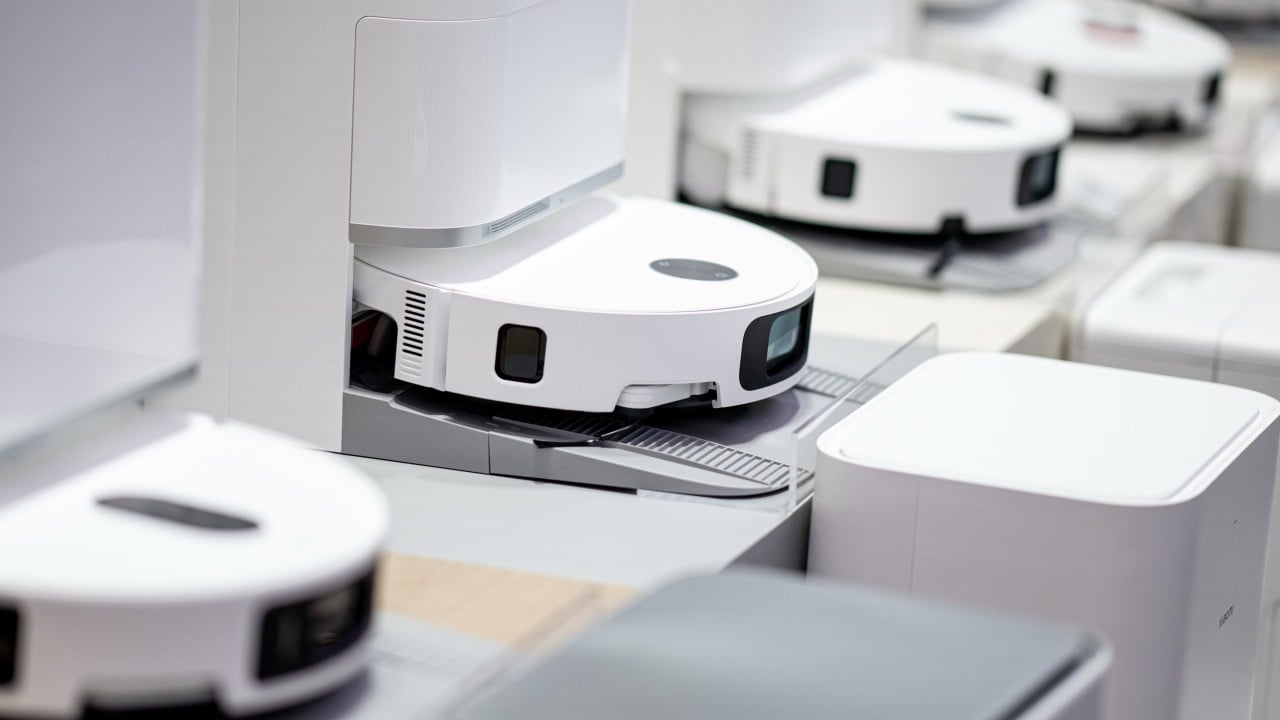
Shenzhen Camsense Technologies launched its Hong Kong public offering to raise roughly $78 million, ignoring the rising tide of trade restrictions and regulatory crosshairs originating from Washington. While mainstream financial commentary fixates on the geopolitical friction between the United States and Chinese hardware manufacturers, the more compelling story lies underneath the chassis of millions of automated domestic appliances. The market for spatial perception components—specifically the LiDAR and line-laser sensors that allow autonomous cleaning units to map living rooms—has quietly transformed into a high-stakes geopolitical asset class.
The numbers tell an aggressive story of specialized dominance. Camsense captured the leading market share by revenue for robot vacuum spatial perception products in China, driving annual revenues upward by over 40 percent before stepping onto the Hong Kong Stock Exchange floor (SEHK: 6802). Nearly 98 percent of that revenue stems directly from the robot vacuum ecosystem. This hyper-specialization is precisely what makes the company a fascinating analytical subject. Rather than diversifying away from consumer hardware, the firm doubled down on the exact supply chain nodes that Western regulators are attempting to wall off.
Washington's regulatory apparatus has steadily tightened around autonomous mobile hardware. Recent Federal Communications Commission directives expanded national security parameters to target foreign-made robotic devices, sweeping everything from advanced automated cleaners to multi-terrain utility units into compliance reviews. The rationale centers on data collection. Modern household units do not merely sweep dust; their onboard sensors map spatial dimensions, interior layouts, and structural geometries with millimeter accuracy.
Yet, treating these components as simple targets for export controls misunderstands the reality of global manufacturing momentum. Shenzhen's component suppliers operate within an integrated engineering cluster that Western alternatives cannot easily replicate or replace at scale. When American startups attempt to build domestic automated vacuums, the bill of materials routinely climbs past twelve hundred dollars per unit. Meanwhile, manufacturers utilizing Chinese optical sensors and mapping chips deliver functional counterparts at a fraction of that cost. The capital raised on the Hong Kong exchange is earmarked explicitly to widen that technological gap through heavier research and development expenditure, ensuring that even if direct sales to the American market face structural headwinds, alternative global corridors remain wide open.
The inclusion of cornerstone backers like BYD’s investment arm highlights a deeper industrial convergence. Sensor technology originally scaled for consumer sanitation products is finding dual-use applications in warehouse automation, autonomous logistics vehicles, and localized robotics. By anchoring its financial foundation in Hong Kong, Camsense secured the liquidity necessary to insulate its operations from shifting trade policies while simultaneously signaling to global supply chains that specialized component manufacturing has migrated permanently eastward.
The market has spoken, and it values spatial awareness over political friction. As regulatory walls rise in the West, the engineering core of autonomous robotics continues to accelerate in the Pearl River Delta.