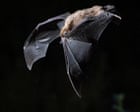
The numbers do not scream. They accumulate in field notebooks, tallied by tired biologists who spend their nights counting silhouettes against a fading dusk. Over recent monitoring cycles, populations of specific Australian flying fox species have dropped by as much as sixteen percent in key strongholds. The causes remain officially unresolved on paper, buried under bureaucratic hesitation and funding shortfalls. But the truth is hiding in plain sight across fragmented eucalyptus forests and overheated orchards.
Wildlife managers call it a mystery. Field researchers call it a slow-motion disaster.
Flying foxes are not merely interesting mammals with leathery wings and intelligent eyes. They are the structural pillars of Australia's eastern forests. Without them, entire ecosystems lose their capacity to regenerate. When sixteen percent of a keystone pollinator vanishes in a blink of evolutionary time, the shockwaves reach far beyond the canopy.
The Anatomy of a Missing Population
To understand why an animal can simply disappear in massive numbers without a smoking gun, you have to look at how these colonies live. Ghost bats, grey-headed flying foxes, and their relatives gather in camps containing tens of thousands of individuals. These camps are noisy, crowded, and politically sensitive. They sit near suburban backyards, commercial fruit farms, and municipal water supplies.
When a population drops by sixteen percent, it does not mean every camp lost a neat slice of its residents. It means entire colonies winked out of existence while others swelled temporarily before crashing.
Extreme weather events write the opening chapters of this decline. Australia's climate has grown violently erratic. Heatwaves that spike past forty degrees Celsius transform eucalyptus canopies into ovens. Flying foxes do not sweat effectively. When temperatures cross critical thresholds, thermoregulation fails. Thousands of bats drop from the branches in a single afternoon, dead before they hit the forest floor.
Local wildlife carers rescue what they can, wrapping heat-stressed survivors in wet towels and offering syringes of water. Yet these heroic efforts are drops of water on a blazing stone. The scale of mortality during a severe heat event overwhelms human response capacity entirely.
Habitat Fragmentation and the Edge Effect
Loss of food availability compounds the damage wrought by extreme weather. Native forests have been sliced into disconnected postage stamps of green by urban sprawl, real estate developments, and intensive agriculture.
Flying foxes are nomadic commuters. They track flowering events across hundreds of kilometers, following the sweet nectar of native eucalypts, banksias, and melaleucas. When vast tracts of native bushland are cleared for subdivisions or timber, the invisible highways of food disappear.
Consider what happens when a colony loses its primary food source within a fifty-kilometer radius. The animals must fly further to find sustenance. Every extra kilometer burned is energy drained from immune systems and reproductive cycles.
The Nutritional Deficit
Malnutrition in wild populations rarely looks like dramatic starvation. Instead, it manifests as reproductive failure. Females abort pregnancies or abandon dependent pups when body condition scores drop below critical thresholds.
- Flowering Mismatches: Climate shifts disrupt the synchronized blooming of native trees.
- Monoculture Pressures: Native forests are replaced by agricultural crops that offer intermittent, low-quality calories.
- Urban Foraging: Starving bats are forced into suburban gardens to eat exotic fruit, exposing them to backyard hazards, pesticides, and domestic pets.
A malnourished mother produces less milk. A weakened juvenile fails its first migration. Multiply these micro-failures across a continent-spanning population, and a sixteen percent drop begins to look mathematically inevitable rather than mysterious.
The Human-Wildlife Interface
Conflict with human communities accelerates the decline through direct mortality. Every summer brings a fresh wave of friction between residents and nearby camps. The complaints are familiar: noise, smell, and perceived health risks.
Local councils face relentless pressure to disperse colonies. Governments authorized various forms of harassment, ranging from loud noise generators and smoke machines to complete habitat destruction under the guise of management.
Dispersal rarely solves the problem. Science demonstrates that when a camp is forcibly moved, the animals rarely leave the region. They simply split into smaller, harder-to-manage groups closer to human habitation, or they experience acute physiological stress that triggers disease outbreaks and high mortality.
Hendra virus hysteria often shadows these conflicts. While the virus is real and dangerous, public panic frequently drives disproportionate hostility toward the animals. Farmers net their orchards to protect fruit, but improperly installed netting becomes a deadly trap. Thousands of flying foxes, along with owls and raptors, entangle themselves in monofilament mesh every year and die slow deaths of dehydration and starvation.
Disease Dynamics and Immunological Toll
Pathogen pressure acts as an invisible hand guiding population contractions. Flying foxes host various viruses, coexisting with them through ancient evolutionary balances. However, when these mammals face chronic nutritional stress and thermal shock, their immune systems falter.
High stress levels lead to elevated cortisol, which reactivates latent infections and increases viral shedding. This phenomenon creates a feedback loop. Stressed populations shed more pathogens, inviting stricter public health crackdowns, which in turn lead to more aggressive dispersals and habitat disruption.
We are not watching a sudden viral epizootic wipe out the species. We are watching the cumulative cost of a degraded environment manifest through physiological collapse.
The Failure of Current Policy Frameworks
Environmental legislation in Australia moves with the speed of a glacier, while ecological collapse happens in real time. State and federal protection listings often lag years behind actual population declines. By the time a species is bumped from vulnerable to endangered on paper, the genetic bottleneck has already tightened.
Conservation funding remains reactive rather than proactive. Millions are funneled into emergency response after a mass die-off event, while preventive funding for landscape-scale habitat restoration remains chronically under-resourced.
Land-clearing permits continue to be granted for projects that fragment critical migration corridors. Environmental impact assessments routinely underestimate the cumulative regional impact of removing small forest patches, treating each lost hectare as an isolated loss rather than a severed artery in a continental network.
What Real Recovery Requires
Fixing this trajectory demands a complete paradigm shift in how Australian society views flying foxes. Protection on paper means nothing without ecological breathing room.
First, the government must enforce strict moratoriums on the clearing of native foraging habitat within designated critical corridors. Every remaining stand of mature eucalypt is a structural asset for biodiversity.
Second, the management of urban camps needs professionalization built on ecological science rather than political panic. Dispersal programs should be banned unless backed by irrefutable evidence and paired with immediate, large-scale habitat creation nearby.
Third, agricultural subsidies should be tied to wildlife-friendly farming practices. Financial support for farmers to install high-tension, wildlife-safe netting or electric exclusion fencing would prevent thousands of needless deaths annually while securing orchard yields.
The sixteen percent decline is a warning flare sent up by the ecosystem. Ignoring it because the exact mechanics of every single death cannot be neatly summarized in a single spreadsheet is a choice. The bats are telling us that the landscape is fraying at the edges. When the pollinators fail, the forests follow, and the rest of the natural machinery soon grinds to a halt


