Western defense analysts spent years tracking China overt military hardware, counting hull sections in Shanghai shipyards and monitoring flight lines in Chengdu. They missed the actual acceleration point. Deep within the state-backed research infrastructure, military scientists are using artificial intelligence to compress decades of hardware iteration into months, effectively breaking the traditional acquisition cycle that has governed global arms development since the Cold War.
The primary battleground is not a contested island or an orbital track, but the grinding, unglamorous physics of component engineering. Recent disclosures from defense laboratories in Beijing and Xi'an reveal that the People's Liberation Army is deploying specialized machine learning models to solve fundamental engineering bottlenecks that previously choked the development of hypersonic glide vehicles, electronic warfare suites, and autonomous underwater platforms. By using predictive networks to simulate stress, heat, and material degradation, researchers are bypassing the costly, sequential loop of physical prototyping.
This is a structural shift in how national power is manufactured. The state is no longer merely attempting to match Western capabilities through industrial scale; it is fundamentally altering the clock speed of military innovation.
The Frictionless Blueprint
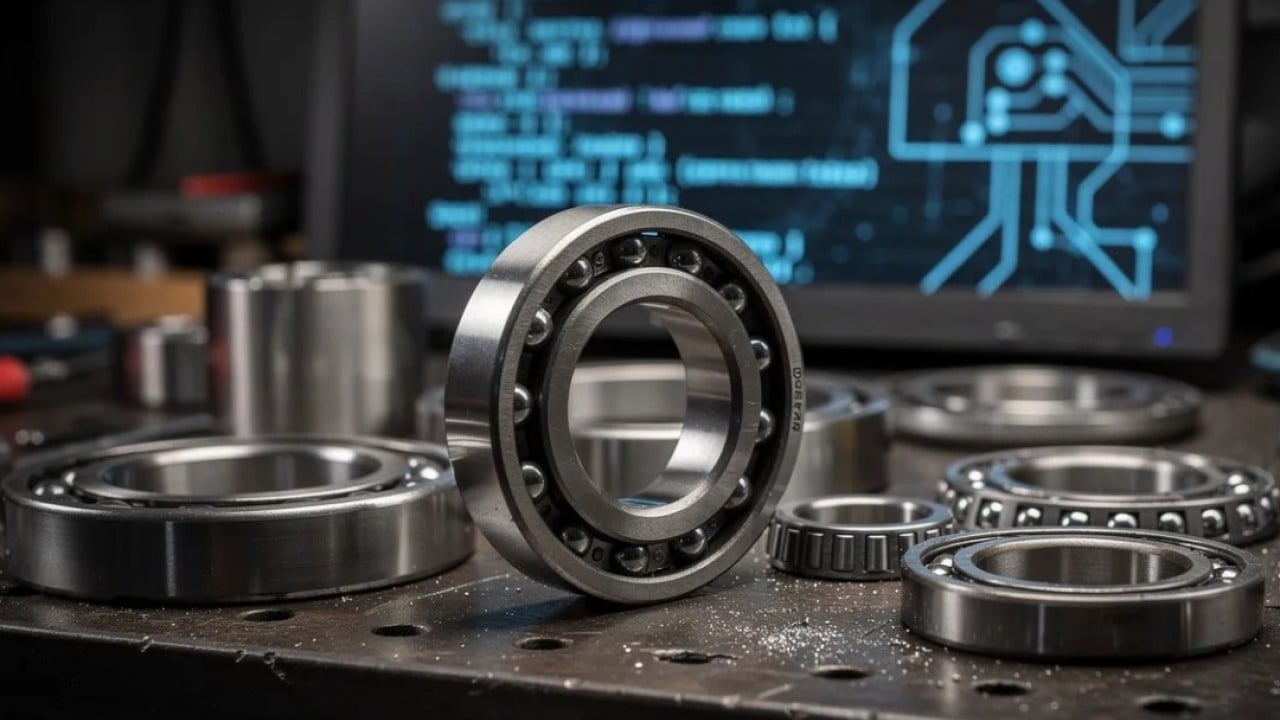
Traditional military development is notoriously slow. A standard aerospace component requires a cascading sequence of design, wind tunnel testing, metallurgical adjustments, and structural analysis. If a rolling bearing in a high-speed turbine fails under thermal stress at Mach 5, the entire sub-system must return to the drafting board. This cycle frequently consumes years of engineering hours and millions in capital.
Artificial intelligence removes this friction by substituting physical experimentation with high-fidelity synthetic testing. Chinese defense labs are training neural networks on massive datasets harvested from decades of conventional manufacturing and wind tunnel archives. These models predict structural failures before a single ounce of steel or titanium is cast.
Consider a hypersonic engine component subjected to extreme vibrational and thermal stress. Instead of machining fifty different alloys and testing them sequentially inside a plasma wind tunnel, engineers feed the structural requirements into an algorithmic framework. The system runs millions of micro-structural simulations simultaneously, pinpointing the precise molecular geometry required to survive prolonged thermal loads.
The results are tangible. Engineering documentation indicates that the time required to transition a complex component from conceptual design to production-ready specification has been reduced by up to 70% in several key aerospace programs. This allows for an iterative development process that looks more like commercial software deployment than heavy defense manufacturing.
The Industrial Symbiosis
This speed relies entirely on China civilian industrial landscape. While Western defense contractors operate within a highly specialized, insulated economic ecosystem, Beijing relies on a policy of military-civil fusion that ensures commercial breakthroughs immediately reinforce state security apparatuses.
The infrastructure behind tools like DeepSeek, which upended global assumptions about computing efficiency by matching Western AI capabilities with a fraction of the hardware budget, is directly accessible to state labs. This computational agility allows researchers to run complex physics simulations without needing the massive, easily tracked supercomputing clusters that Western export controls aimed to restrict.
+-------------------------------------------------------------------+
|               CHINA INTELLECTUAL WARFARE ENGINE                   |
+-------------------------------------------------------------------+
| [Civilian AI Innovation]   --> Optimized Compute & Efficient Models  |
|                                         |                         |
|                                         v                         |
| [Military-Civil Fusion]    --> Direct Data & Pipeline Integration |
|                                         |                         |
|                                         v                         |
| [Defense Infrastructure]   --> Accelerated Prototyping & Design   |
+-------------------------------------------------------------------+
The scale of this operation is anchored by raw industrial data. China possesses an immense domestic manufacturing base, accounting for over 2 million operational industrial robots. Every factory floor, automated assembly line, and state-directed metallurgical plant acts as a data ingestion point, feeding empirical engineering metrics back into the central models used by the defense sector.
The Verification Vulnerability
Accelerated design is not without systemic danger. While predictive algorithms excel at optimizing known parameters, they are notoriously susceptible to edge cases, anomalies that fall outside their training data.
A model might design a structurally flawless component based on simulated physics, but fail to account for the erratic, chaotic environments of real-world combat. If the underlying data contains subtle biases or unrecorded variables, the accelerated pipeline risks producing flawed designs at scale.
Western intelligence agencies are shifting their focus to this exact vulnerability. The primary objective is no longer simply tracking the deployment of finished weapon systems, but identifying the software environments where these platforms are conceived. If an adversary can subtly corrupt the training data or inject algorithmic anomalies into a defense lab's simulation environment, the speed of the development pipeline becomes a liability, rapidly churning out hardware with hidden, systemic defects.
The Illusion of the Finished Line
The current geopolitical discourse frames this technological shift as a conventional arms race, a frantic sprint toward a definitive technological finish line. This is an analytical error.
There is no final flag to plant in the landscape of algorithmic warfare. AI-driven development is a continuous, self-reinforcing loop of capability accumulation. The speed advantage gained today does not yield a static arsenal of advanced weapons; it yields a permanent, adaptable infrastructure capable of re-engineering an entire military apparatus in response to emerging threats in real time.
The strategic advantage goes to the state that can ingest data, simulate solutions, and manufacture hardware with the tightest feedback loop. As the line between digital simulation and industrial production completely dissolves, the traditional metric of military dominance, the sheer volume of existing hardware, becomes obsolete. Power belongs to the fastest cycle.