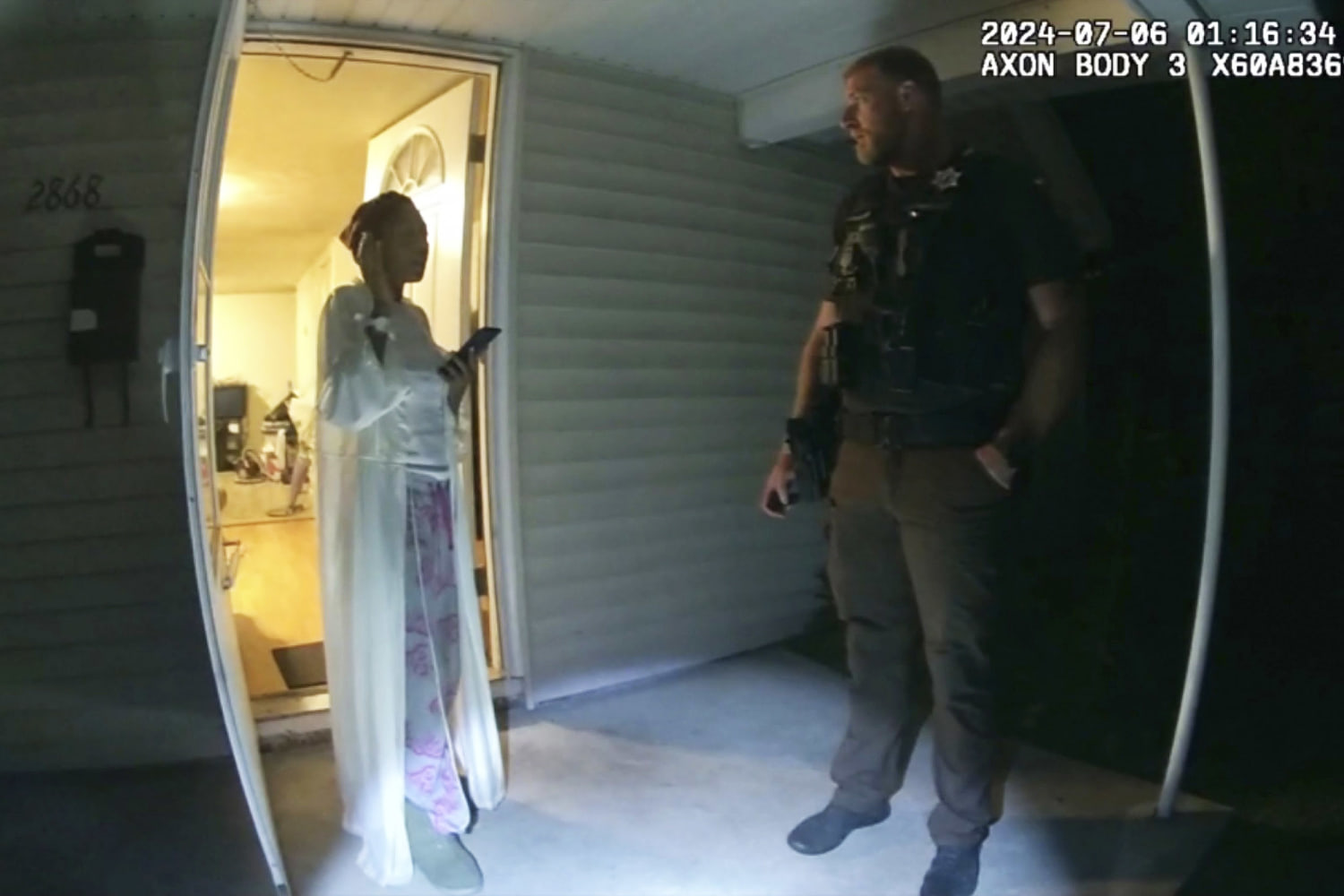
Former Sangamon County Sheriff's deputy Sean Grayson, convicted of second-degree murder for the fatal shooting of Sonya Massey inside her Illinois home, died in prison while serving a 20-year sentence. Grayson, whose July 2024 shooting of the 36-year-old Black mother sparked national fury and structural reform demands, passed away after battling advanced colon cancer. His attorney, Daniel Fultz, confirmed the death, arriving just weeks after the Illinois Prisoner Review Board unanimously rejected Grayson's emergency medical release application. Yet, the quiet closure of an incarcerated life cuts short no broader accountability for the systemic rot that put a badge on Grayson in the first place.
The Anatomy of a Broken Screening Process
To understand how Sean Grayson came to stand in Sonya Massey's kitchen with a drawn weapon, one must look past the grim optics of a single body-camera clip and examine the hiring pipelines of rural and suburban law enforcement agencies. Before he fired the fatal shots that ended Massey's life—moments after she complied with commands, apologized, and ducked to the floor—Grayson had drifted through multiple police departments in a remarkably short span.
This migratory cop phenomenon is an open secret inside law enforcement circles. When an officer exhibits red flags, erratic behavior, or disciplinary failures at one agency, resignation often precedes termination. They slip cleanly across county lines into a new uniform, leaving behind unredacted paper trails that standard background checks routinely fail to synthesize.
Grayson's employment history before joining Sangamon County featured precisely these kinds of lateral moves. Departments desperate for warm bodies plug holes in their roster without probing deep into why an applicant left their previous post. The administrative friction required to properly vet candidates gets overridden by the immediate operational need for patrol units. When accountability is treated as an optional administrative burden, communities absorb the ultimate cost.
The Myth of Instant Justice and the Legal Aftermath
When a jury convicted Grayson of second-degree murder, resulting in a 20-year prison sentence, public discourse framed the verdict as a definitive closing chapter. Legal analysts pointed to the swift firing, the rare indictment for murder, and the subsequent conviction as proof that the system corrects its own errors.
That perspective ignores the grueling, uphill battle required to secure even a baseline measure of accountability. Without the unvarnished public release of the body-camera footage, the institutional instinct to protect the shield would have likely buried the reality of the encounter. The initial narrative pushed by standard police reporting mechanisms often attempts to sanitize lethal use of force before independent evidence emerges to dismantle it.
Furthermore, the legal victory secured by civil attorneys Ben Crump and Antonio Romanucci—including a substantial civil settlement from Sangamon County—cannot resurrect a mother of two. Financial payouts funded by taxpayers do not alter the internal culture of departments where de-escalation training remains secondary to compliance-by-force doctrines.
When Medical Appeals Meet Institutional Resistance
The final weeks of Grayson's life were defined by a legal battle over his mortality. Diagnosed with stage 3 colon cancer that progressed during his incarceration, his defense team pushed for an early medical release to home confinement.
The Illinois Prisoner Review Board faced a stark moral and procedural test. In opposing the release, prosecutors rightly pointed out that Grayson's medical condition was known and factored into his initial sentencing equation. To grant early freedom months into a 20-year term would have inverted the scales of justice, placing the physical deterioration of the perpetrator above the permanent absence of the victim. The unanimous rejection signaled that prison walls must hold accountability steady, regardless of a prisoner's failing health.
Even so, death in a cell halts the ongoing psychological reckoning that a full decades-long sentence represents. It offers no fresh revelations about why Grayson failed to render immediate medical aid to Massey as she bled out on her kitchen floor, details prosecutors emphasized during trial to demonstrate a profound depravity of duty.
The Structural Vacuum That Remains
The death of a single convicted felon closes a legal docket, but it leaves the larger apparatus untouched. Police departments across the nation continue to recruit from shallow talent pools while resisting independent civilian oversight boards with teeth.
True reform requires structural changes that go far beyond firing bad actors after tragedy strikes. It demands national registries that track officer resignations under internal investigation, mandatory psychological evaluations tied to continued service rather than initial hiring, and a cultural shift away from treating domestic emergency calls as tactical combat zones.
Sonya Massey called 911 seeking protection from a potential prowler. Instead, she encountered a system structurally incapable of safeguarding her life. As the headlines fade from Grayson's final days, the institutions that weaponized him against the public remain open for business.
Officer who shot Sonya Massey denied medical release from prison
This video report provides additional context regarding the legal proceedings surrounding Sean Grayson's prison sentence and his subsequent efforts to secure an early medical release prior to his death.
http://googleusercontent.com/youtube_content/1