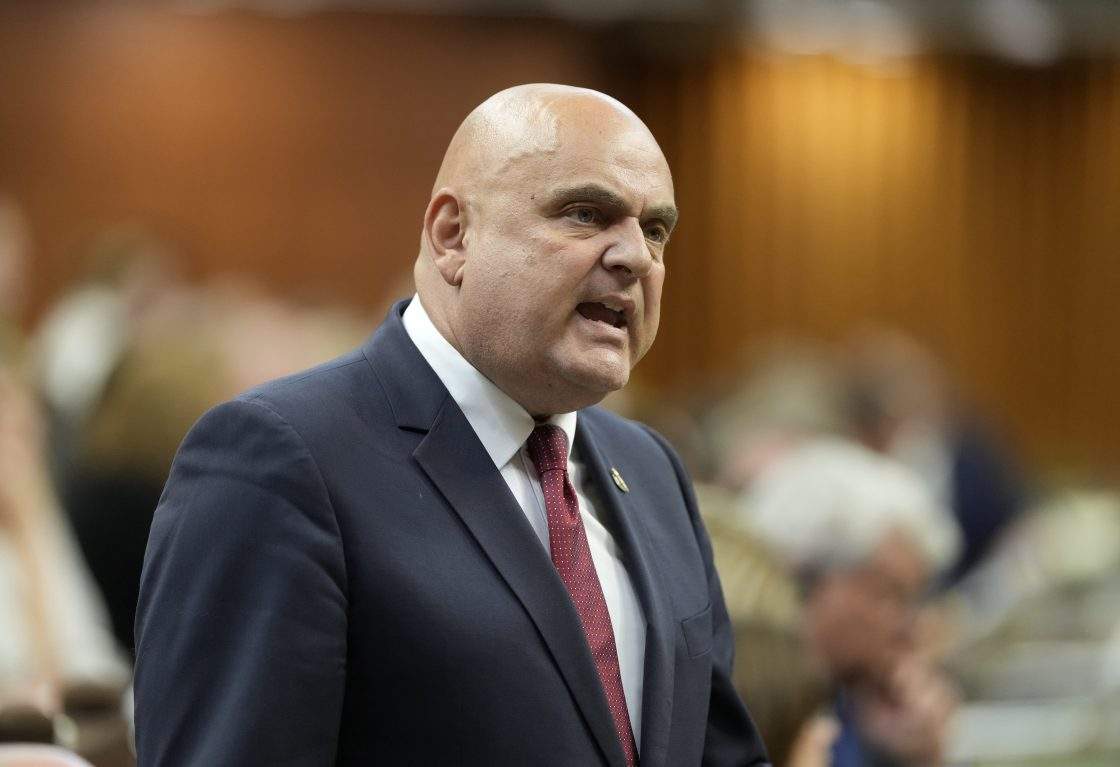
The departure of Larry Brock from the House of Commons was handled with the usual Ottawa choreography: a polite statement about returning to the courtroom, a nod to public service, and a quick pivot toward the next electoral battleground. For five years, Brock represented Brantford—Brant South—Six Nations, serving as a reliable foot soldier and a former shadow minister of justice. Yet his exit on September 18, 2026, is more than just a procedural footnote or the precursor to a local byelection. It marks a symptom of a deeper, quieter attrition testing the structural integrity of Pierre Poilievre's official opposition.
When an MP walks away from a safe or hard-fought seat to go back to prosecuting cases, political analysts tend to take the stated reasons at face value. Burnout is real. The relentless travel between constituency offices and Ottawa wears down marriage and mental health alike. But treating every resignation as an isolated personal choice misses the broader mechanical failure of modern party politics. Caucus management under high-stakes polarization has turned the life of a backbench or mid-tier opposition MP into an exercise of strict ideological compliance coupled with minimal individual agency. If you found value in this article, you might want to read: this related article.
Consider the mathematics of the situation. Brock's departure forms part of a notable string of vacancies and departures from the Conservative benches. When multiple members choose to exit mid-term—some via floor crossings to the governing Liberals, others through appointments or outright returns to private life—it exposes the friction points inside a tightly controlled central party apparatus. Opposition parties are built to project monolithic unity against the government, but that uniformity often leaves little room for regional nuance, independent policy debate, or personal divergence.
The immediate consequence of Brock stepping down is administrative rather than ideological. Under the rules governing the Canadian parliament, a vacant seat triggers a mandatory byelection process. Local riding associations in Brantford must instantly pivot from routine constituency casework to full campaign footing. For voters in the region, the abrupt transition means months of diminished representation in the federal legislature while national parties parachute in strategists, signs, and high-profile leadership rallies to test their electoral momentum ahead of the wider national cycle. For another look on this event, see the recent update from NBC News.
Yet the wider story remains the steady drain of experienced legal and administrative talent from the parliamentary ranks. Prosecutors, municipal leaders, and seasoned professionals who enter federal politics often discover that the legislative chamber functions less as a place of deliberative lawmaking and more as a permanent campaign studio. When the reward for legislative diligence is adherence to rigid talking points, the pull of a predictable career back on the front lines of the justice system becomes entirely rational.
The byelection in Brantford will eventually settle who occupies the red leather chair next. But the steady drip of departures from the opposition benches points to a structural fatigue that no amount of campaign messaging can easily patch over.