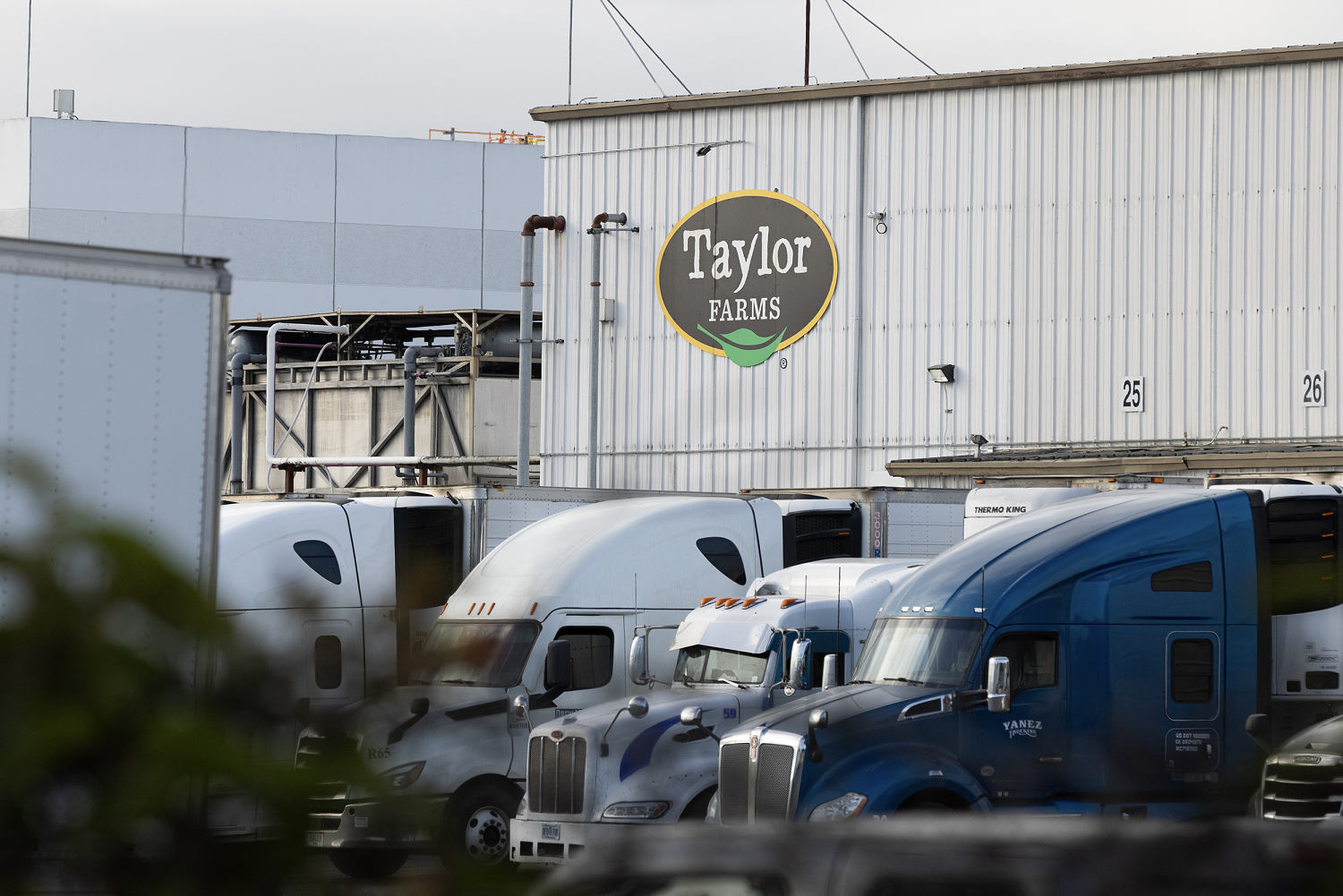
A regulatory testing error briefly derailed the investigation into one of the largest foodborne parasite outbreaks of the decade. Federal health officials retracted a high-stakes finding against agricultural giant Taylor Farms, admitting that a sample of shredded iceberg lettuce initially flagged for Cyclospora cayetanensis contamination was a false positive.
The retraction came less than twenty-four hours after federal regulators announced the positive hit. By then, the commercial damage was already cascading through major supply chains. Fast-food chains pulled raw greens from prep stations across multiple states, retail giants pulled bagged salads from supermarket shelves, and agricultural operators faced massive write-offs.
This quick turnaround highlights a growing friction point between public health urgency and lab accuracy. When thousands of consumers across dozens of states fall ill with persistent gastrointestinal infections, regulators feel intense pressure to point to a source. But when regulatory labs rush out preliminary genetic amplification results without secondary confirmation, the economic and operational fallout can be massive.
The Anomaly in the Polymerase Chain Reaction
Identifying Cyclospora cayetanensis in produce is notoriously difficult. Unlike common bacterial pathogens like E. coli or Salmonella, which can be cultured and grown in large quantities inside a petri dish, Cyclospora is a microscopic single-celled parasite that refuses to multiply outside a human host. Laboratories must rely on specialized extraction methods and Real-Time Polymerase Chain Reaction (qPCR) assays to detect tiny fragments of parasitic DNA clinging to complex plant tissue.
The process involves washing large volumes of leafy greens, centrifuging the runoff to concentrate microscopic debris, extracting genetic material, and running amplification cycles to see if specific target sequences replicate.
That amplification process creates blind spots. Plant material contains complex compounds, cellular debris, and non-target micro-organisms that interfere with chemical reactions. In high-cycle PCR protocols designed to catch trace contamination, false amplification signals can occur. A signal can look like target DNA replicating, when in reality it is background noise or non-specific binding of primers.
Regulatory lab experts re-examined the raw cycle-threshold charts from the initial Taylor Farms sample and realized the curve did not represent true biological amplification. The sample was negative.
The retraction left the agency with zero confirmed positive product tests in hand, even as thousands of people suffered from severe, weeks-long gastrointestinal illness tied to contaminated food.
Supply Chain Realities and the Cost of Precautionary Recalls
Even though the specific sample was cleared, the structural machinery of the produce industry prevents an immediate reset. Long before the federal retraction, supply chain managers had already begun cutting off regional shipments.
Produce processing works on razor-thin margins and ultra-tight timelines. Iceberg lettuce harvested in Mexico or California is washed, shredded, bagged, and shipped in temperature-controlled trucks within forty-eight hours. By the time a consumer reports symptoms, sees a physician, submits a stool sample, and has that sample typed by a laboratory, two to four weeks have usually passed. The original batch of lettuce is long gone from store shelves.
When federal investigators use traceback methodologies to track down common distribution nodes, they look for where sick patients ate. Epidemiological mapping pointed directly to shredded lettuce distributed to regional fast-food outlets.
The moment a major regulatory agency announces a positive sample link, food service corporations execute immediate kill-switches. Taco Bell locations across five states dumped their inventories. Regional distributors cancelled orders. Major supermarket chains pulled retail salad kits from hundreds of locations out of caution.
Once a recall machinery turns, it does not easily reverse. Farmers in growing regions like Guanajuato, Mexico, face fields of ready-to-harvest crops that suddenly have no market. Cold-storage warehouses empty their inventory into landfills. The financial loss runs into tens of millions of dollars within days, and insurance coverage for voluntary precautionary actions remains a legal grey area.
Taylor Farms chose to maintain its voluntary withdrawal of iceberg lettuce grown in central Mexico despite the retraction. Epidemiological data from sick patients still pointed toward that supply chain corridor, even if molecular testing had not yet caught a live organism in the act.
The Broken Link Between Clinical Tracking and Outbreak Response
The false positive controversy exposed a deeper gap in public health oversight. State health departments and federal agencies have drifted out of sync, creating a confusing environment for food processors and consumers.
State health departments reported thousands of confirmed illnesses associated with this summer Cyclospora wave. Meanwhile, federal tracking tallies lagged far behind, reflecting a mismatch in how data is collected, processed, and verified across state lines.
This disparity stems partly from policy changes that shifted how federal agencies track common foodborne pathogens. When national surveillance systems face resource constraints or operational shifts, state public health laboratories are left to shoulder the load independently.
Michigan health officials identified over five thousand cases within their borders alone during the summer peak. Yet federal dashboards listed only a fraction of those cases nationally due to verification bottlenecks.
When state agencies see local case counts explode, they press federal regulators for swift action. Federal regulators, eager to show they are actively policing the food supply, face intense pressure to publish testing updates immediately. That pressure increases the risk of premature announcements based on preliminary laboratory findings that have not undergone rigorous multi-person peer review.
The Parasite Problem in Global Agriculture
Cyclospora cayetanensis presents unique regulatory challenges compared to bacterial pathogens.
+------------------+----------------------------------+----------------------------------+
| Trait            | Bacterial Pathogens (E. coli)    | Parasitic Pathogen (Cyclospora)  |
+------------------+----------------------------------+----------------------------------+
| Cultivability    | Grows easily on lab media        | Cannot be cultured in a lab      |
| Sanitization     | Vulnerable to chlorine/wash solution| Highly resistant to chlorine  |
| Contamination    | Animal feces/run-off             | Human fecal-oral route           |
| Detection Window | Quick growth enables fast typing | Complex PCR extraction required  |
+------------------+----------------------------------+----------------------------------+
Because Cyclospora is spread through human fecal contamination, its presence in fresh greens points to root issues in field sanitation, water quality, or worker facilities in growing regions.
Standard post-harvest sanitizing treatments, including chlorinated water washes that neutralize most bacterial threats, do not destroy Cyclospora oocysts. Once the parasite attaches to the hydrophobic, crinkled surface of an iceberg lettuce leaf, washing does little to dislodge or kill it.
This resistance makes physical prevention at the farm level the only real defense. It also means that testing finished, packaged products is an inefficient way to catch contaminated batches. Finding a microscopic parasite oocyst in a multi-ton lot of processed lettuce is like hunting for a single specific grain of sand on a vast beach.
Testing relies heavily on statistical probability. Regulators sample a tiny fraction of one percent of the produce moving through the supply chain. If an assay produces a false positive during that tiny sample, it throws the entire regulatory apparatus off course while leaving the true source of contamination undiscovered in the market.
Rethinking Regulatory Protocols in High-Risk Outbreaks
The incident highlights a clear need to reform how regulatory agencies handle preliminary laboratory findings during active consumer health crises.
Announcing tentative, unconfirmed lab results on public dashboards creates market whiplash without improving public safety. The FDA correctly retracted the erroneous result, but the quick sequence of positive-then-false-positive announcements undermines public trust in regulatory science.
Food safety protocols require a two-tier verification structure for parasite detection before public release.
- First, secondary laboratory verification by an independent facility should be mandatory before named product warnings are published.
- Second, agencies must establish transparent threshold standards for PCR cycle counts to prevent ambiguous amplification curves from being categorized as active contamination.
- Third, regulatory communications need to clearly distinguish between epidemiological associations (where sick people ate) and direct microbiological proof (finding the pathogen in a specific bag of food).
Blending those two distinct streams of evidence creates consumer confusion and leaves food producers fighting public relations fires while the actual vector of infection continues to move through alternative distribution channels.
Federal laboratories are now re-evaluating their testing protocols for complex parasitic matrices. But for the agriculture sector, the lesson is clear: when regulatory science rushes to meet public demand for answers, the first victim is often the accuracy of the science itself.