Pete Buttigieg spent the 2026 midterm cycle making a calculated political wager: he passed on running for Michigan’s open U.S. Senate seat—a safe, traditional springboard to national office—and instead logged thousands of miles campaigning for down-ballot Democrats across seven battleground states. By trading a guaranteed Senate campaign for an exhausting surrogate tour, the former Transportation Secretary bet that collecting political IOUs from state lawmakers, congressional freshmen, and local party chairs would outweigh the institutional prestige of holding a Senate gavel when the 2028 Democratic presidential primary begins in earnest.
It was a high-wire act without a safety net. Now that the dust from the November 2026 blue wave has begun to settle, the early returns on Buttigieg’s strategy reveal both the brilliance of his ground game and the glaring vulnerabilities he still cannot outrun.
The Anatomy of the Michigan Pass
When longtime Democratic Senator Gary Peters announced his retirement ahead of the 2026 cycle, Washington operatives immediately penciled in Pete Buttigieg as the presumptive frontrunner. Having relocated to Traverse City in 2022, Buttigieg possessed unmatched name recognition, an email list that could print money overnight, and the backing of an administration that had funneled billions of infrastructure dollars into the Rust Belt. A Senate seat offered everything a presidential hopeful usually covets: six years of job security, a built-in media platform on Capitol Hill, and the ability to cast high-profile votes against the Trump administration.
Buttigieg said no.
To understand why, you have to look at the structural trap of the modern Senate. Running in Michigan meant spending eighteen months locked in a brutal, expensive statewide campaign—potentially against fellow heavyweight Democrats or a well-funded Republican machine—only to arrive in Washington in January 2027 as the 100th-most-senior member of an upper chamber that moves at a glacial pace. Worse, a Senate run would have forced him to spend every waking hour raising money for himself rather than building coalitions outside the Great Lakes.
By declining the race, Buttigieg freed himself from the mechanical grind of candidate fundraising and candidate survival. He became a free agent. In late October 2026, he told a Michigan podcast that he chose to dedicate himself to helping other candidates win rather than seeking office himself. That framing was pure political gold, painting him as a selfless party builder while simultaneously allowing him to test-drive his 2028 stump speech in front of friendly crowds from Detroit to Atlanta.
Collecting IOUs Across the Map
During the final sprint of the 2026 election, Buttigieg’s itinerary read like a primary shadow calendar. He hit Mississippi, Michigan, Colorado, Georgia, Florida, Minnesota, and Wisconsin, wrapping up the tour with a massive rally in Detroit. Watch the stops closely and a clear geographic strategy emerges.
- The Blue Wall Core: In Michigan, Wisconsin, and Minnesota, he campaigned alongside figures like gubernatorial nominee Amy Klobuchar and Senate nominee Peggy Flanagan, reinforcing his Midwest credentials with union halls and suburban swing voters.
- The Sun Belt Battlegrounds: In Georgia and Florida, he targeted high-turnout metropolitan hubs and tested economic messaging designed to win back working-class voters who had drifted toward Donald Trump.
- The Deep South Signal: Even a stop in Mississippi served a distinct purpose—demonstrating a willingness to show up in deep-red territory where national Democrats rarely bother to set foot, a visual contrast aimed squarely at Black primary voters who hold decisive sway in early nominating states like South Carolina.
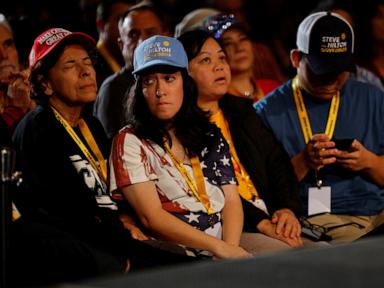
Every stop produced local television hits, earned media in regional newspapers, and quiet backroom meetings with county chairs. In Sterling Heights, Michigan, he stumped for congressional candidate Christina Hines, hammering themes around medical bankruptcy and working-poor economic conditions. When Democrats swept to a massive midterm victory in November, dozens of newly elected House members, state legislators, and governors owed a small slice of their margin to the guy who showed up when the polls were tight.
Just two weeks after Election Day, the first dividend paid out. A supporter-led political action committee, Team Pete PAC, officially launched to draft and back Buttigieg for a 2028 presidential run. The roster of initial endorsers who stepped forward to speak to the press told the real story of his network: Virginia Representative Don Beyer, Florida House Minority Leader Christine Hunschofsky, former Dayton Mayor Nan Whaley, and his former policy advisor Portia Allen-Kyle. That is not a collection of Washington insiders; it is a geographically dispersed rapid-response team spanning the Mid-Atlantic, the South, and the industrial Midwest.
The Unemployed Politician Problem
For all the tactical upside of his midterm barnstorming, Buttigieg faces a historical hurdle that has tripped up many promising contenders before him. As of January 2025, he has held no public office. By the time the first presidential primary debates kick off in June 2027—part of a newly expanded twelve-debate schedule announced by the Democratic National Committee—Buttigieg will have been a private citizen for nearly two and a half years.
History is unkind to candidates who try to run for the White House without an active institutional perch. Without a governor’s mansion, a Senate seat, or a cabinet post, a candidate has no natural news hook. You do not sign bills. You do not grill administration nominees during televised committee hearings. You do not command the state National Guard during a crisis. Instead, you are reduced to giving speeches at summits in Denver, appearing on cable news panels, and launching podcasts.
Consider the contrast he will face on the debate stage in 2027. If Georgia Senator Jon Ossoff runs, he enters the race fresh off high-profile Senate clashes and a bruising statewide battle. If Michigan Senator Elissa Slotkin decides to jump in—a move she is reportedly weighing seriously—she will claim the exact home-state turf Buttigieg moved to Traverse City to cultivate, backed by current Senate relevance. Governors like Gavin Newsom, Gretchen Whitmer, or Josh Shapiro carry executive records that can be pointed to on a map. Buttigieg, meanwhile, will have to rely on his sharpest weapon—his elite communication skills and omnipresence across conservative and mainstream media—just to stay in the daily political bloodstream.
The Cabinet Baggage That Won't Stay Packed
There is also the unavoidable problem of his actual resume. From 2021 to 2025, Buttigieg was the public face of American transportation. While he spent four years cutting ribbons on Bipartisan Infrastructure Law projects, he also absorbed the political shrapnel of every supply chain bottleneck, airline meltdown, and rail disaster that occurred on Joe Biden’s watch.
Even though Republicans took control of the executive branch in 2025, every time an air traffic control ground stop makes national news or an airport descends into holiday chaos, partisan critics immediately pivot back to Buttigieg’s tenure at the Department of Transportation. In a Democratic primary, his rivals will not hesitate to exploit that vulnerability. Primary voters are notoriously pragmatic; they want a nominee who is bulletproof against general election attack ads. Opponents will argue—fairly or not—that nominating Buttigieg hands the GOP four years of ready-made television commercials blaming him for every delayed flight and pothole in America.
Buttigieg has never been one to duck a tough question, and his defenders point out that he routinely goes onto hostile networks like Fox News to dismantle conservative talking points in real time. Still, playing defense on a four-year-old administrative record is never where a frontrunner wants to spend precious primary oxygen.
A Party Pulling Left While He Plays the Center
Perhaps the biggest threat to Buttigieg’s 2028 math has nothing to do with his midterm strategy and everything to do with the shifting ideological mood of the Democratic electorate. The 2026 midterms delivered a massive repudiation of Donald Trump, energized largely by grassroots anger over tariffs, healthcare costs, and billionaire tax breaks.
Yet early post-midterm polling reveals a telling split inside the Democratic base. While a Reuters/Ipsos survey showed 29 percent of respondents viewing both Buttigieg and Jon Ossoff as strong presidential contenders, an Emerson College poll placed Ossoff at 17 percent and progressive firebrand Alexandria Ocasio-Cortez right behind him at 12 percent, with rank-and-file voters expressing a clear appetite for a younger, more aggressively progressive standard-bearer. Progressive organizers are already mobilizing on Zoom calls to draft Ocasio-Cortez into the race.
Buttigieg’s brand has always been calibrated for institutional reform and pragmatic moderation—the guy who talks about fixing tax fairness and curbing corporate abuses without calling for a systemic revolution. That pitch played remarkably well in the 2020 Iowa caucuses, where he narrowly edged out Bernie Sanders. Eight years later, the party’s center of gravity has shifted. The activists who powered the 2026 blue wave are looking for street fighters, not technocrats. Furthermore, Buttigieg has never fully resolved the skepticism he faced from Black voters during his 2020 run—a demographic firewall that remains the single most decisive factor in winning the Democratic nomination.
The Road Through South Carolina
That reality explains why the post-midterm calendar is already shifting south. Before the 2026 ballots were even finished being counted, political insiders were eyeing January’s King Day at the Dome march in Columbia, South Carolina—the traditional proving ground where prospective presidential candidates lock arms and audition for the party’s most loyal voting bloc.
Buttigieg’s 2026 midterm bet bought him two vital assets: goodwill among the party’s newly elected class and a proven ability to draw crowds in states Democrats desperately need to win back. It cleared the deck so he could enter the 2028 sweepstakes unburdened by a fresh Senate campaign and backed by an organized PAC infrastructure ready to scale.
What it could not buy him is insulation from the coming storm. When the twelve DNC debates begin next summer, surrogacy tours and media clips will no longer be enough. Buttigieg will have to prove that a former cabinet secretary without a current title can command a restless, populist-leaning base—and convince skeptical voters in places like Columbia and Detroit that the man who spent 2026 helping everyone else win is the only one who can close the deal for himself.
Watch Buttigieg Fires Up Democrats Ahead Of The 2026 Midterms to see how he framed his economic and anti-Trump message on the campaign trail ahead of the November elections.