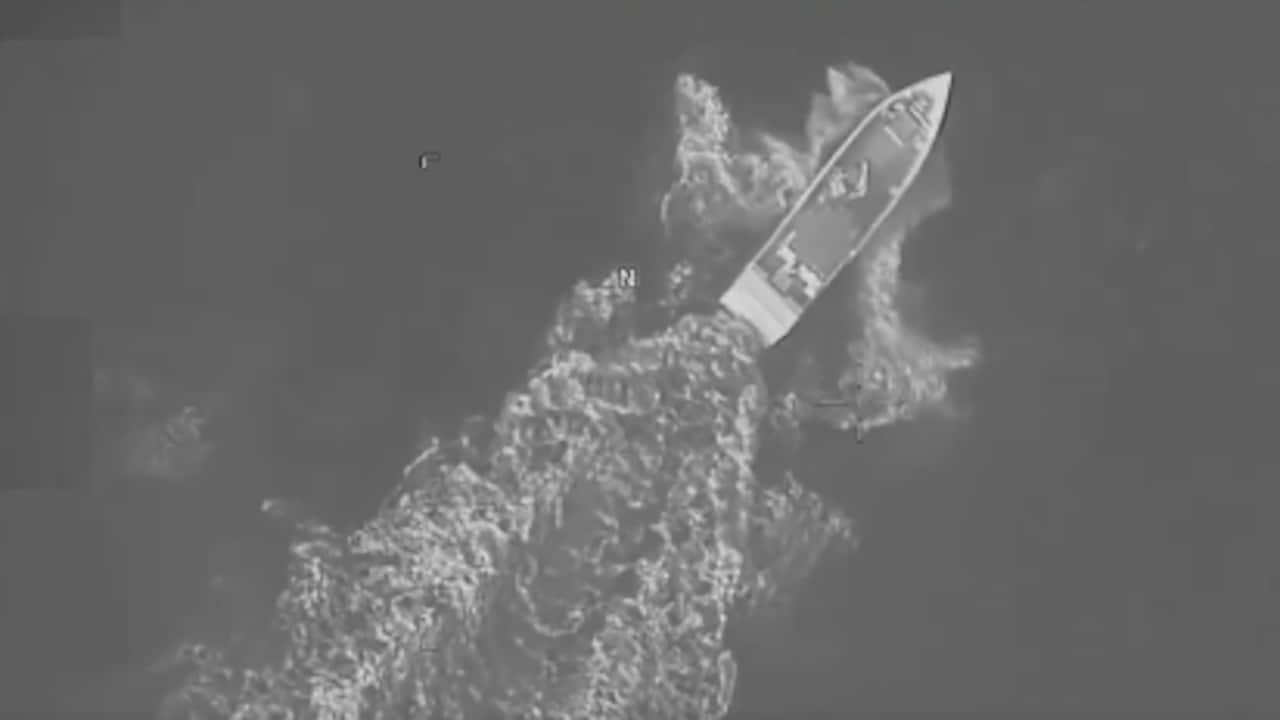
The United States military incinerated a low-profile vessel in the Caribbean Sea, ending four lives and pushing the cumulative death toll of an unacknowledged maritime campaign past 220 fatalities. United States Southern Command released a brief, silent clip on social media showcasing a moving vessel meeting a sudden flash of kinetic energy. There was no public trial, no presentation of confiscated contraband, and no independent verification that the occupants were actively trafficking narcotics. This kinetic operation represents a broader normalization of summary executions carried out by missiles rather than law enforcement boarding parties, redrawing the boundaries of modern military power in Latin American waters.
For nearly a year, the White House has maintained an aggressive posture against maritime targets, classifying criminal smuggling syndicates as militarized combatants. By labeling suspected drug runners as narcoterrorists, the administration bypasses traditional Coast Guard interdiction protocols. Standard counter-narcotics procedures rely on pursuit, boarding, search, seizure, and judicial prosecution in federal courts. These kinetic strikes bypass the courtroom entirely. A missile replaces the magistrate.
The Geography of Disconnect
Geography remains an inconvenient truth for the architects of this offshore campaign. Decades of federal drug enforcement data indicate that the vast majority of cocaine entering North American borders arrives via maritime corridors in the Eastern Pacific or overland routes through Central America and Mexico. More critically, the synthetic opioid crisis driven by fentanyl relies primarily on precursor chemicals imported from overseas and manufactured in continental labs, moving across the southwest land border rather than through Caribbean speedboats.
Yet the strikes persist with relentless momentum in the Caribbean and Pacific. Military analysts point to a fundamental mismatch between the chosen instrument of violence and the actual logistics of transnational cartels. Speedboats operating along coastal waters often function as tactical pawns rather than strategic centerpieces. Sinking a fiberglass hull with a multi-million-dollar precision weapon inflicts negligible structural damage on cartels boasting bottomless financial reserves and redundant distribution networks.
Military officials defend the strategy through the lens of systemic disruption. General Francis Donovan, commanding officer of Southern Command, has spoken of imposing total friction on regional networks to shatter cartel leadership. Yet translating tactical missile strikes into strategic supply reduction requires a causal chain that remains stubbornly unproven. When independent oversight bodies attempt to audit these missions, they run into institutional walls. The Pentagon inspector general announced an evaluation focusing narrowly on whether planners adhered to the internal six-phase Joint Targeting Cycle, explicitly excluding questions of broader international legality from the review.
Legal Grey Zones and Expanding Horizons
International legal scholars watch these developments with mounting alarm. Under traditional laws of armed conflict, military force is restricted to recognized nation-states or organized armed groups meeting strict criteria of protracted armed conflict. Transnational criminal organizations, while ruthlessly violent, occupy an ambiguous category. Applying battlefield rules of engagement to civilian policing operations creates a dangerous precedent.
Furthermore, the operational history of this campaign features disturbing tactical choices. Investigative reporting and congressional inquiries previously exposed instances where initial missile strikes left survivors clinging to debris, only for subsequent munitions to destroy the wreckage. While administration defenders insisted those follow-up actions fell under self-defense parameters, military legal specialists argued that killing defenseless survivors violates core tenets of humanitarian law regardless of the operational theater.
The ambition driving these maritime attacks is now bleeding onto dry land. Defense Secretary Pete Hegseth recently toured regional capitals attempting to secure bilateral agreements for joint land operations against criminal infrastructure inside sovereign Latin American states. While Washington claims partnership consent, regional governments frequently find themselves caught between domestic political fallout and intense pressure from the northern superpower. Guatemala publicly disputed claims of a finalized agreement shortly after announcements were made, highlighting the diplomatic friction generated by unilateral security projections.
The video clips released by Southern Command offer a sanitized view of state-sanctioned violence. A silent white flash on a dark screen replaces complex geopolitical realities. Each iteration of this cycle deepens the militarization of foreign policy while leaving domestic drug consumption and transnational supply chains fundamentally unaltered. The missiles will keep flying as long as political incentives favor visible retaliation over systemic solutions, leaving accountability stranded far out at sea.