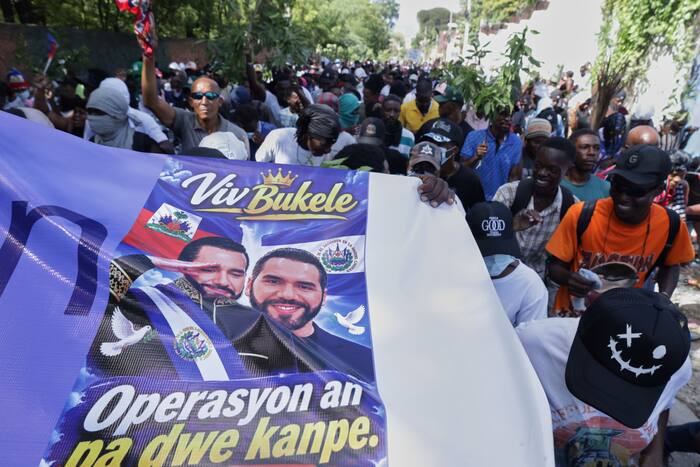
El Salvador’s president, Nayib Bukele, has officially confirmed and celebrated a targeted military-style strike against the compound of a major Haitian gang leader, marking an extraordinary escalation in hemispheric security policy. By taking credit for an operation miles beyond Central America’s borders, Bukele has effectively declared that his administration’s uncompromising war on organized crime is no longer a domestic experiment, but an exportable doctrine. For observers who have tracked security shifts across Latin America and the Caribbean over the last three decades, this announcement represents a seismic break from traditional diplomatic restraint.
The strike hits at the heart of Haiti’s ongoing collapse. Port-au-Prince has spent years under the suffocating grip of armed coalitions like Viv Ansanm, led by figures such as Jimmy "Barbecue" Chérizier and other entrenched warlords who control ports, fuel terminals, and vital transit arteries. While international bodies debated mandates and delayed funding for multinational policing missions, Bukele’s public confirmation signals that San Salvador is willing to act unilaterally or through covert regional partnerships to decapitate gang leadership directly.
The Mechanics of an Exported Security Doctrine
To understand why El Salvador would project force into the Caribbean, you have to look at the political capital Bukele has built at home. Over the past few years, the Salvadoran government dismantled the MS-13 and Barrio 18 networks through a sustained state of exception, mass incarcerations, and the construction of mega-prisons like CECOT. Murder rates plummeted. Street-level extortion evaporated.
Success breeds ambition. Once the domestic threat was neutralized, the Bukele administration recognized that its brand of iron-fisted security had become its single most valuable geopolitical asset. Leaders across Ecuador, Honduras, and Peru began openly copying Salvadoran tactics, yet none possessed the operational nerve to take the fight across international waters.
Haiti presented a unique vacuum. Since the 2021 assassination of President Jovenel Moïse, the Haitian state has ceased to function in any meaningful capacity across vast swathes of its territory. The Haitian National Police are outgunned, underpaid, and demoralized. The Kenya-led Multinational Security Support mission struggled from day one with logistical bottlenecks, equipment shortages, and restrictive rules of engagement. Into that paralysis stepped an actor with zero patience for bureaucratic consensus.
Why San Salvador Targeted Port-au-Prince
Critics often dismiss Bukele’s foreign policy moves as pure theater designed for social media consumption. That is a dangerous misreading of the man and his apparatus. While the celebratory tone of his confirmation certainly feeds a massive digital following, the operational reality points to calculated strategic motives.
First, there is the issue of regional contagion. Transnational criminal networks do not respect maritime borders. Intelligence analysts have long warned that a failed state in the heart of the Caribbean inevitably becomes a logistics hub for weapons trafficking, narcotics transshipment, and money laundering that feeds gangs back on the Central American mainland. Disrupting a key Haitian commander cuts off a potential supply line before it can re-arm remnants of Central American syndicates.
Second, Bukele is positioning himself as the indispensable strongman of the Western Hemisphere. By demonstrating reach and lethality in a theater where larger powers have hesitated, San Salvador forces Washington, Brussels, and regional blocs to treat El Salvador not as a small, aid-dependent nation, but as an active security broker.
Consider how traditional peacekeeping operates versus what just unfolded in Haiti:
- Traditional Multinational Missions rely on United Nations resolutions, donor conferences, months of vetting, and defensive mandates that prioritize minimizing collateral risk over decisive territorial control.
- The Salvadoran Model relies on centralized executive command, aggressive intelligence gathering, surprise kinetic action, and immediate information dominance to shatter the psychological aura of invincibility that gang leaders cultivate.
The Geopolitical Blowback Nobody Wants to Discuss
Celebrating a strike on a gang leader’s home is easy when the target is universally despised for kidnapping, extortion, and terrorizing civilians. Navigating the legal and diplomatic wreckage afterward is considerably harder.
International law rests on the bedrock principle of state sovereignty. Even when a government is fractured—as Haiti’s transitional council undeniably is—foreign military or paramilitary operations conducted without explicit, transparent bilateral treaties set a volatile precedent. If El Salvador can validate cross-border strikes in the Caribbean under the banner of anti-gang warfare, what stops other regional powers from launching unilateral raids into neighboring territories to settle their own security scores?
There is also the acute risk of retaliation against civilians. Haitian gang coalitions operate on a logic of asymmetric terror. When cornered or humiliated, commanders rarely absorb the blow quietly. Historically, targeted strikes on gang compounds in Port-au-Prince have triggered immediate, indiscriminate reprisals against nearby neighborhoods, hospitals, and humanitarian corridors. Without a permanent ground force capable of holding the territory after the dust settles, a high-profile strike can leave ordinary Haitians more exposed than they were before.
The Myth of the Silver Bullet
Veterans of urban counterinsurgency know a hard truth that gets lost in viral victory laps. Removing a prominent gang figure—or destroying his fortified residence—rarely dismantles the underlying criminal economy.
Haiti’s gangs are not rigid corporate hierarchies where eliminating the CEO causes the company to fold. They are decentralized networks bound together by survival, illicit taxation, and political patronage. When one warlord’s compound is reduced to rubble, three lieutenants immediately start fighting over his turf, his extortion rackets, and his weapons caches. That succession struggle often produces more bloodshed on the streets than the original leadership ever did.
Furthermore, El Salvador’s domestic success relied on total control over its territory, its judiciary, and its prison system. San Salvador could arrest seventy thousand suspects because it controlled the roads, the courts, and the cellblocks. In Haiti, none of those institutions exist at scale. You cannot replicate the Salvadoran model through isolated strikes alone when there is no functioning state apparatus waiting in the wings to govern the cleared ground.
Washington’s Quiet Dilemma
The reaction—or conspicuous silence—from major capitals tells its own story. For years, policymakers in Washington have maintained a complicated relationship with Bukele, oscillating between sharp criticism of his democratic backsliding and grudging acknowledgment of his security results.
A confirmed Salvadoran operation in Haiti puts U.S. officials in an uncomfortable bind. Publicly endorsing unilateral cross-border strikes undermines decades of diplomatic messaging about international rules and multilateral cooperation. Yet publicly condemning an action that weakens the very warlords choking Port-au-Prince looks absurd to voters and regional allies watching Haiti burn on the evening news.
Behind closed doors, security planners in Washington are undoubtedly dissecting the operational details. How were the logistics handled? Did Salvadoran assets stage from a third country, or did they utilize private maritime and aviation contractors? Most importantly, did elements within the Haitian security establishment quietly coordinate the targeting intelligence while letting Bukele take the public credit?
What Happens When Force Becomes the Only Currency
The broader trend here extends far beyond one damaged compound in Haiti. Across the Americas, patience with slow-moving institutional reform has hit rock bottom. Citizens exhausted by daily violence do not care about jurisdictional niceties or diplomatic protocols. They care about results.
Bukele understands this visceral frustration better than any politician alive. By framing the attack as a clean, decisive blow against pure evil, he reinforces a narrative that traditional democracies struggle to counter. Every delayed aid package and every stalled UN committee meeting only makes San Salvador’s direct-action approach look more appealing to desperate populations from Kingston to Quito.
Yet history offers plenty of sobering lessons about outsourced security and cross-border interventions. Tactical victories are intoxicating. They generate dramatic footage, triumphant statements, and immediate surges in approval ratings. Strategic stability, however, requires the unglamorous, grueling work of rebuilding courts, funding local police, and dismantling the economic incentives that drive young men into armed gangs in the first place. Until someone figures out how to rebuild the Haitian state from the ground up, outside strikes will remain nothing more than thunder over an unbroken storm.