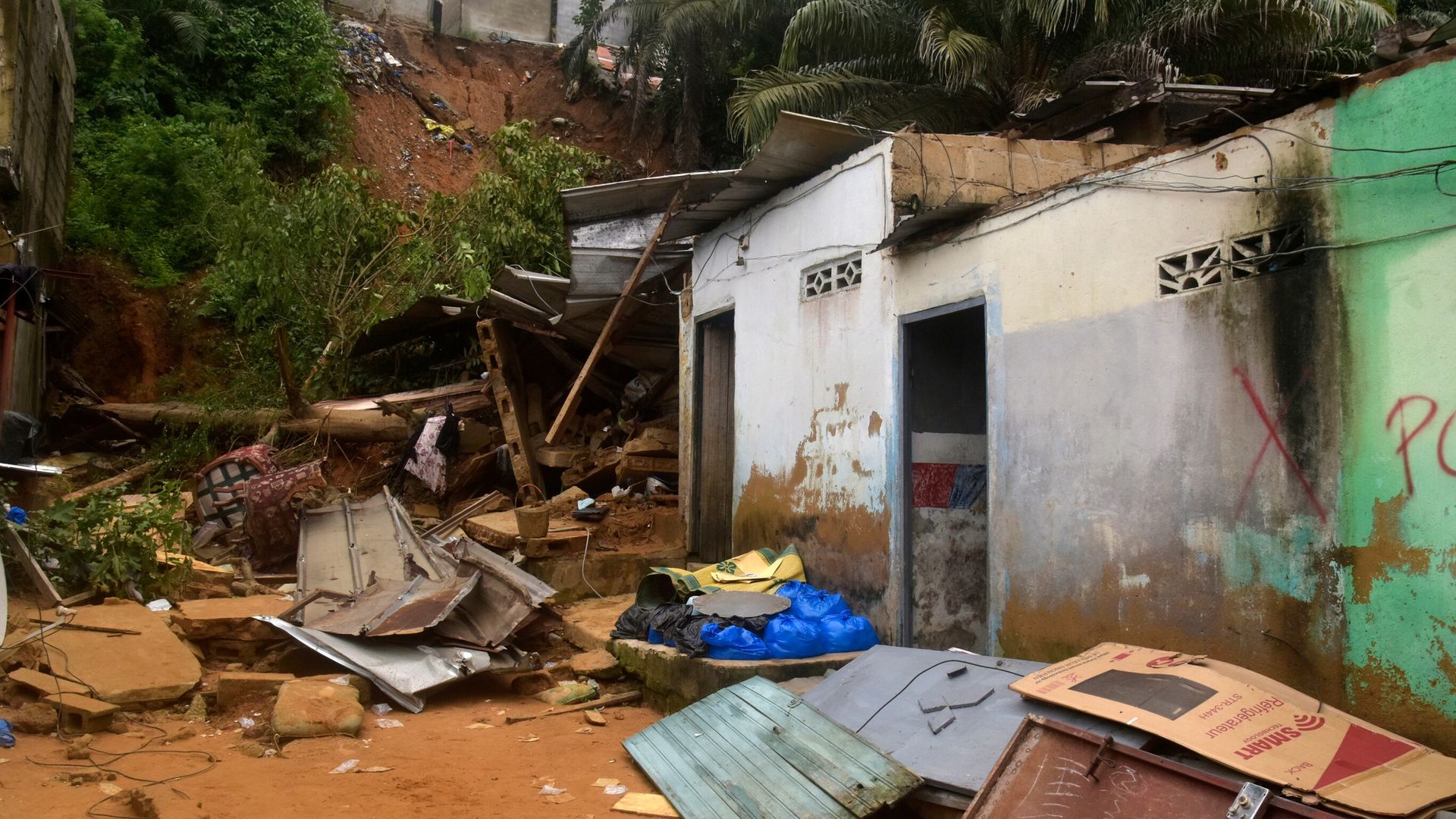
The death toll from the catastrophic floods ravaging Ivory Coast has surged to 59 people following a devastating wave of torrential rain and subsequent landslides. Government spokesperson Amadou Coulibaly confirmed the updated casualties following a council of ministers meeting in the economic capital of Abidjan, where the bulk of the destruction is concentrated. Entire neighborhoods are underwater, and emergency services are stretched past their breaking point attempting to rescue families trapped beneath collapsed structures. While regional meteorologists warn that more rain is on the horizon, the true crisis lies not in the clouds, but in the intersection of climate shifts, rapid urbanization, and a severe housing deficit that leaves millions with nowhere safe to live.
This is not a temporary emergency. It is a structural failure. Every year, the rainy season from May to July brings a familiar sense of dread to West Africa, but the intensity of recent downpours has obliterated previous benchmarks. In a matter of days, Abidjan experienced rainfall roughly four times heavier than the seasonal norm. The national meteorological service, Sodexam, recorded localized deluges where a quarter of the entire season's expected precipitation fell in a single 24-hour window. The ground simply cannot absorb the volume, and the city’s existing drainage systems are utterly incapable of handling the overflow.
The Myth of Natural Disasters
To label what is happening in Abidjan as a natural disaster is an incomplete assessment. The 59 lives lost are the direct result of a predictable urban crisis that has been brewing for decades.
Abidjan is a metropolis of roughly six million people, acting as the economic engine of Ivory Coast. Its rapid growth has vastly outpaced municipal infrastructure development. When hundreds of thousands of people migrate to an economic hub looking for opportunity, they need a place to sleep. Because affordable, formal housing is practically non-existent for working-class families, informal settlements expand across the city's periphery and into its precarious geographical gaps.
Neighborhoods like Yopougon, Attécoubé, and the hillside slum of Mossikro are the primary battlegrounds for this crisis. In Mossikro, nine members of a single household were killed when a rain-weakened hillside gave way, burying their home in mud and concrete rubble. These families are not ignorant of the risks. They live on steep slopes and in low-lying marshlands because the formal real estate market has shut them out completely.
The mechanics of these landslides are straightforward yet lethal.
- Saturated Soil: Prolonged downpours turn dry, clay-heavy hillsides into heavy fluid.
- Structural Vulnerability: Homes built out of substandard concrete blocks or makeshift corrugated iron lack deep foundations.
- Erosion: The clearing of natural vegetation to make room for informal housing removes the root systems that naturally anchor the hillsides.
When these three factors intersect, it takes only an extra inch of rain to trigger a fatal collapse. The government's standard response has historically relied on reactive measures, such as sending the Military Firefighters Group to dig through mud after the fact. By then, the damage is already done.
The Failure of Bulldozer Diplomacy
In response to previous fatal flooding events, the Ivorian government initiated a policy of mass demolitions. The objective was to clear out shantytowns situated along lagoons and flood-prone valleys to protect lives. While logical on paper, this strategy has completely backfired in execution.
Demolishing a vulnerable neighborhood does not make the residents disappear. It merely displaces them into neighboring informal settlements that are equally at risk. Without addressing the underlying demand for low-income housing, demolition drives resemble a grim game of geographic musical chairs. A family forced out of a valley in Cocody often ends up renting a room on a precarious hillside in Attécoubé.
+-----------------------------------------------------------------+
|               The Displacement Loop of Abidjan                  |
+-----------------------------------------------------------------+
|  1. Torrential Rains Cause Fatalities                           |
|  2. Government Mandates Forced Demolition of Informal Slums     |
|  3. Displaced Residents Face Severe Deficit of Affordable Housing|
|  4. Families Relocate to Adjacent At-Risk Hillsides & Valleys    |
|  5. Next Rainy Season Triggers Renewed Collapses                |
+-----------------------------------------------------------------+
Furthermore, the state's infrastructure investments are unevenly distributed. Glitzy commercial districts and affluent residential enclaves receive concrete storm drains, paved roads, and sophisticated runoff retention basins. Conversely, the dense, working-class communes rely on dirt roads that turn into raging rivers during the wet season. When trash accumulates in unmaintained ditches, it creates makeshift dams. When those dams burst under the pressure of a major storm, the resulting flash flood behaves like a structural wall of water sweeping away vehicles and pedestrians alike.
Regional Paralysis and the Military Intervention
The crisis is not contained within Ivorian borders. Neighboring Ghana has faced a parallel catastrophe, with its capital of Accra paralyzed by identical weather systems. In both countries, the emergency response apparatus has been overwhelmed, forcing civilian leaders to deploy the military to assist with search and rescue operations.
In Accra, emergency workers reported residents swimming through neck-deep water to haul neighbors out of submerged concrete buildings. The Ghana National Fire Service faced severe logistical bottlenecks, noting that access to inundated districts like Achimota-Agbogbloshie was entirely blocked by abandoned vehicles and floating debris. This lack of access is a structural design flaw common across West African coastal cities. When neighborhoods lack planned roadways, emergency vehicles cannot physically enter to offer aid or evacuate the injured.
The economic fallout from these compounding disasters will linger long after the floodwaters recede. Small businesses, market stalls, and informal workshops form the backbone of Abidjan's economy. When a neighborhood floods, these enterprises lose their inventory, their tools, and their structural foundations. Because property insurance is a luxury reserved for large corporations, a single severe weather event can wipe out a family's generational savings overnight, forcing them deeper into the cycle of poverty that drove them into vulnerable housing in the first place.
The Real Fix Beyond the Rubble
Fixing this systemic failure requires a complete pivot away from reactionary crisis management toward aggressive urban planning.
First, the Ivorian state must transition from forced evictions to localized infrastructure upgrading. Rather than leveling informal settlements, municipal authorities need to invest heavily in retaining walls, terraced hillsides, and deep, reinforced concrete drainage channels that can handle modern rainfall volumes.
Second, the government must incentivize the construction of high-density, low-cost formal housing options located outside of ecological danger zones. If affordable housing options exist, the economic pressure to build on dangerous hillsides diminishes.
The current death toll of 59 is a stark warning that the old ways of managing urban growth are entirely obsolete. As long as cities like Abidjan rely on reactive emergency responses and superficial slum clearing instead of deep infrastructural equity, the rainy season will continue to function as an annual humanitarian crisis. The solution is entirely dependent on a political willingness to rebuild the city from the underground drains upward.