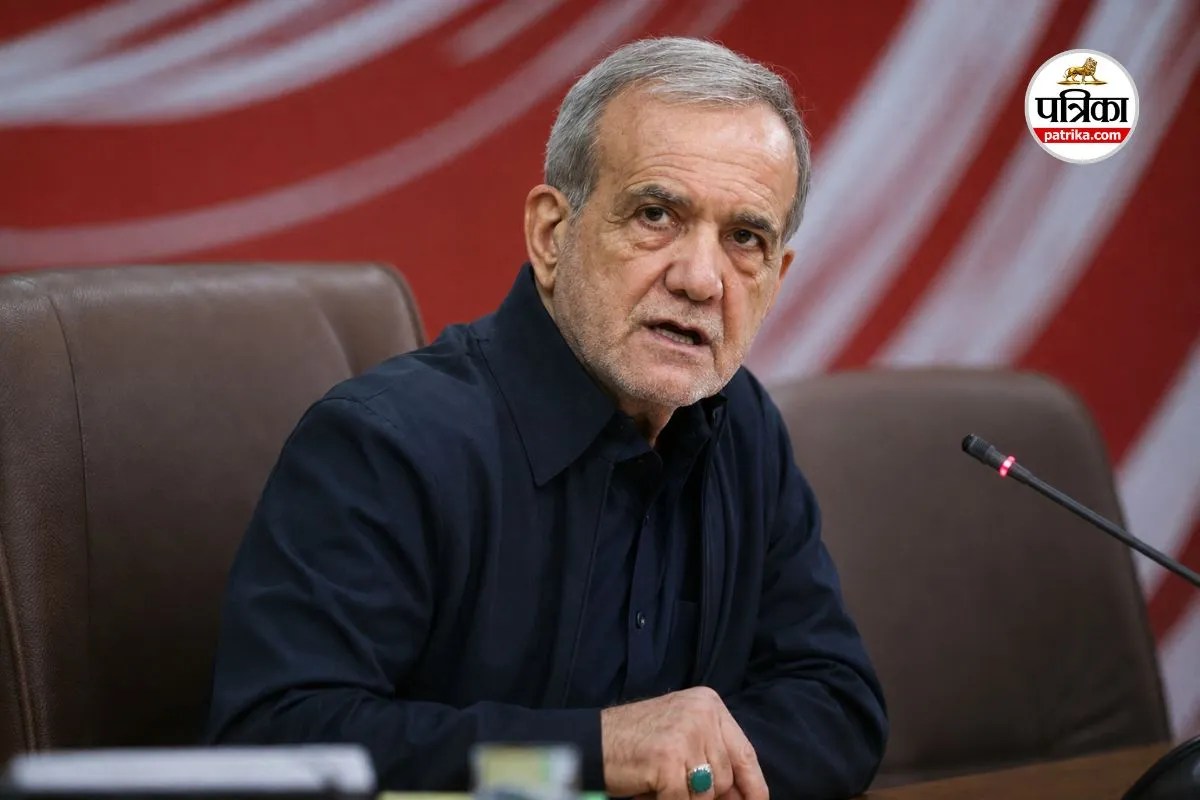
The timing is never accidental in Tehran. When Iranian President Masoud Pezeshkian stepped to the podium to declare that his country had emerged from recent military flare-ups strong, unified, and uniquely positioned for an agreement with Washington, international markets barely flinched. Yet beneath the surface of official press releases and televised soundbites lies a fractured domestic landscape and a high-stakes diplomatic gamble. Pezeshkian insists that the memorandum of understanding signed earlier this year serves as the ultimate cornerstone for future bilateral relations. Critics within his own borders call it a surrender.
To understand the mechanics of this fragile diplomatic opening, one must look past the standard anti-Western rhetoric that continues to emanate from official state organs. Pezeshkian is walking a razor-thin tightrope. He needs economic relief to stave off domestic collapse, but he cannot afford to alienate the hardliners who view any compromise with Washington as an existential betrayal. His recent statements frame diplomacy not as a sign of weakness, but as a calculated pressure tactic that forced the White House back to the negotiating table.
The Anatomy of the Memorandum
The June memorandum of understanding brokered through regional intermediaries was supposed to halt months of maritime conflict in the Strait of Hormuz and set a 60-day window for a comprehensive settlement. Instead, it triggered a furious political storm inside Iran. Hardline factions argue that the text compromises core national sovereignty, specifically regarding maritime transit rights and regional security buffers.
Pezeshkian has pushed back aggressively against these accusations. He has challenged domestic detractors to find a single clause where Tehran conceded its fundamental interests. From his perspective, the agreement successfully forced Washington to abandon total naval containment and acknowledge Iran's regional footprint.
However, enforcement remains an entirely different matter. Trust between Tehran and Washington is virtually non-existent. Iranian officials frequently point to what they characterize as American violations—such as pursuing alternative shipping routes in the Gulf rather than adhering to joint protocols with Oman—as proof that the White House negotiates in bad faith. Conversely, American planners argue that ongoing proxy activities and maritime harassment show Tehran has no intention of honoring long-term stability.
Domestic Friction and the Hardliner Backlash
The internal debate inside Iran is fiercer than at any point since Pezeshkian took office. Rumors of political resignations and severe factional infighting have circulated through diplomatic corridors in Geneva and Doha, though administration insiders forcefully deny them.
Consider a hypothetical scenario to understand this internal friction: imagine a government attempting to negotiate a high-stakes trade treaty while half of its parliament actively sabotages implementation at every turn. That is the reality of the executive branch in Tehran. Pezeshkian relies heavily on the backing of the Supreme National Security Council, framing the memorandum as a product of collective institutional wisdom rather than a unilateral executive whim. By binding the wider state apparatus to the agreement, he attempts to insulate himself from personal fallout if the deal ultimately implodes.
Yet the ideological contradictions are glaring. In the same breath that Pezeshkian advocates for peaceful coexistence and structured dialogue, he reaffirms that the United States remains fundamentally untrustworthy and expansionist. This dual-track messaging is designed for domestic consumption. It reassures the ideological base that the core identity of the Islamic Republic remains untouched, even as the administration pursues pragmatic economic engagement.
The Regional Spillover and Economic Pressures
The economic cost of prolonged isolation is the primary driver behind Tehran's sudden diplomatic urgency. Inflation, currency devaluation, and chronic infrastructure strains have created a volatile public mood. Street-level frustration poses a far greater threat to the ruling establishment than any external military coalition.
Regional neighbors are watching these developments with cautious apprehension. Gulf states that previously bore the brunt of retaliatory missile and drone exchanges are eager to cement any arrangement that guarantees uninterrupted energy flows through the Strait of Hormuz. At the same time, Israeli officials have maintained strong objections to the framework, viewing any diplomatic accommodation as a temporary stopgap that fails to neutralize long-term strategic threats.
Pezeshkian has explicitly accused his domestic critics of unwittingly parroting foreign opposition narratives, arguing that calls to perpetuate open-ended conflict directly serve external interests aimed at keeping Iran economically suffocated.
The path forward depends entirely on reciprocal compliance. Tehran has made it clear that its adherence to the framework is strictly conditional. If Washington bypasses agreed-upon oversight mechanisms or attempts to impose unilateral maritime regulations, Iranian compliance will evaporate overnight.
Diplomacy rarely moves in a straight line, especially when forged in the crucible of decades of mutual hostility. Whether this current window of engagement transforms into lasting stability or collapses into another cycle of escalation depends less on public declarations and more on whether both capitals can tolerate the compromises required to keep the table alive.
US Iran War | Iran President Pezeshkian: “We Will Remain United” Amid Rising Tensions
This segment offers direct insight into Iranian leadership framing its domestic unity and foreign stance amid ongoing diplomatic friction with Washington.