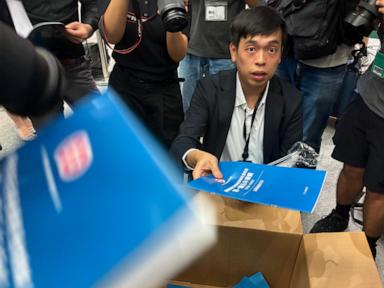
Hong Kong has officially broken with its economic past. On June 15, 2026, the city launched a two-month public consultation for its first-ever Five-Year Plan for Economic and Social Development, spanning 2026 to 2030.
By mimicking the central government's macroeconomic planning cycle, local officials claim they are marrying a capable government with an efficient market. The immediate goal is to align the financial hub with Beijing's 15th Five-Year Plan. However, beneath the official rhetoric of synergy lies a deeper, systemic anxiety.
The city is trying to fix a structural economic stagnation by adopting bureaucratic mechanisms from the mainland, a move that risks alienating the international capital that made Hong Kong valuable to Beijing in the first place.
The Myth of Laissez-Faire Alignment
For decades, the city operated on a doctrine of positive non-interventionism. Markets allocated capital, and the colonial-era bureaucracy managed infrastructure. That era is dead. Financial Secretary Paul Chan and Secretary for Constitutional and Mainland Affairs Janice Tse now argue that the complexity of the modern economy requires a top-down roadmap.
Officials are desperate to prove that adopting a mainland-style blueprint will not choke the free market. They claim the plan provides stability and predictability for corporate planning. Yet, this argument ignores the fundamental nature of the city's economic machinery.
International investors do not look to Hong Kong for state-directed industrial policy. They look for legal predictability, free capital movement, and a regulatory environment distinct from the mainland.
The introduction of a five-year plan threatens to muddy these waters. By introducing a "quasi-constitutional" development blueprint that requires legislative approval and formal filing with the Central People's Government, the territory is locking itself into rigid, multi-year economic targets.
If a policy fails to meet its goals, officials face accountability mechanisms not just locally, but from Beijing. This creates an environment where civil servants are likely to prioritize political compliance over market realities.
The Northern Metropolis Illusion
A centerpiece of the consultation document is the accelerated development of the Northern Metropolis, a massive 30,000-hectare land project near the Shenzhen border. The plan sets specific intermediate benchmarks, including the generation of 70,000 housing units and one million square meters of economic floor space over the next five years.
The state wants to build a massive tech hub powered by a university town to jumpstart local innovation.
It sounds pristine on paper. In reality, it exposes a massive mismatch in economic capabilities.
Shenzhen across the border is a genuine technology powerhouse built over decades by agile, private enterprises like Tencent and DJI, alongside a massive manufacturing ecosystem. Hong Kong has none of that industrial infrastructure.
Trying to manufacture a tech sector via real estate development and administrative decrees rarely works. The city's property developers are adept at building luxury high-rises, not semiconductor labs.
Worse, the local economy remains stubbornly reliant on property and finance. The government’s belief that it can simply command an artificial intelligence revolution to happen by setting aside land is a dangerous miscalculation.
Discredited Consultations and the Execution Gap
The government claims it wants public input until August 14, 2026, to shape this historic document. However, local public consultations have faced severe credibility issues in recent years. The legislative council is devoid of meaningful opposition following extensive electoral overhauls, meaning the approval process is essentially guaranteed to be a rubber-stamp exercise.
The consultation document itself remains light on granular targets and heavy on conceptual slogans. It mentions shoring up the city's position as a global hub for offshore yuan and high-caliber talent, but offers few operational details on how to reverse the ongoing talent drain.
Thousands of mid-level professionals in finance, law, and engineering have left the city over the past few years, replaced primarily by mainland professionals. While this fulfills the goal of integration, it changes the cultural and operational fabric of the city's professional services.
The implementation mechanism also presents an institutional headache. The territory already uses the Chief Executive's annual Policy Address and the Financial Secretary’s annual budget to dictate economic policy.
Layering a rigid five-year plan over these existing tools introduces bureaucratic duplication. Local officials argue these tools will complement each other, with the five-year plan dictating macro goals and the Policy Address serving as an annual task list.
But what happens when global economic conditions shift rapidly, as they did during recent interest rate cycles? A system bound by a five-year ideological framework cannot pivot quickly enough to protect a volatile, open economy.
The Ultimate Paradox
The central paradox of the 2026–2030 development plan is that the closer Hong Kong aligns its governance model with Beijing, the less unique it becomes. Beijing needs Hong Kong because it is a portal to global capital that operates under a familiar common law framework and free-market rules.
If the territory absorbs the administrative habits, planning structures, and political accountability mechanisms of the mainland, it risks becoming just another coastal Chinese city.
A planned economy requires a captive market to function effectively. Hong Kong has never been a captive market; it is an open financial node completely exposed to global capital flows. You cannot command international capital to follow a five-year state directive. It simply flows elsewhere.