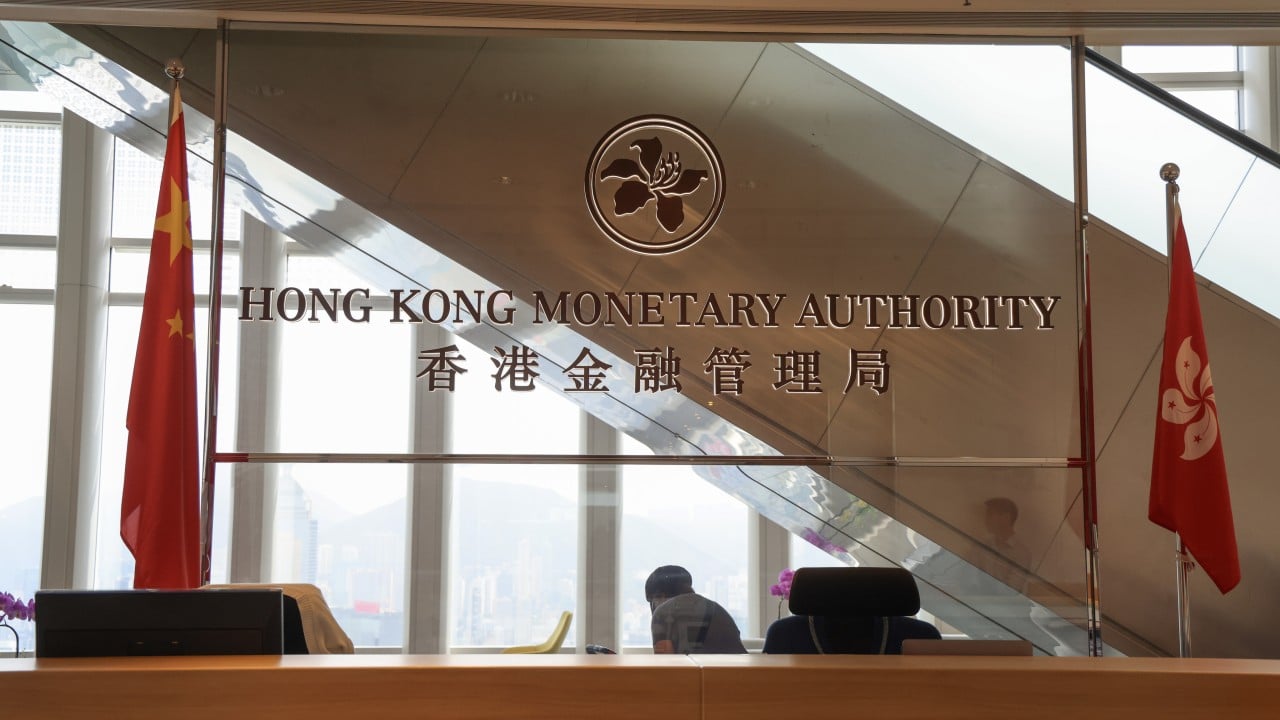
Hong Kong banks are staring down a silent, structural crisis that threatens the foundational cryptography of global finance. The Hong Kong Monetary Authority recently published a whitepaper and launched a baseline Quantum Preparedness Index, exposing an initial sector score of just 2.3 out of 10. Financial institutions across the territory are waking up to the reality that classical encryption methods protecting trillions of dollars in assets are fundamentally vulnerable to future quantum machines.
The baseline score is low. It is supposed to be. Decades of institutional inertia mean that legacy systems remain deeply entrenched in standard public-key cryptography like RSA and Elliptic Curve Cryptography.
Senior risk officers have spent careers treating cybersecurity as a perimeter defense problem. Firewalls, multi-factor authentication, and intrusion detection systems dominate compliance budgets. Yet, quantum computing operates on an entirely different physical plane. Shor’s algorithm does not punch holes in a firewall; it dissolves the mathematical foundations of encryption itself.
When a sufficiently powerful quantum computer arrives, standard asymmetric cryptographic algorithms will unravel in minutes.
The threat is not a matter of if, but when. Adversaries are already executing harvest-now-decrypt-later attacks, siphoning encrypted financial transactions, proprietary trade secrets, and client communications across fiber-optic networks. They store this ciphered data today, waiting for the day quantum processors mature enough to decode it retroactively.
A transaction encrypted today with standard protocols and possessing a ten-year confidentiality requirement is already compromised if it falls into the wrong hands now.
The Illusion of Cryptographic Agility
Most financial technologists speak freely about cryptographic agility, treating it as a plug-and-play feature that can be bolted onto existing architectures when the time is right.
That view is dangerously naive.
Modern banking infrastructure is a sprawling labyrinth of legacy mainframes, third-party vendor APIs, and proprietary microservices built over forty years. Pinpointing every single instance where an asymmetric key is hardcoded into a codebase or embedded in a payment gateway is a monumental task.
Many institutions do not even have a complete inventory of their cryptographic assets.
Consider a hypothetical tier-one commercial bank operating in Central. It relies on hundreds of software applications touching millions of daily retail and corporate transactions. Upgrading those systems to post-quantum cryptography requires refactoring core libraries, testing for latency regressions, and ensuring backward compatibility with regional clearing houses that may still run on decades-old software.
A patch is not enough. An entire architectural overhaul is required.
The Hong Kong Monetary Authority's index evaluates institutions across four distinct dimensions: awareness, planning, pilots, and practical preparedness. While roughly sixty-eight percent of surveyed banks demonstrate baseline awareness or are moving toward planning, nearly a third have not started their transition journey.
Worse still, half of the institutions lack any formal post-quantum planning whatsoever.
Boardroom Apathy and Budget Realities
Risk management in banking is driven by immediate regulatory penalties and visible operational losses. Quantum threats possess neither trait. Because the catastrophic failure event sits years in the future, chief financial officers routinely push quantum defense budgets to the back of the queue.
Boardrooms hear presentations about artificial intelligence deployment, cloud migration, and real-time payment rails. Quantum risk sounds academic by comparison.
This short-term bias is fatal. Cryptographic transitions take years, sometimes decades, to complete across an enterprise-grade financial ecosystem. Waiting for a working quantum computer to materialize before taking post-quantum cryptography seriously guarantees catastrophic failure. By the time the machine exists, the data has already been stolen.
Regulatory intervention is the only force capable of overriding this institutional procrastination.
By introducing the Quantum Preparedness Index and aiming for full sectoral readiness by 2030, the central bank is forcing commercial lenders out of their comfort zone.
Support measures like the upcoming post-quantum cryptography toolkit, co-developed with academic institutions and industry stakeholders, aim to give compliance officers concrete migration priorities. But toolkits and whitepapers do not write code. Engineers do. And right now, the talent pool possessing both deep cryptographic expertise and enterprise banking experience is painfully thin.
The Hard Realities of Post-Quantum Migration
Transitioning to post-quantum cryptography is not simply a matter of swapping one algorithm for another. Algorithms like lattice-based cryptographic standards require significantly larger key sizes and consume more bandwidth.
Performance hits are inevitable.
High-frequency trading desks and low-latency payment networks cannot afford millisecond delays without breaking arbitrage models and transaction throughput requirements. Balancing absolute cryptographic security against operational speed is a brutal engineering compromise.
Furthermore, global standards are still solidifying. The National Institute of Standards and Technology and international bodies are finalizing post-quantum standards, but early adopters risk backing an algorithm that later discovers subtle implementation flaws.
Banks must choose between moving early with experimental protocols or waiting for finalized standards and risking a compressed timeline.
There is also the vendor ecosystem problem. Financial institutions rarely build their core banking software from scratch. They rely on enterprise tech giants and niche vendors. If those third-party suppliers drag their feet on integrating post-quantum algorithms into their products, client banks remain exposed regardless of their internal readiness score.
The entire supply chain of financial technology must modernize in lockstep.
Confronting the Horizon
The low initial score of 2.3 on the Quantum Preparedness Index serves as an urgent wake-up call for financial capitals worldwide. Hong Kong's banking sector sits at the crossroads of international trade and capital flows, making it a high-value target for state-sponsored and sophisticated cyber syndicates.
If local institutions fail to accelerate their cryptographic overhaul, the fallout will extend far beyond individual balance sheets. Trust in the core financial infrastructure of the territory will fracture.
The countdown has already begun, and the window to secure the digital vault is closing fast.