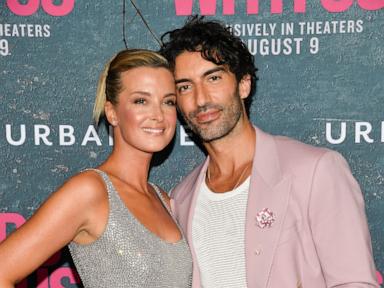
On Wednesday, actor-director Justin Baldoni and his wife, Emily, broke a two-year public silence regarding the toxic legal fallout of their 2024 film It Ends With Us. While Baldoni stated the family is finally healing from a deeply traumatic ordeal, the actual mechanics of the dispute reveal a much darker reality than standard creative differences. This was a scorched-earth legal and public relations campaign disguised as social justice that ultimately collapsed under judicial scrutiny. By the time the dust settled, federal judges had gutted the core of Blake Lively's sexual harassment allegations, leaving behind a bitter war over an eight-million-dollar legal bill and a structural blueprint for how modern celebrity warfare backfires.
The friction began during the post-production of the domestic violence drama, but it exploded into the legal system in December 2024. What the public witnessed during the film's press tour—distanced promotional appearances, whispered rumors of onset tension, and competing edits of the final cut—was merely the prelude to a calculated corporate strike. Lively initially filed a sweeping complaint with the California Civil Rights Department, accusing Baldoni of sexual harassment and maintaining an abusive workspace. Her camp aimed for a total reputational erasure of Baldoni, betting that the serious nature of the accusations would force an immediate, quiet surrender.
They miscalculated. Instead of retreating, Baldoni and his production banner, Wayfarer Studios, dug in, launching a massive $400 million defamation countersuit against Lively, her husband Ryan Reynolds, and her long-time publicist Leslie Sloane. The move turned a standard industry dispute into one of the most expensive and volatile legal standoffs in recent entertainment history.
The Mechanics of a Defamation Strategy Built on Quicksand
High-stakes celebrity PR relies heavily on the court of public opinion to force settlements before evidence ever reaches a judge. In the weeks following the film's release, the narrative surrounding Baldoni was meticulously shaped to paint him as difficult, dismissive, and ultimately toxic to work with on a set dedicated to women's trauma. This was not accidental. Court filings later exposed how targeted leaks and strategic silence were deployed to isolate Baldoni from the very project he spent years developing.
The strategy depended entirely on the assumption that the legal system would validate these public assertions. When Lively formalised her complaints into a civil lawsuit, her legal team utilized expansive language designed to capture headlines. They alleged that Baldoni had engaged in retaliatory behavior and orchestrated a coordinated smear campaign to silence her voice.
However, there is a vast gulf between a successful press release and a sustainable legal claim. Entertainment litigators know that building a harassment case requires specific, verifiable patterns of behavior, especially when dealing with co-stars who also hold executive power on a production. Lively’s team attempted to frame creative disagreements and structural conflicts over the film’s creative direction as systemic workplace discrimination. This specific conflation became the structural flaw that caused their entire legal architecture to fracture under pressure.
How the Federal Court Gutted the Allegations
The turning point of this two-year war did not happen on social media. It happened in the quiet chamber of U.S. District Judge Lewis Liman, who looked past the celebrity status of the litigants and examined the statutory realities of the claims. In a series of decisive rulings, the federal court systematically dismantled the case Lively’s team had built.
The court threw out ten of the thirteen primary allegations brought forward by Lively, including the critical claims of sexual harassment, defamation, and conspiracy. A major factor in this dismissal was a cold piece of employment law. Because Lively worked on the production as an independent contractor rather than a traditional employee, certain state-level workplace protections did not apply to a production that took place out of state.
"The truth and the facts have spoken for themselves," Emily Baldoni noted in the couple's recent address, referencing the quiet dismissal of the heaviest charges.
With the sexual harassment claims legally dead, the leverage shifted entirely. Baldoni was dismissed as a personal defendant from the core of the harassment suit. The remaining fragments of the lawsuit were reduced to narrow retaliation claims against third-party public relations entities. This was a catastrophic defeat for a celebrity brand that had staked its public integrity on being the aggrieved party in a systemic workplace dispute.
| Original Allegations Built by Lively Camp | Final Rulings by U.S. District Court |
|---|---|
| Systemic Sexual Harassment on Set | Dismissed entirely due to lack of substantial connection and legal standing. |
| Coordinated Corporate Defamation | Dismissed under strict federal pleading standards. |
| Retaliatory Smear Campaign | Narrow claims allowed to proceed against PR teams only. |
| Punitive Damages Against Baldoni | Denied completely by the presiding judge. |
The Weaponization of Social Justice in Celebrity Warfare
The most damning element of this legal battle is the cultural framework within which it was fought. It Ends With Us was marketed as a culturally significant exploration of a woman breaking free from domestic abuse. By positioning the real-world conflict between the lead actors as a parallel struggle of female empowerment versus toxic male authority, the Lively camp sought to utilize contemporary cultural movements as an engine for litigation.
This dynamic is what Emily Baldoni directly targeted when she spoke of the trauma of watching an attack "disguised as a fight for women".
When high-profile figures use the language of advocacy to settle commercial or creative scores, it creates a dangerous precedent. It desensitizes the public to genuine claims of workplace misconduct and trivializes the mechanisms built to protect vulnerable workers. Baldoni’s team argued from the beginning that the accusations were an attempt to seize control of the film’s legacy and financial upside while erasing the director who brought the book to Hollywood. By attempting to weaponize social consciousness, the litigation exposed the cynical underbelly of modern studio politics, where moral virtue is frequently deployed as a shield for corporate maneuvering.
The Eight Million Dollar Bill Left on the Table
By May 2026, both sides realized that a full public trial would be disastrous. They entered into a formal settlement agreement. The terms of the settlement specified that Lively would receive exactly zero dollars in direct damages or financial settlement money from Baldoni or Wayfarer Studios. For a lawsuit that began with demands for massive punitive damages, leaving the table empty-handed is a clear declaration of a failed offensive.
Yet, the legal maneuvering did not stop with the settlement. A lingering loophole in the litigation involves California’s specialized statutes designed to protect individuals from retaliatory lawsuits after they report harassment. Because Judge Liman had previously dismissed Baldoni’s counter-claim for defamation, the court ruled that Lively could technically seek recovery for the specific legal costs incurred while defending against that single countersuit.
Lively’s legal team immediately seized on this, filing documents demanding a staggering $8,035,040.88 in fees and expenses.
Total Fees Sought: $8,035,040.88
├── Law Firm Attorney Fees: $7,495,526.87
└── Miscellaneous Expenses: $539,514.01
This massive sum represents the final battleground. Baldoni’s legal representation has until July 13, 2026, to challenge this request. They will likely argue that the fees are wildly disproportionate, given that her primary offensive lawsuits were overwhelmingly thrown out by the court. This fee petition is a desperate attempt to extract a symbolic financial penalty from a studio that refused to buy her silence early in the process.
Hollywood watchdogs are observing this fee dispute closely. If the court awards the full amount, it establishes a reality where wealthy litigants can run up exorbitant legal bills on failed cases, knowing they can use procedural loopholes to force the opposition to foot the bill. If the judge slashes the request, it will serve as a final, definitive rebuke of the entire strategy.
The broader lesson of the two-year war over It Ends With Us is that the era of uncontested reputational destruction is drawing to a close. For years, major talent could rely on aggressive public relations management to completely control the narrative of a production dispute. This case proves that when a target refuses to comply with the script and forces the matter into a federal courtroom, the truth has a sobering way of emerging through the noise. Baldoni’s career and production studio survived an existential threat not by playing the publicity game, but by letting the legal system methodically dismantle an unsupportable accusation.