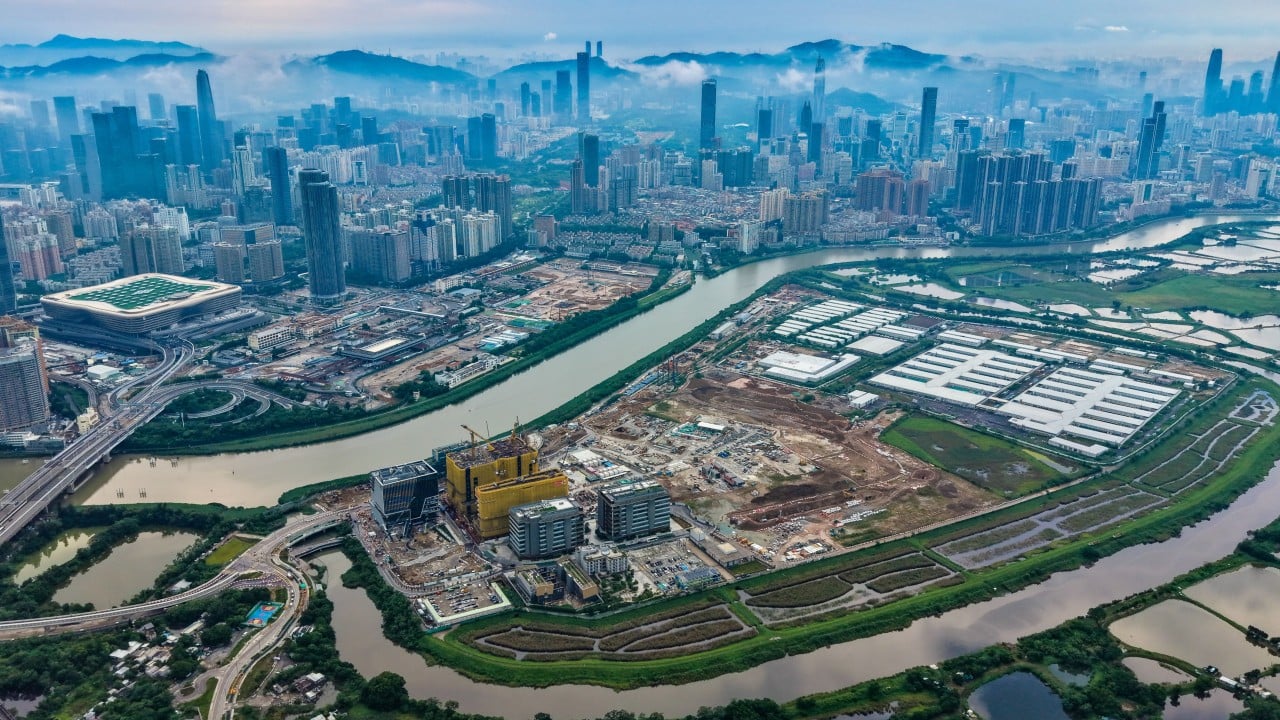
Bureaucratic deadlines in technology zones rarely survive contact with reality, but Hong Kong’s technology chief has drawn a hard line in the sand. Innovation, Technology and Industry Bureau head Sun Dong recently staked his administration's credibility on a firm target: the flow of talent and cross-border personnel between Hong Kong and the Hetao Shenzhen-Hong Kong Science and Technology Innovation Co-operation Zone must officially commence by June 30.
For years, the Hetao project has suffered from the classic ailment of regional mega-initiatives. Grand blueprints, soaring rhetoric about the Greater Bay Area, and endless ministerial handshakes have frequently collided with the gritty friction of two entirely different legal, customs, and data regimes. Setting a strict calendar date forces officials to stop theorizing and start clearing the administrative roadblocks that have long choked movement across the boundary.
Yet, establishing a June deadline exposes a deeper institutional anxiety. A physical zone with state-of-the-art laboratories means very little if researchers, engineers, and data scientists spend hours waiting at checkpoints or navigating conflicting credential recognition systems.
The Friction of Two Systems
The fundamental tension of Hetao rests on an ambitious premise. It attempts to marry Hong Kong's common law, international connectivity, and open data framework with Shenzhen's blistering hardware manufacturing speed and industrial scale. On paper, it represents an ideal division of labor. In practice, bridging these two distinct operational environments creates immense regulatory friction.
Consider the baseline challenge of credential recognition. A software architect or biotech researcher licensed in Hong Kong does not automatically possess the legal standing to execute identical duties across the boundary line in Shenzhen, and vice versa. While various pilot lists have attempted to streamline professional qualifications, the everyday reality for corporate human resources departments remains a compliance labyrinth.
When Sun Dong insists that personnel movement must scale up by June, he is acknowledging that infrastructure without human capital is merely concrete. Buildings in the Hong Kong park are rising, but occupancy depends entirely on whether specialists can move back and forth as fluidly as local commuters hop on the MTR.
Beyond the Concrete
Skeptics within the venture capital and tech sectors have every right to view administrative deadlines with caution. Past announcements regarding cross-border data flows and expedited customs channels have frequently met with delayed implementation timelines. Security protocols, data sovereignty concerns, and financial controls on either side of the boundary do not simply vanish because a minister checks a calendar.
For Hetao to avoid becoming an expensive industrial ghost town, the June milestone must deliver three distinct breakthroughs:
- Frictionless physical transit: Designated personnel must utilize streamlined channels that reduce transit times to minutes rather than hours.
- Harmonized data compliance: Sector-specific firms require predictable rules regarding how research data moves across the boundary without running afoul of divergent regulatory mandates.
- Tax and employment parity: High-value talent needs absolute clarity on personal income tax burdens and social welfare structures so they are not penalized for crossing the river to work.
If these elements remain unresolved when the clock runs out, the June deadline will serve merely as an administrative monument to wishful thinking.
The Stakes for Regional Competitiveness
Hong Kong cannot afford prolonged administrative paralysis. Regional competitors across Asia are aggressively courting artificial intelligence researchers, life sciences firms, and advanced materials pioneers. The city’s historical advantage as a pure financial intermediary is no longer sufficient to sustain its long-term economic relevance. It must anchor itself firmly in hard-tech commercialization.
The upcoming months will reveal whether inter-agency cooperation between Hong Kong and Shenzhen possesses the institutional muscle to override legacy bureaucratic resistance. Success will not be measured by the number of ribbon-cutting ceremonies held before summer, but by the quiet, daily passage of engineers walking through checkpoint gates with their laptops, moving freely between two worlds that desperately need each other to function.