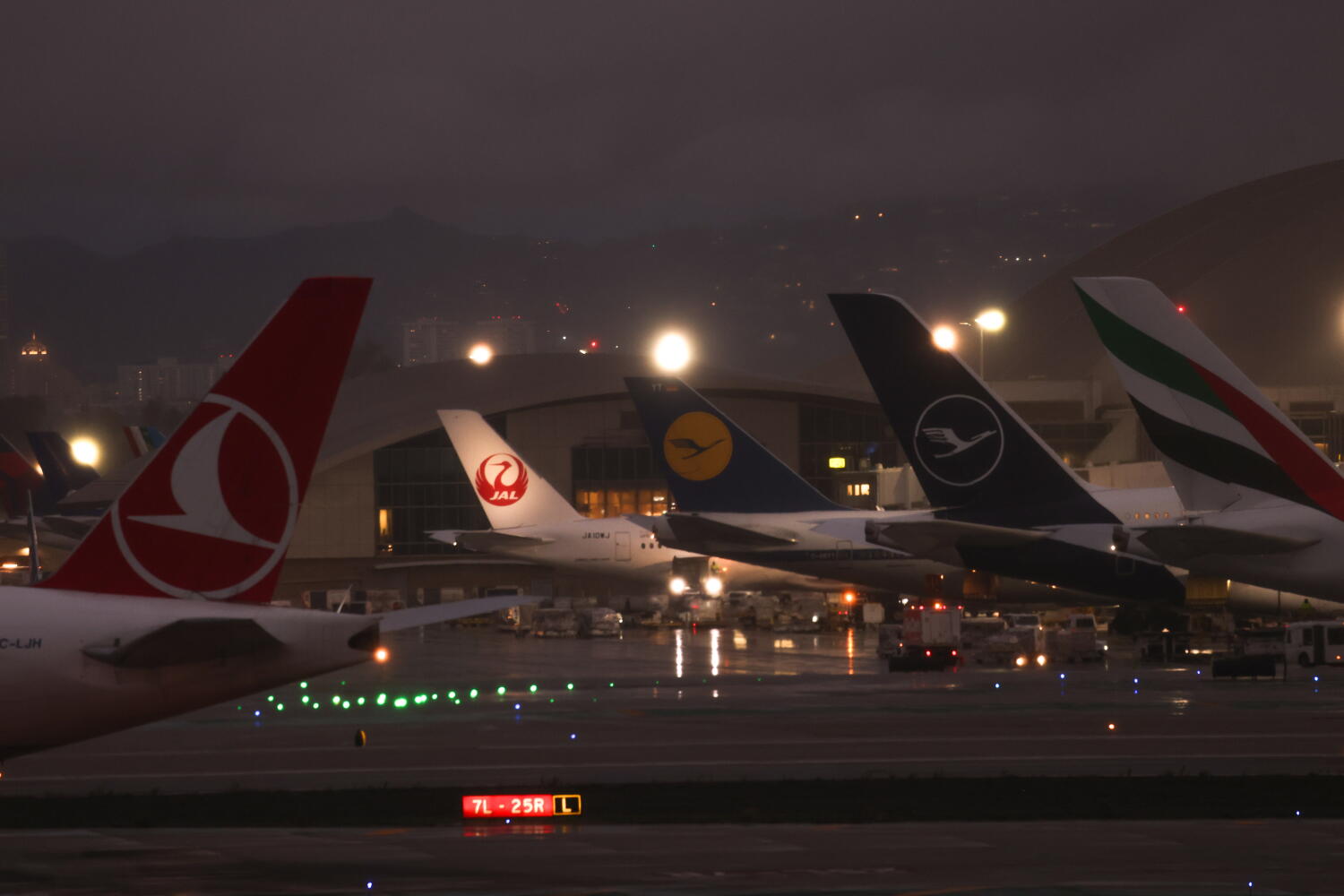
Democrats are pressing the Trump administration for answers after a telecommunications breakdown triggered a nationwide ground stop across U.S. air travel on November 13, 2026, halting departures for nearly five hours and grounding thousands of flights. Yet the real story behind the meltdown goes far beyond partisan blame trading in Washington. It exposes a brittle telecommunications backbone held together by copper wire from the 1960s, contractor handoffs that lacked tight supervision, and a fiscal standoff over a $50.1 billion modernization request that neither party can solve with slogans alone.
Anyone who has spent decades watching American aviation knows that ground stops are blunt, conservative instruments. When data links wobble or voice frequencies go intermittent, air traffic managers pull the brake before a small blind spot turns into a serious hazard. That discipline kept roughly 3,500 airborne aircraft landing safely on November 13. Still, safety during a crisis does not excuse the preventable fragility that made the crisis possible in the first place.
What Actually Happened Inside the Network
A nationwide ground stop rarely starts with a dramatic explosion. It usually starts with a quiet configuration drift or a flooded routing table in a place most flyers have never heard of.
On Friday afternoon, November 13, 2026, instability hit the Federal Aviation Administration's telecommunications links affecting regional air traffic control facilities. By late afternoon Eastern time, departures across the United States were frozen, affecting 17 of the agency's 22 en-route centers at the peak of the disruption and forcing airlines to cancel thousands of flights as aircraft and crews fell out of position. International flights bound for the United States faced holds or suspensions from European air traffic authorities while technicians hunted for the fault.
Transportation Secretary Sean Duffy pointed investigators and the public toward contractor work transitioning legacy copper circuits toward fiber optics, including router activity tied to contractor L3Harris at a remote site in El Dorado, Arkansas, alongside scrutiny of a radar site in Amarillo, Texas. The FAA disabled broadcasting functions on the suspect Juniper router and on roughly 60 similar routers across the network as a precaution while pausing further installations. Meanwhile, Hewlett Packard Enterprise, which owns Juniper, stated that its hardware operated according to how it was configured rather than suffering an internal hardware failure.
Watch how quickly rumor fills a vacuum when officials speak before forensic logs are settled. Within hours of the shutdown, social media feeds blamed the FAA's newly activated SMART air traffic management tool. Homeland Security Secretary Markwayne Mullin warned early on that patchwork upgrades and aging gear were colliding, while Duffy pushed back against blaming SMART, explaining that the tool surfaces advisory prompts for human controllers rather than driving core radio and radar transport. Both statements can be partly right and still leave passengers in the dark: when legacy telecom pipes are already strained, almost any change in traffic or routing behavior can trigger cascade symptoms.
Why Democrats Are Demanding Answers Now
Lawmakers do not wait for a complete engineering post-mortem before sending oversight letters. They move when a high-visibility disruption collides with a pending budget fight and shifting power on Capitol Hill.
Senate Commerce Committee Democrats pressed Duffy and FAA leadership for briefings and hard answers on how a routine upgrade cascaded into a nearly five-hour nationwide ground stop. Their scrutiny lands right as the administration seeks $50.1 billion in supplemental aviation funding and as Democrats prepare to take control of Congress in January 2027, turning air traffic control modernization into an immediate political battleground.
Critics in Congress and aviation safety circles are zeroing in on three uncomfortable questions:
- Oversight and workforce capacity: Did reductions in FAA technical personnel and earlier workforce attrition leave too few agency engineers directly supervising and signing off on contractor changes in the field?
- Contractor accountability: When a contractor swaps network gear or modifies telecom circuits, what verification gates stop a misconfigured device or an unexpected broadcast storm from rippling across regional centers?
- Money already appropriated: Before approving tens of billions in fresh spending, how much of previously authorized modernization money has actually reached working wires, relays, and routers instead of sitting in slow-moving procurement pipelines?
Duffy has argued that decades of underinvestment by prior administrations left the FAA inheriting obsolete gear, and he has also flagged the risk of vendor lock, where a single prime contractor controls too much of the underlying network monitoring. That candid admission cuts through some of the usual Washington spin. Yet blaming past budgets does not answer why today's change-management controls allowed one bad router or configuration to freeze an entire continent.
The Overlooked Factors Behind Every Outage
Most coverage treats a ground stop like a scoreboard between the White House and congressional Democrats. That framing misses the structural mechanics that govern every flight in America.
First, copper-to-fiber transitions are among the trickiest engineering jobs in critical infrastructure. Replacing decades-old circuits—some dating back to the 1960s—while keeping live air traffic running around the clock is like changing a tire on a moving bus. Canada moved through its fiber transition far faster than the multi-decade slog in the United States, a contrast that underscores how federal procurement rules and fragmented legacy systems slow down basic plumbing upgrades.
Second, airlines and lawmakers have a long history of wanting modern airspace without agreeing on who pays. Airlines rightly complain when a telecom hiccup strands planes and wrecks crew schedules for days. At the same time, carriers and antitax factions frequently resist higher user fees or rigid cost-recovery formulas, while libertarian critics argue that Congress should spin off air traffic control into a nonprofit, user-financed entity rather than handing the FAA another massive federal check.
Consider a hypothetical example to see how incentives warp day-to-day decisions. Suppose a regional telecom contractor schedules a cutover during daytime hours because nighttime labor carries higher premiums or fewer available support staff. If an on-site FAA specialist is stretched thin across multiple facilities and a configuration mistake floods neighboring routers, a localized maintenance hiccup turns into a national aviation emergency. Even without a cyberattack—and officials have stated they see no evidence of a foreign intrusion or hack—the operational blast radius is enormous.
Third, privatization is no magic wand. Spinning off air traffic control into a separate corporation might streamline certain capital budgets, as proponents claim by pointing to overseas models. It would also create fierce fights over governance, rural airport service, defense coordination, and ticket surcharges. You cannot solve a 25-year engineering backlog merely by changing the legal name on theorg chart.
What Travelers and Policymakers Should Watch Next
A nationwide ground stop during a busy travel season is a wake-up call, not proof that the skies are unsafe when planes are flying. Controllers, pilots, and safety protocols proved once again that when communications degrade, stopping traffic on the ground protects lives in the air.
Still, travelers heading into holiday peaks and lawmakers negotiating the $50.1 billion request should look past speeches and track hard operational metrics over the coming months:
- Published root-cause findings: Look for a clear technical accounting distinguishing hardware behavior from configuration or procedural error at El Dorado and any linked sites, rather than vague assurances that the network is stable.
- Change-control rules: Watch whether the FAA mandates stricter test windows, automated traffic-throttling guardrails, and independent verification before new routers are allowed back into active service.
- Technical staffing and oversight: Pay close attention to whether telecom engineers and field specialists are rebuilt to match the complexity of modern IP networks.
- Appropriations guardrails: See whether Congress ties new modernization funds to milestone audits and legacy copper retirement schedules rather than open-ended blank checks.
Political fights over the nationwide ground stop will dominate cable news and committee hearings for weeks, yet aging wires and unverified router changes do not care which party holds the gavel. Until Congress pairs real engineering oversight with steady, disciplined funding for the underlying telecom network, American aviation will remain one misconfigured switch away from another sudden standstill.