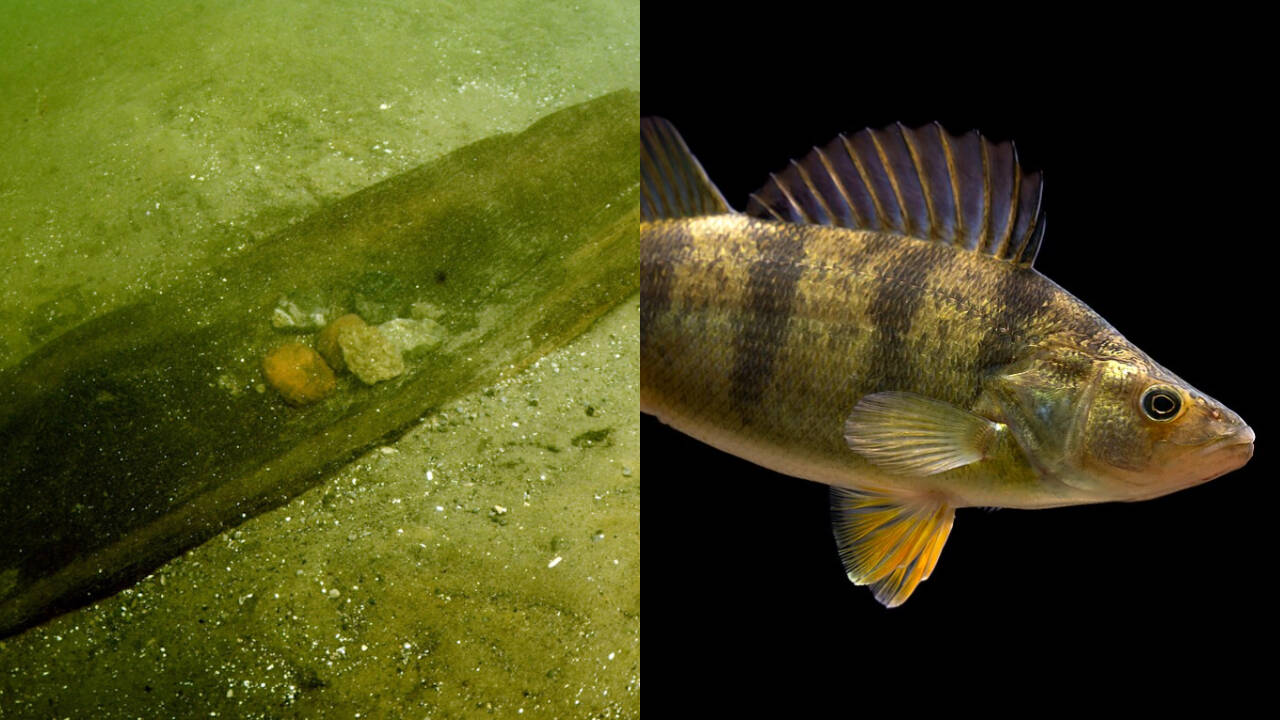
To the casual eye, a fallen tree resting against a pristine northern shoreline looks like nothing more than waterlogged clutter, a messy nuisance obstructing a clean view of the water or snagging a fishing line. Waterfront property owners across North America have spent decades tidying up these aquatic brush piles, clearing coarse woody debris from the shallows to create sandy swim zones and unobstructed boat launches. That tidy impulse, multiplied across thousands of private parcels and municipal beaches, is quietly dismantling the architectural foundation of freshwater ecosystems. When researchers systematically stripped away more than seventy percent of the underwater logs from one half of an experimental Wisconsin lake, the once-dominant yellow perch population nearly vanished within twenty-four months.
The mechanics behind this ecological collapse reveal an uncomfortable truth about how modern shoreland management ignores basic biology. Conducted at Little Rock Lake in Vilas County, an eighteen-hectare body of water neatly split in two by an impermeable vinyl curtain, this long-term whole-lake manipulation served as a stark natural laboratory. One basin remained untouched as a reference point, while the other underwent a drastic pulmonary treatment of sorts. Crews extracted over seventy percent of the coarse woody habitat from the shallows, dragging ancient timbers and submerged branches out of the littoral zone. They wanted to measure what happened when a key structural element vanished. They found out quickly. Recently making news recently: The Dust Beneath Our Boots And The Invisible Weight Of Tomorrow.
Yellow perch densities in the manipulated basin plummeted into near-oblivion. The crash was not driven by some mysterious chemical poison or a sudden algal bloom, but by a total breakdown in predator-prey dynamics and recruitment failure. In a healthy lake, juvenile yellow perch depend on the dense matrix of underwater branches to evade hungry largemouth bass and other predators. Strip away the timber, and those complex hiding spots evaporate. Young perch find themselves entirely exposed in open water, hunted down before they can reach maturity. Meanwhile, in the undisturbed half of the lake behind the heavy curtain, yellow perch continued to spawn successfully year after year, maintaining a stable, vibrant population.
The Unseen Architecture of the Littoral Zone
We tend to evaluate lakes based on what we can see from a speedboat or a dock, focusing on water clarity and surface area while ignoring the complex underwater city sitting just beneath the surface. Coarse woody debris acts as the primary infrastructure of the littoral zone. It is a vertical metropolis for aquatic life, serving multiple functions simultaneously. Algae and macroinvertebrates colonize the submerged bark, creating an organic grazing pasture. Small fish duck into the crevices to feed and hide from larger piscivores. Without this structural complexity, the underwater landscape flattens into an aquatic desert where the rules of survival skew heavily toward aggressive open-water predators. More details regarding the matter are detailed by TIME.
For decades, waterfront development has prioritized manicured aesthetic standards over ecological function. Property owners clear away fallen oaks, maples, and pines, replacing complex shorelines with manicured lawns and stone retaining walls. Every single log hauled onto a burn pile or dragged up an embankment removes a microscopic shelter belt. The Little Rock Lake study demonstrated that the consequences of this tidy landscaping are immediate and sweeping. It is not a slow, imperceptible drift over a century. Within two short years, the fundamental character of the fish community shifted dramatically.
The ripple effects extend far beyond a single species. While the yellow perch population collapsed in the treated basin, other aquatic residents adapted in unexpected ways. Largemouth bass, deprived of their traditional ambush cover provided by the fallen timber, altered their spatial distribution and hunting strategies. They had to roam more widely, expending energy in unfamiliar ways. Yet the most startling aspect of the data was the lag time in other trophic levels. While the fish population reorganized itself around the sudden absence of structure, benthic macroinvertebrate communities did not show immediate, catastrophic shifts in overall density or diversity during the initial two-year window. The collapse belonged squarely to the vertebrates at the mercy of structural shelter loss.
Broader Failures in Aquatic Intervention
This Wisconsin experiment is part of a broader pattern of heavy-handed management strategies yielding unintended consequences across freshwater systems. Consider what happened just a few miles away in McDermott Lake, where researchers attempted a completely different kind of manipulation to solve a parallel crisis. Faced with declining native walleye populations, fisheries biologists embarked on an aggressive four-year removal campaign starting in 2018. They pulled approximately 285,000 warm-water fish—mostly centrarchids like bluegill, pumpkinseed, and rock bass—out of the thirty-three-hectare lake, hoping to relieve the competitive pressure on young walleye.
The results were paradoxical. With the competition drastically thinned, yellow perch in McDermott Lake staged an astonishing surge, jumping nearly eight hundred percent in catch rates as their average length increased. Yet despite this massive explosion of potential prey, natural walleye recruitment remained stubbornly at zero. The adult walleye population flickered upward temporarily before crashing back down to its original baseline. Pulling hundreds of thousands of panfish out of a lake did not fix the recruitment bottleneck for the apex predator. Ecosystems resist simple, mechanical adjustments. When you pull one lever, the machinery shifts in ways that human planners frequently fail to anticipate.
These two contrasting field studies expose the limits of ecological engineering. Whether through the subtraction of physical habitat like logs or the subtraction of biological components like sunfish and bass, manipulating a complex aquatic network triggers cascading reactions. Nature possesses deep inertia, forged through millennia of evolutionary adaptation. When humans step in with chainsaws or fyke nets to optimize a lake for specific outcomes—whether it is a clear view for a cottage owner or a monoculture of game fish for anglers—the system often breaks down.
The Cost of Aesthetic Cleanliness
The regulatory frameworks governing private shorelines remain stubbornly outdated. Many local ordinances still view fallen trees as navigation hazards or untidy debris, actively encouraging property owners to clear their shallow waters. State departments of natural resources try to educate the public about the value of leaving coarse woody debris intact, but the cultural bias toward a sterile, park-like shoreline runs deep. People want their lakes to look like swimming pools.
Achieving a sustainable balance requires a radical shift in how we perceive waterfront property management. Leaving a decaying oak tree where it falls into the water feels counterintuitive to someone who values neatness, yet that single log represents a vital nursery for the entire aquatic food web. Protecting inland fisheries is not just a matter of stocking fish or setting stricter catch limits for anglers. It requires preserving the messy, unglamorous physical reality of the shoreline. If we continue to sanitize our lakes under the banner of improvement, we will engineer the life right out of the water, leaving behind clear, beautiful, and ultimately empty basins.