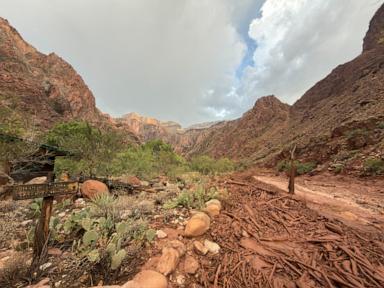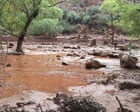
Two people are dead and approximately fifteen remain missing following a catastrophic flash flood that tore through the inner depths of Arizona's Grand Canyon. The disaster struck the Bright Angel Creek corridor and Phantom Ranch area, transforming a tranquil desert stream into a vertical torrent that obliterated footbridges, smashed utility lines, and trapped scores of hikers. While national headlines focus primarily on the immediate rescue operations and the grim recovery tallies, the event exposes deeper, systemic vulnerabilities tied to aging park infrastructure and the brutal mechanics of desert hydrology during the summer monsoon season.
Water dropped fast. Roughly half an inch to an inch of rain slammed into steep, rocky terrain in a window of less than thirty minutes. Because earlier seasonal storms had already saturated the high-elevation soils, the subsequent downpour refused to infiltrate the ground. Instead, it sheeted off the cliffs instantly, funneling down from the North Rim and dropping six thousand vertical feet into the inner canyon.
The Geography of Destruction
Bright Angel Creek behaves like an uncapped firehose when heavy precipitation hits the upper plateaus. The narrow passage known locally as "the Box" acts as a hydraulic bottleneck. When a four-foot wall of muddy debris, boulders, and uprooted timber surges through these tight geological constraints, escape options drop to zero.
Eyewitness accounts from survivors describe a sudden, deafening roar preceding the wall of water. Hikers caught in the corridor owed their lives to split-second warnings from park rangers and fellow travelers who spotted waterfalls materializing out of dry cliffsides. Over sixty people required emergency helicopter evacuations, hauled out of the canyon by the National Park Service and the Arizona Department of Public Safety while bridges vanished beneath the brown foam.
Fragile Lifelines in the Abyss
The physical toll on the landscape matches the operational crisis unfolding above ground. Nearly every pedestrian footbridge spanning Bright Angel Creek was torn from its moorings, cutting off cross-canyon trails and isolating historic installations like Phantom Ranch. More critically, the flood severely damaged the Transcanyon Waterline.
This single pipeline serves millions of annual visitors and hundreds of year-round residents on both the North and South Rims. Even though the infrastructure had been undergoing multi-million-dollar modernization efforts, the sheer kinetic energy of boulders rolling down the creek bed fractured the system. Park officials immediately implemented strict water conservation mandates, shuttered overnight lodges, and halted tourist reservations to preserve remaining municipal reserves.
The Deceptive Threat of the Monsoon
Visitors often misunderstand the fundamental nature of Grand Canyon weather patterns. Clear blue skies directly above a hiker's head provide zero assurance of safety. Storms routinely erupt miles away on the high rims, dumping massive volumes of water into drainage basins that empty directly into popular tourist corridors hours later.
Emergency management agencies face an uphill battle communicating these risks to a public conditioned to view national parks as curated, predictable theme parks. Backcountry permits require explicit warnings, yet the sheer scale of the wilderness means real-time communication with individual hikers remains virtually impossible once they descend below the rim. Search-and-recovery teams continue scouring the banks of the Colorado River near Crystal Rapids, where the first victims were recovered, while automated tracking systems and public appeals attempt to account for the remaining missing persons.
The canyon remains active, unpredictable, and profoundly indifferent to human schedules as recovery crews wait for the next weather window to close the loop on those still unaccounted for.