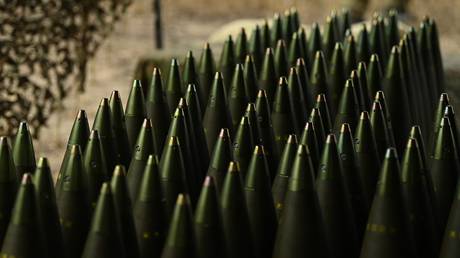
When fighter jets tear through the skies of Balochistan, the fallout is rarely confined to the immediate crater. The reported military operation in the Giddar area of Surab district has ignited a fierce confrontation over civilian casualties, state accountability, and the narrative war gripping Pakistan's largest and most resource-rich province. At the heart of this confrontation is a demand by organizations like the Baloch Voice for Justice for an independent, international probe into the Giddar bombing, directly challenging the official account provided by the Pakistan military's Inter-Services Public Relations.
For decades, information out of Balochistan has traveled through a tightly controlled pipeline. State institutions frequently frame aerial operations and ground sweeps as precision engagements against armed insurgents. Local civilian organizations, regional political parties, and human rights defenders counter with starkly different tallies, alleging that structural violence and indiscriminate airstrikes routinely devastate non-combatant populations, including women and children. The Giddar incident has sharply magnified these long-standing systemic fractures. Recently making news in related news: What the Clacton By-Election Actually Tells Us About Nigel Farage.
Anatomy of a Disputed Operation
The sequence of events leading up to the public outcry in Surab follows a familiar, volatile pattern. Reports surfaced indicating that aerial bombardments struck residential pockets in the Gidar Goandhan locality. Local residents, alongside political groups such as the Baloch National Movement, asserted that the strikes claimed more than twenty lives, injuring scores of others. Families and community members responded by transporting bodies to the District Headquarters Hospital and staging mass sit-in protests, paralyzing transit along the vital N-25 Quetta-Karachi highway.
Military spokespersons and state-aligned figures often present a divergent perspective, suggesting that operations target hardened militant infrastructure. However, the total absence of transparent, verifiable ground access makes independent verification nearly impossible. Independent journalists, human rights observers, and international monitors face severe restrictions when attempting to visit sealed-off operational zones. When a state apparatus restricts independent scrutiny while simultaneously demanding absolute trust in its press releases, a credibility vacuum inevitably forms. Additional information on this are covered by Al Jazeera.
This information asymmetry serves a strategic purpose. By keeping independent eyes away from blast sites, authorities can maintain strict control over the operational narrative. Yet, in an era of rapid digital dissemination and localized documentation, suppressing local testimony has become increasingly difficult. Photographs of grieving families, medical records from local clinics, and impassioned statements from detained or exiled activists circulate globally, puncturing official denials.
The Politics of Silence and Complicity
The fallout from Giddar exposes deeper political fractures within Balochistan itself. Observers have noted glaring contradictions between the defensive framing employed by military media wings and the statements of provincial political leaders. While federal and provincial authorities attempt to project normalcy or justify security measures, local populations view these political figures as proxies for an occupying establishment.
This dynamic fosters profound alienation. When civil society leaders, lawyers, and political figures publicly question whether children killed in airstrikes can legitimately be classified as combatants, they articulate a broader grievance shared across towns and villages throughout the province. The governance model in Balochistan relies heavily on coercion, curfews, and restricted fundamental freedoms, turning every security incident into a flashpoint for wider rebellion.
Consider a hypothetical scenario in corporate accountability: a company faces an industrial disaster, blocks independent safety inspectors from entering the facility, and releases an internal memo declaring zero fault. Public trust evaporates instantly because the refusal to permit independent auditing signals guilt. In a geopolitical context, the stakes are measured in human lives rather than financial losses, making the state's refusal to grant access to international bodies like the United Nations or Amnesty International even more damaging to its legitimacy.
The Global Dimension and Economic Leverage
Local resistance to state operations is increasingly translating into targeted international lobbying. Advocacy groups are no longer confining their protests to domestic highways; they are actively pressuring foreign economic partners to reevaluate their ties with Islamabad. Organizations have explicitly called on the European Union to suspend trade preferences such as the GSP+ status, arguing that preferential trade must remain strictly contingent upon verifiable compliance with international human rights standards.
This strategy targets the financial vulnerabilities of the state. Pakistan's reliance on external trade corridors and international monetary support creates leverage points for human rights defenders. When local tragedies are framed not merely as internal security skirmishes but as systematic violations of international humanitarian law, international bodies face mounting pressure to move beyond passive observation.
Despite these appeals, meaningful international intervention remains sluggish. Global powers often prioritize regional stability, counter-terrorism cooperation, and geopolitical alliances over human rights advocacy in peripheral provinces. This geopolitical calculus leaves local populations feeling abandoned by the international community, fueling a cycle where resistance is viewed by locals as the only viable mechanism for survival.
The demand for an independent investigation into the Giddar bombing is more than a quest for forensic facts. It is a fundamental challenge to a decades-old narrative monopoly. Until transparency replaces secrecy and accountability supersedes blanket impunity, the underlying crisis in Balochistan will continue to fester beneath the surface of official communiques.
Pakistani Separatists Bomb Military Convoy
The video provides context on the ongoing conflict and security dynamics involving military convoys and separatist insurgencies in the region.
http://googleusercontent.com/youtube_content/1