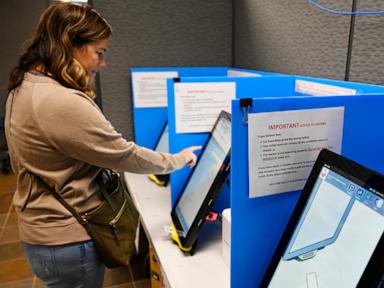
Georgia is hurtling toward an unprecedented administrative meltdown that could leave its 159 counties without a legal, functional way to tabulate votes just weeks before crucial elections. In 2024, the Republican-controlled General Assembly bowed to intense grassroots pressure and outlawed the use of QR codes for official ballot counting, setting a hard expiration date of July 1, 2026. Yet, when lawmakers adjourned their regular session earlier this year, they failed to fund or authorize a single alternative system. This intentional political paralysis has created an immediate crisis. With a special congressional election scheduled for late July and early voting starting on July 6, local election supervisors are trapped between conflicting directives from state agencies, facing an impossible operational mandate with zero state dollars to back it up.
The core of the issue lies in the state’s multi-million-dollar fleet of touchscreen ballot-marking devices, manufactured by Dominion Voting Systems and recently rebranded under the Liberty Vote banner. When a voter makes selections on these kiosks, the machine prints out a paper sheet displaying human-readable text alongside a machine-readable QR code. Under the current setup, the optical scanners at the precinct do not read the English text. They read the barcode. Critics from both ends of the political spectrum have long argued that this setup forces voters to trust a cryptographic black box that they cannot personally verify. Expanding on this topic, you can also read: Inside the US Iran Peace Deal Nobody is Talking About.
But passing a law to ban the barcodes without purchasing new equipment or altering the underlying software infrastructure was a masterclass in performative governance. By walking away from the logistical reality of their own mandate, legislators dropped a massive, unfunded liability onto local municipal budgets.
Now, with Governor Brian Kemp convening an emergency special legislative session this week to address the looming July 1 cliff, the state finds itself in a high-stakes standoff. It is a collision of technical inertia, bureaucratic infighting, and partisan panic that threatens to destabilize the mechanics of voting in America's most scrutinized battleground. Experts at NBC News have provided expertise on this trend.
The Illusion of a Software Quick Fix
The Secretary of State’s office, led by Brad Raffensperger, has floated a temporary workaround that relies on Optical Character Recognition (OCR) technology. Under this plan, ballots would still be fed into the existing precinct scanners on election night, reading the prohibited QR codes to generate an unofficial, immediate tally. Before the final county certification, however, the digital images of those ballots would be uploaded to a central server. There, standalone software would scan the human-readable text to produce the official, legally binding tabulation.
To a casual observer, this sounds like an elegant compromise. To anyone who has managed enterprise-grade tech rollouts or audited local precinct operations, it looks like a recipe for disaster.
- The Certification Void: The standalone OCR software proposed to read the ballot text has not been certified by the federal Election Assistance Commission (EAC). Pushing uncertified software into a high-stakes count invites immediate, systemic lawsuits from whichever campaign loses.
- The Optical Precision Flaw: Unlike crisp digital text, physical paper ballots get wrinkled, smudged, and slightly misaligned when fed through heavy-duty scanners by thousands of voters. If the software misreads a single line of text due to a microscopic paper skew, it can trigger discrepancies between the election night count and the official audit.
- The Security Flannel: Moving ballot images to a centralized server for a secondary software pass creates a new, vulnerable vector in the chain of custody. It multiplies the attack surface rather than shrinking it.
Raffensperger’s office estimated that modifying the statewide infrastructure to properly handle text-based scanning would require between $25 million and $26 million. Replacing the entire ecosystem outright would top $300 million. The General Assembly allocated exactly zero dollars for a systemic overhaul before packing their bags, leaving the state’s premier election office to patch together an administrative band-aid out of uncertified software and wishful thinking.
Bureaucracy at War
The institutional chaos deepened when the State Election Board openly rebelled against the Secretary of State’s OCR plan. Arguing that Raffensperger’s central-server software workaround lacks explicit statutory authority, the board issued its own conflicting guidance to the state’s 159 counties.
The board’s counter-directive orders local election supervisors to bypass the electronic ballot-marking kiosks entirely in the event that the legislature fails to extend the QR code deadline this week. Instead, they want counties to deploy their emergency backup systems for standard, day-to-day voting. This means printing hundreds of thousands of hand-marked paper ballots, distributing them manually to voters, and counting them via standard optical scanners.
This bureaucratic civil war leaves local election directors stranded in a legal no-man's-land. If they follow the Secretary of State, they risk lawsuits from election integrity groups who argue the OCR software is uncertified and illegal. If they follow the State Election Board, they face logistical ruin.
State law explicitly mandates that counties must provide electronic ballot-marking devices unless conditions make their use "impossible" or "impracticable." Historically, those terms meant a total power grid failure or a catastrophic system crash. Interpreting a self-inflicted legislative deadline as an "emergency" stretches the statute to a breaking point.
The Human Toll on the Ground
While politicians and regulators bicker in Atlanta, local election offices are bracing for impact. Henry County, located in the sprawling suburbs of Atlanta, is one of six counties forced to run the July special election to fill the seat of the late U.S. Representative David Scott. Early voting begins in less than a month.
"Given the uncertainty surrounding the guidance currently available, we believe it is wise to wait for further direction to ensure that any decisions made are consistent with state requirements and election administration best practices," wrote Axiver Harris, Henry County’s interim elections director, in a memo that quietly underscores the panic gripping local administrators.
Shifting a major county to an all-paper, hand-marked system on a few weeks' notice is not a simple matter of buying more reams of paper. It changes the entire operational architecture of a polling place.
The Ballot Style Nightmare
In any given legislative or congressional district, there isn't just one ballot. Dozens of distinct ballot styles exist depending on a voter’s precise municipal precinct, school district, and county commission zone. Touchscreen voting machines handle this automatically by reading a voter’s registration card and displaying the exact contests they are eligible to vote on.
In a manual, hand-marked paper system, elderly poll workers must visually verify a voter's address, navigate a complex filing system, and physically hand over the correct ballot style. If a poll worker accidentally hands out the wrong sheet, that voter casts an illegal ballot in a hyper-local race, potentially invalidating the results of an entire precinct.
The Staffing Drain
The physical reality of handling, sorting, and securely storing hundreds of thousands of individual paper sheets requires a massive injection of human labor. During a recent state Election Board meeting, Fulton County Elections Director Nadine Williams testified that hand-counting just a single contest during an audit required 275 two-person teams working continuously for nearly five days. Scaling that requirement across an entire multi-page ballot containing federal, state, and local races would cost millions of dollars that counties simply do not have.
Faced with this immense pressure, veteran poll managers are quietly walking away. The pool of institutional knowledge is evaporating at the exact moment Georgia needs it most. Many poll workers are retirees in their late 70s who are willing to check in voters and hand out "I Voted" stickers, but are unwilling to face personal legal liability, public harassment, and systemic chaos because lawmakers refused to fund the statutes they wrote.
The Special Session Calculus
This brings everything down to the emergency special legislative session convened by Governor Kemp. Lawmakers have two real paths out of the corner they painted themselves into, and neither option is clean.
The most pragmatic option is to pass a clean, short-term extension of the QR code deadline, kicking the prohibition down the road to 2028. This would provide the necessary breathing room to properly vet, fund, and certify a legitimate text-based scanning infrastructure. A compromise bill mirroring this strategy passed the House earlier this year, but was killed by hardline Senate Republicans who feared that voting to extend the use of QR codes would be weaponized against them in primary challenges.
The alternative is a chaotic scramble to retroactively fund Raffensperger’s OCR software plan, pass emergency language to shield counties from litigation over uncertified tech, and pray that the system holds together through the fast-approaching midterms.
The political stakes are further complicated by federal pressure. Donald Trump singled out these barcode-tabulating systems in an executive order early in his second term, aiming to force a nationwide shift toward hand-marked paper ballots. While federal courts have blocked that order from taking effect, its existence creates an intense ideological headwind for Georgia Republicans. Any state legislator who votes to keep the QR codes active, even temporarily to avoid an administrative train wreck, risks being labeled a traitor to the election integrity movement.
This crisis was entirely predictable. For two years, the statutory clock ticked toward July 1, 2026, while leadership treated the technical realities of voting infrastructure as a secondary concern to political theater. Elections do not run on rhetoric; they run on certified software, precise procurement timelines, and immense logistical discipline. By treating the mechanics of the vote as a bargaining chip, Georgia's legislature has ensured that the upcoming election cycle will be defined not by the choices of the voters, but by the systemic vulnerability of the count itself.