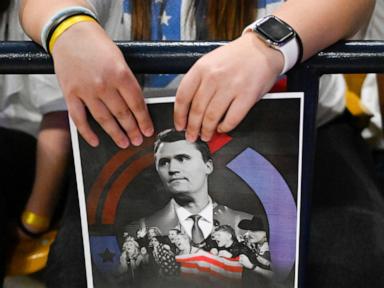
The Florida Fish and Wildlife Conservation Commission recently agreed to pay $485,000 to settle a federal First Amendment lawsuit filed by Brittney Brown, a state biologist fired for an off-the-clock social media post regarding the late conservative activist Charlie Kirk. The settlement provides $275,000 in back wages and damages to Brown, alongside $210,000 for legal fees, after agency officials allegedly fabricated operational disruptions to justify her termination. The outcome underscores a growing trend of state agencies weaponizing employment against private speech, raising severe questions about the rule of law in public administration.
This is not a story about political civility. It is an unvarnished look at how bureaucratic panic, internet mobs, and partisan pressure are draining public coffers and subverting constitutional protections.
The Cost of Compliance
When Brittney Brown shared a dark humor meme on her private Instagram story in September 2025, she was a biological scientist tracking shorebirds at the Tyndall Air Force Base Critical Wildlife Area. She had a seven-year record of strong performance reviews and steady merit bonuses. Her job involved monitoring avian nesting patterns, not managing public relations.
The post, shared off the clock, referenced the assassination of Turning Point USA founder Charlie Kirk on a Utah university campus. It suggested that a whale would care about Kirk’s death exactly as much as Kirk cared about victims of classroom shootings.
Within twenty-four hours, an online account with millions of followers published Brown’s LinkedIn profile and demanded her firing. The state agency capitulated instantly. FWC leadership terminated Brown, declaring a zero-tolerance policy for hate and violence.
The rush to fire her was so intense that someone within the agency tipped off the original online instigators about her termination just ten minutes after she was notified, long before any public announcement.
The immediate capitulation shows that agency heads have abandoned the concept of due process for state employees. When faced with digital noise, administrative leadership routinely panics, choosing the immediate relief of a firing over the constitutional obligation to protect employee speech.
Fabricated Friction in the Federal Courts
The state’s legal defense did not merely fail; it dissolved under judicial scrutiny. To legally terminate a public employee for private speech, a government entity must prove that the speech caused significant disruption to public operations. FWC Habitat and Species Conservation Director Melissa Tucker testified under oath that the agency received hundreds of documented complaints that paralyzed operations.
Discovery proved otherwise.
Attorneys representing Brown revealed that the agency received fewer than fifty complaints. Crucially, almost none of those messages ever reached the decision-makers who terminated Brown. The discrepancy led U.S. District Judge Mark Walker to issue sanctions against Tucker and the defense team for misleading testimony.
"From the beginning, the state's case rested on a foundation that could not withstand scrutiny," said Gary S. Edinger, co-counsel for Brown. "They submitted false claims about disruption that never occurred, and when confronted with the truth, they doubled down."
This reveals a systemic issue. State officials are treating federal litigation as an exercise in damage control rather than a search for truth, relying on exaggerated claims of public outrage to retroactively justify partisan firings.
The Outsourcing of Human Resources
The mechanics of Brown’s termination illustrate a dangerous governance model where state human resources departments act as executioners for online outrage mobs.
| Phase | Action | Institutional Actor |
|---|---|---|
| Identification | Private post screenshotted and matched to professional profile | External Political Influencers |
| Amplification | Workplace targeted with demands for immediate termination | Digital Follower Network |
| Execution | Employee fired within 24 hours without internal investigation | Agency Directors |
| Justification | Complaint numbers exaggerated to meet legal thresholds in court | Department Leadership |
This dynamic leaves public servants vulnerable to targeted cancellation campaigns. The underlying mechanism relies on a total collapse of administrative independence. Instead of assessing whether an employee's work is impacted, agencies look at their social feeds to gauge political risk.
The True Price Paid by Taxpayers
The $485,000 settlement paid to Brown is not an isolated event. It is part of a broader legal trend across multiple states following the fallout from Kirk’s death. In Tennessee, state officials recently agreed to pay $835,000 to settle a lawsuit brought by a retired police officer who was wrongfully jailed over a similar online comment.
In Florida, the fiscal cost is compounded by the selection of legal counsel. Rather than utilizing internal staff attorneys, the FWC retained Lawson Huck Gonzalez, a private firm known for representing the state administration in high-profile political battles.
The financial structure of the Brown settlement splits the funds cleanly between personal vindication and legal realities.
- $235,000: Compensatory damages for emotional distress and career disruption.
- $40,000: Back wages owed during the period of unemployment.
- $210,000: Legal fees and court costs generated by the state's prolonged defense.
The state preferred to route half a million dollars of taxpayer money to outside lawyers and damages rather than admit an error in judgment. This is a deliberate policy choice to fund ideological battles using public resources.
The Irreparable Ecological Deficit
While the financial settlement is substantial, the professional cost to Florida's conservation efforts cannot be recouped. Under the terms of the agreement, Brown is barred from ever applying to or working for the FWC again.
In specialized scientific fields, a state regulatory agency often holds a monopoly on employment. By banning an experienced shorebird biologist from the primary conservation body in the state, the administration has effectively excommunicated an expert from her local ecosystem.
The chill extends far beyond bird conservation. Every state employee, from hydrologists to safety inspectors, now understands that their private life can be weaponized against them if it offends the prevailing political orthodoxy in the state capital.
Public workers do not sign away their citizenship when they take a government salary. When agencies treat the Bill of Rights as an inconvenient corporate policy, the courts will continue to penalize them at the expense of the public.