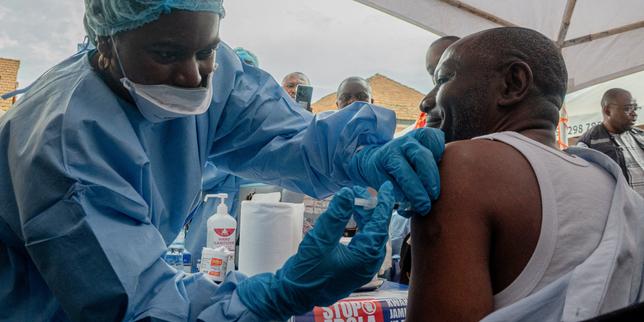
More than 10,000 recorded Ebola cases across Africa, heavily concentrated in the Democratic Republic of the Congo (DRC), and 4,887 deaths tell a grim story on paper. Yet tallies alone miss the real machinery driving the toll. Headlines recite cumulative numbers as if an outbreak were a static ledger rather than a collision between filovirus biology, fragile health systems, armed displacement, and slow diplomatic cash flows.
The competitor piece treats those figures like a scoreboard. That misses the point entirely. When an epidemic crosses five figures in cases and nears five thousand deaths, the headline count is a lagging shadow of hundreds of broken links in contact tracing, underfunded district clinics, and communities exhausted by years of instability.
Why Headcounts Lag Behind Reality
Numbers move slowly. Viruses do not.
In rural and conflict-affected districts of the DRC, confirming a case requires laboratory verification, reliable transport from remote health posts, and cooperation from families who have every reason to distrust strangers in protective gear. A person can fall ill, pass the pathogen to household caregivers or traditional healers, and die before a single epidemiological form ever reaches a provincial data desk.
Under-ascertainment is not a clerical flaw. It is a structural feature of outbreaks in places where primary care clinics run out of basic gloves, clean water, and oral rehydration salts long before a single Ebola patient walks through the door. When routine health services already struggle with malaria, cholera, and measles, early Ebola symptoms—fever, severe headache, muscle aches, fatigue, and gastrointestinal distress—look like ten other emergencies competing for the same scarce beds.
The Trap of Cumulative Totals
Aggregating cases across years and across different provinces can flatten critical shifts. A spike in one health zone behaves very differently from steady low-level transmission in another, and a death recorded weeks after symptom onset reflects care decisions made days earlier.
Reporting systems also depend on security and road access. When armed clashes or floods sever a corridor, case counts in that pocket may appear to dip even as transmission continues quietly out of sight. Experienced field epidemiologists know that a sudden drop in reported cases in an unstable zone calls for scrutiny, not relief.
- Delayed reporting stretches the gap between exposure, isolation, and statistical confirmation.
- Diagnostic bottlenecks force clinicians to make life-or-death triage calls based on syndromic suspicion rather than laboratory proof.
- Community avoidance grows when treatment centers are perceived as places of isolation and death rather than recovery.
How Transmission Actually Takes Hold
Ebola spreads through direct contact with the blood, secretions, organs, or other bodily fluids of infected people, or with surfaces and materials contaminated with those fluids. It does not spread casually through the air like seasonal influenza. That distinction sounds comforting until you examine how people care for one another when money is tight and hospitals are far away.
Care is love. Care is also risk.
When a mother, spouse, or neighbor falls violently ill with vomiting and diarrhea, staying away feels unnatural. In households without running water, soap, or disposable gloves, wiping down bedding or holding a feverish relative leaves bare hands exposed to high viral loads, especially late in the illness and after death.
Burials, Grief, and Trust
Funeral customs sit at the sharpest fault line of any Ebola response. Across many Central and West African communities, washing, dressing, and saying a close physical farewell to the deceased are sacred duties that honor the dead and protect the living from spiritual harm.
Safe and dignified burial teams were created to bridge that divide, yet friction persists whenever outside responders impose rigid rules without local negotiation. If families feel rushed, overruled, or denied culturally meaningful rites, secret burials happen. One unsafe funeral can spark an entire new chain of transmission in a single week.
Containment succeeds or fails in living rooms and graveyards long before it is won or lost in high-level emergency meetings.
The Logistics Bottleneck Behind Every Response
Outbreak control is often framed as a medical battle. On the ground, it is mostly a supply-chain and human-relations grind.
Think of a hypothetical example in a remote district of the DRC. A suspected Ebola case is flagged at a rural health center sixty kilometers down a rutted, rain-slicked track. To break the chain, a team needs fuel for motorcycles and four-wheel-drive vehicles, radio or mobile network coverage, personal protective equipment in usable sizes, cold-chain storage for vaccines and therapeutics where applicable, trained nurses willing to work rotational shifts, and hazard pay that arrives on time rather than months late.
Miss two or three of those links and the entire response stalls. Health workers who go unpaid or lack basic protection face an impossible choice: walk off the job to protect their own families or stay at their posts and gamble with their lives.
When Aid Arrives Late or Fragmented
International emergencies routinely suffer from a feast-or-famine funding cycle. Attention surges when dramatic numbers hit global wires, then fades as soon as weekly tallies edge downward—even when lingering chains of infection or viral persistence in survivors require sustained surveillance and clinical follow-up.
Coordination between national ministries, international agencies, non-governmental organizations, and local leaders can also fracture under pressure. Overlapping mandates, shifting donor priorities, and short-term grants rarely build permanent district health capacity. Once the emergency teams pack up, the underlying clinic weaknesses often remain.
| Response Pillar | What It Requires on the Ground | Where It Commonly Breaks Down |
|---|---|---|
| Surveillance and Tracing | Trusted local tracers, map access, daily follow-ups | Mobile populations, fear of stigma, missing transport funds |
| Clinical Care | Isolation capacity, fluids, electrolyte support, trained staff | Stockouts, overworked personnel, late arrival of patients |
| Safe Burials | Rapid dispatch, family dialogue, culturally adapted protocols | Mistrust of external teams, delayed burial response times |
| Community Engagement | Two-way listening with elders, healers, and youth | Top-down messaging that ignores local rumors and grievances |
Overlooked Forces Shaping the Toll
Focusing solely on Ebola as a standalone viral threat obscures why some regions keep absorbing massive blows while others contain flare-ups faster.
Displacement is one of the biggest amplifiers. People fleeing violence or economic collapse move along informal routes, live in crowded temporary shelters, and carry existing health deficits like anemia and malnutrition. Every mile of unplanned movement complicates contact tracing and stretches fragile cross-border health coordination.
Stigma and the Cost of Survival
Surviving Ebola does not mean walking away untouched. Survivors can face joint pain, vision problems, psychological trauma, and social rejection from neighbors who fear contagion long after recovery.
When communities stigmatize survivors or ostracize families linked to cases, people hide symptoms. Hiding symptoms delays care, and delayed care drives higher mortality and wider spread. Addressing stigma is not soft public relations; it is core epidemiology.
Why There Are No Silver Bullets
Medical countermeasures—including targeted therapeutics and vaccines against specific Ebolavirus species—have transformed what is clinically possible compared with earlier decades. Still, no medical tool works in a vacuum.
Vaccines require cold chains, clear eligibility protocols, and public trust. Therapeutics work best when patients arrive early rather than after days of untreated fluid loss. Even in the best-equipped settings, Ebola demands meticulous infection prevention and control inside every clinic, maternity ward, and outpatient room, because health facilities themselves have repeatedly served as amplification points when triage falters.
What Real Accountability Looks Like
A tally of more than 10,000 cases and 4,887 deaths across Africa—with the overwhelming share in the DRC—should force a harder question than how big the next pledge will be. It should ask why basic protective gear, clean water at rural clinics, reliable local health worker pay, and respectful community partnerships are still treated as emergency extras rather than everyday baseline investments.
True preparedness is built quietly between outbreaks, inside ordinary district clinics where nurses have running water, working thermometers, and a community that trusts them when trouble starts.


