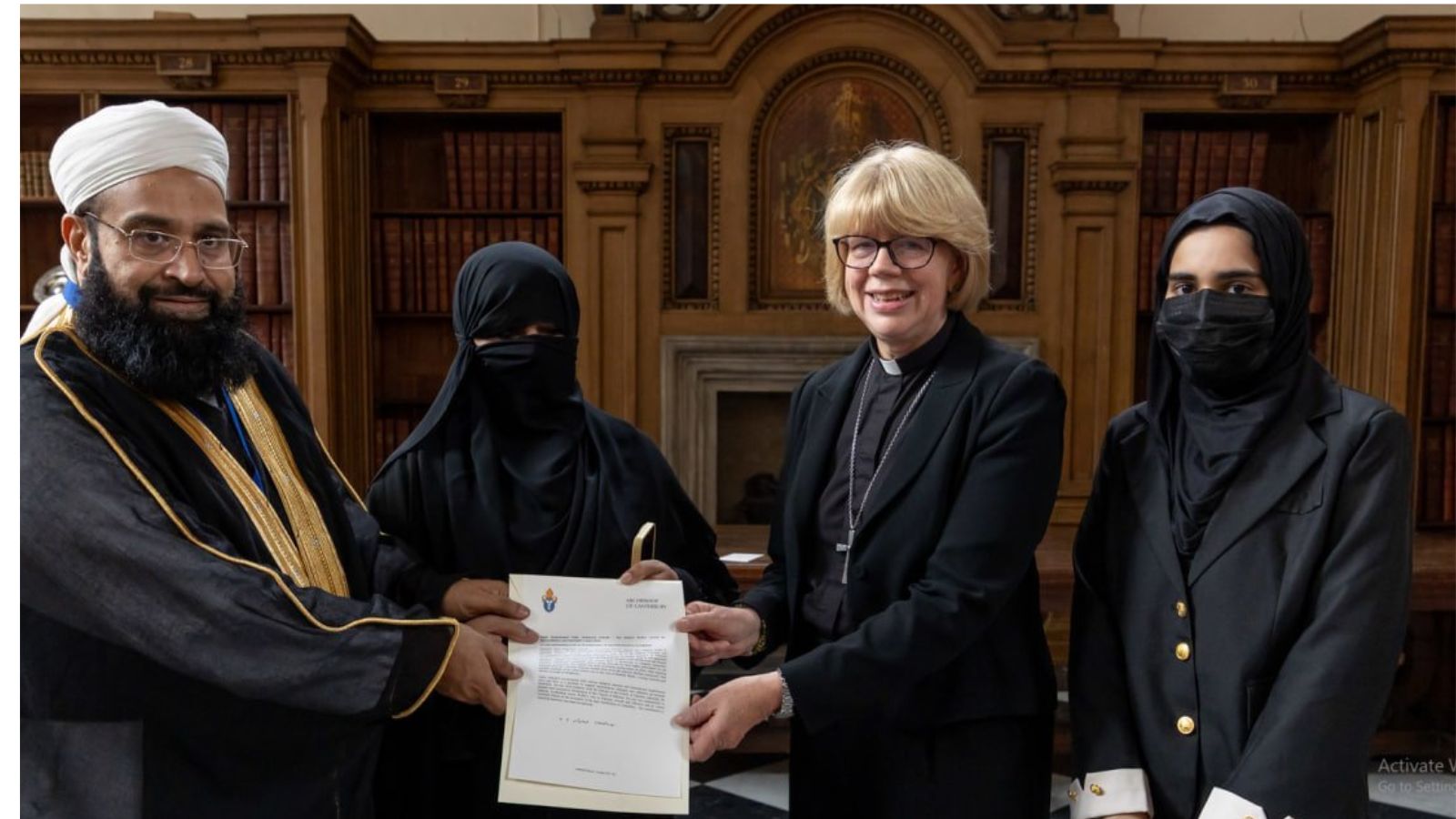
Diplomatic optics often blind institutions to the brutal realities on the ground. When Lambeth Palace awarded the Hubert Walter Award to Pakistani cleric Tahir Ashrafi for promoting religious harmony, church leadership likely envisioned a straightforward photo opportunity celebrating cross-cultural dialogue. Instead, the gesture imploded. Within days, the award was rescinded after long-standing controversies resurfaced, culminating in an investigative firestorm connecting Ashrafi’s inner circle to an alleged criminal enterprise that weaponized Pakistan’s lethal blasphemy laws for extortion.
This scandal is not merely an administrative blunder by the Church of England. It represents a systemic failure of international vetting and exposes a much darker underworld operating within Pakistan. Here, religious authority, state-backed diplomatic profiling, and organized crime converge around the country's draconian blasphemy statutes.
The Anatomy of a Foreign Honors Scandal
Diplomacy requires partners. Governments and religious bodies frequently elevate local figures who present themselves as moderate interlocutors, bridging the gap between conservative religious communities and western diplomatic missions. Tahir Ashrafi filled this role for years. As head of the Pakistan Ulema Council and a former government special representative on religious harmony, he cultivated an international persona as a voice of moderation.
Foreign dignitaries welcomed his assurances. They dined with him, praised his advocacy, and ultimately decided to honor him. Yet, this public-facing persona masked a deeply polarized domestic record. Critics, human rights defenders, and independent journalists had spent years raising alarms about Ashrafi’s past statements and political alignments.
When the Hubert Walter Award was announced, those warnings were brushed aside by ecclesiastical evaluators eager for a public relations win. The collapse was swift. As soon as the ceremony concluded, archival records re-emerged. Observers pointed to a 2007 interview where Ashrafi’s council bestowed a high honor on Osama bin Laden as a protest against British honors awarded to Salman Rushdie. Facing immediate public outrage and pressure from human rights groups, Lambeth Palace scrambled to reverse its decision, revoking the medal and admitting severe flaws in its nomination process.
Yet, the bin Laden remarks were only the surface layer of a much deeper, more dangerous investigation. The real crisis involved allegations linking Ashrafi’s family to a systematic blackmail syndicate operating under the cover of Pakistan’s blasphemy laws.
Anatomy of the Blasphemy Business Gang
Blasphemy in Pakistan carries the ultimate penalty. Under statutes like Section 295-C of the Pakistan Penal Code, insults to Islam or its Prophet can result in a mandatory death sentence or life imprisonment. Even an unproven accusation triggers immediate social ostracization, mob violence, and violent reprisals before a court can ever hear the evidence.
For criminal syndicates, this legal weapon transformed into a lucrative business model. Recent investigative reports published by international and domestic outlets laid bare the operations of what law enforcement sources described as a blasphemy business gang. This network did not operate in the shadows of ordinary street crime. Instead, it allegedly coordinated with corrupt elements within law enforcement and investigative agencies to manufacture cases, extort families, and generate millions of rupees through systematic terror.
At the center of these allegations stands Hassan Muawiya Ashrafi, the brother of Tahir Ashrafi. According to police records, court filings, and investigative findings, Muawiya emerged as a central operator within a Lahore-based network accused of orchestrating elaborate honey-trap operations.
The mechanism was brutally simple. Victims were targeted online through social media profiles designed to lure them into casual conversations. Operatives then manipulated these digital interactions, tricking targets into sharing material that could be framed as blasphemous. Once the trap snapped shut, the targets were abducted, detained, and subjected to physical torture while extortionists demanded heavy ransoms from their terrified families.
If families paid, the victims were sometimes released into silence. If they could not pay, formal blasphemy charges were filed through police channels, sealing the victim's fate within a judicial system cowed by religious extremism. State reports from provincial internal security branches confirmed a sharp surge in blasphemy-related incarcerations, jumping exponentially from single-digit annual figures to hundreds of cases within a short span, highlighting an industrial-scale manufacturing of blasphemy accusations.
The Mechanics of Extortion and Terror
Understanding how these networks function requires looking past abstract legal commentary and examining the terrifying physical reality faced by ordinary citizens. When a family is targeted by a blasphemy blackmail ring, they enter an institutional vacuum where survival depends entirely on discretion, fear, and money.
Survivors and relatives of victims who spoke to investigative journalists described harrowing ordeals of abduction and abuse. In several documented instances, abducted men were held in clandestine locations, beaten, and subjected to severe sexual and physical violence while their tormentors filmed the assaults to ensure compliance. The psychological terror was compounded by the knowledge that even breathing a word of the ordeal to local authorities could trigger counter-accusations or incite local mobs.
The financial toll matched the physical brutality. Extortion demands frequently reached astronomical sums in local currency, forcing families to sell ancestral land, borrow heavily from usurers, or liquidate small businesses just to prevent a formal blasphemy charge from being registered. In tragic cases where ransoms could not be raised, victims died from the severity of torture inflicted during captivity, their deaths later obscured by falsified medical reports or attributed to unrelated health issues while in custody.
Despite these grim details, powerful figures managed to shield themselves behind layers of political influence and diplomatic immunity. Tahir Ashrafi has consistently denied any personal involvement in extortion or criminal enterprises, dismissing the allegations as politically motivated attacks designed to damage his reputation. His supporters argued that family members are independent adults and that holding a prominent cleric accountable for the actions of a sibling is a smear tactic aimed at undermining his work in interfaith dialogue.
However, judicial scrutiny has begun to penetrate the wall of denial. Proceedings before high courts in Pakistan revealed damning evidence of systemic police collusion, missing investigative records, and the recurrent appearance of identical female profiles used in honey-trap operations across multiple districts. Judges ordered specialized commissions of inquiry, demanding answers from law enforcement agencies that had previously turned a blind eye to the syndicate's activities.
Institutional Naivety at Lambeth Palace
The collision between international diplomacy and local criminality raises severe questions regarding how western institutions vet international figures. Lambeth Palace operates within a framework of optimistic engagement. Its mandate focuses on peacebuilding, reconciliation, and building bridges across religious divides. In theory, this approach fosters genuine dialogue. In practice, it creates a dangerous vulnerability to exploitation by figures who maintain dual personas.
To foreign diplomats and religious leaders, Tahir Ashrafi played the statesman. He spoke the language of tolerance, condemned sectarian violence when convenient, and presented himself as a necessary partner for protecting religious minorities in a volatile region. This performance satisfied the institutional checkboxes of western ecclesiastical bodies.
Vetting processes often rely heavily on local endorsements rather than rigorous independent investigations. In this case, the recommendation came through regional church leadership, including high-ranking figures within the Church of Pakistan who championed Ashrafi's candidacy for the Hubert Walter Award. These local nominators argued that engaging figures with influence over conservative religious majorities is essential for safeguarding vulnerable Christian communities living under constant threat of blasphemy accusations.
That argument exposes a profound strategic miscalculation. Appeasing powerful clerics who maintain ties to extremist ideologies or tolerate systemic abuses does not protect minorities. It empowers the very power structures that oppress them. When international bodies hand out prestigious awards to individuals whose domestic records are marred by controversy and family-linked criminal enterprises, they inadvertently provide those figures with a veneer of global legitimacy that shields them from local accountability.
The rapid unravelling of the award ceremony demonstrates that the old playbook of diplomatic insulation no longer works in an interconnected information ecosystem. Local human rights defenders, exiled journalists, and digital activists can now bypass traditional gatekeepers to broadcast uncomfortable truths across borders within minutes. Lambeth Palace did not uncover Ashrafi’s past through internal due diligence; it reacted defensively after public pressure made ignoring the facts impossible.
The Domestic Fallout and Legal Reckoning
Backlash inside Pakistan has been fierce, dividing religious and political communities along predictable lines. Conservative religious councils rallied to defend Ashrafi, issuing strongly worded statements condemning the investigative reports as foreign-backed conspiracies aimed at discrediting prominent Islamic scholars and destabilizing the country's social fabric. Legal actions and defamation threats were swiftly launched against media outlets that published details of the syndicate's operations.
Conversely, civil rights activists, minority advocates, and independent legal professionals viewed the scandal as a long-overdue exposure of a rotting system. For years, domestic human rights organizations have documented how anti-blasphemy laws are hijacked by criminal gangs, land grabbers, and personal rivals to settle scores with total impunity. The inclusion of high-profile names in these investigative revelations shattered the taboo that protected the architects of the blasphemy industry from public scrutiny.
The judicial system now faces a monumental test. While high court judges have pushed for transparent inquiries and condemned police complicity, the structural incentives that make blasphemy accusations a powerful weapon remain entirely intact. Lawmakers have repeatedly shied away from introducing procedural reforms to curb the abuse of Section 295-C, terrified of triggering violent street protests led by religious right-wing groups who view any attempt at reform as apostasy.
As long as the state refuses to penalize false accusers and dismantle the organized networks profiting from fear, the blasphemy business gang model will adapt and survive. International recognition may falter, and foreign awards may be quietly rescinded under the glare of media scrutiny, but the daily reality for ordinary citizens caught in the crosshairs of extortion and state-sanctioned terror remains unchanged.
The revocation of a medal in London does not dismantle a torture ring in Lahore. Accountability requires far more than diplomatic embarrassment; it demands an uncompromising reckoning with the domestic networks that monetize human suffering under the guise of religious sanctity.