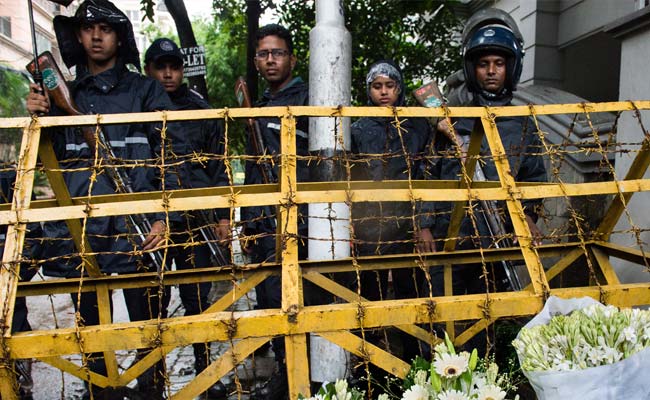
Security sweeps inside urban spaces rarely begin with dramatic shootouts. More often, they start with the quiet ping of a digital notification, a monitored chat thread, and a coordinated movement of law enforcement units converging on a landmark. When the Dhaka Metropolitan Police detained twenty-three individuals from a mosque near Tejgaon College, the immediate headlines focused on the numbers. Twelve of those detained were subsequently placed on three-day remands under scrutiny for suspected extremist links. Yet, looking past the initial police blotter reports reveals a far more complex reality about how modern security operations unfold in densely populated urban centers, the shifting mechanics of underground recruitment, and the delicate balance between public safety and civil liberties during periods of heightened political transition.
The operation itself unfolded in the Farmgate area during late afternoon hours. Intelligence units, including specialized details from the Counter Terrorism and Transnational Crime unit, moved in after tracking a gathering inside the Tejgaon College Jame Masjid. According to initial statements from law enforcement officials, the group was holding an unannounced assembly that intelligence reports flagged as a potential clandestine meeting. In the immediate aftermath, differing narratives emerged with striking speed. Detainees like Shihab Uddin, identified by authorities as a WhatsApp group administrator, insisted to reporters and investigators that the assembly was entirely benign, claiming the participants were merely coordinating business matters and had barely known one another before arriving via digital invitation.
This friction between police suspicion and civilian denial underscores a fundamental challenge for investigators operating in the capital. Modern urban security is no longer just about raiding physical safehouses filled with printed manifestos and cached weapons. It relies heavily on intercepting fragmented, decentralized communication networks where participants may occupy a gray zone between casual ideological sympathy, economic desperation, and active operational plotting. When groups organize through encrypted messaging applications, distinguishing between a legitimate grassroots gathering and a radical cell requires parsing digital footprints that are intentionally obfuscated.
The choice of location also carries symbolic and tactical weight. Mosques and educational hubs in central Dhaka have historically been sensitive flashpoints. Placing security operations inside religious venues invites intense public scrutiny and political sensitivity, demanding that law enforcement agencies walk a very narrow line. Authorities must act swiftly on credible intelligence to preempt potential threats, but overzealous sweeps risk alienating communities and fueling narratives of overreach. The involvement of specialized counter-terrorism units alongside regular local police units signals that the state treats these urban intercepts not as minor public order offenses, but as high-priority intelligence vectors.
Behind every mass detention lies an arduous verification process. Once suspects are taken to central holding facilities like the detective branch offices on Minto Road, investigators must rapidly sort through alibis, check mobile device metadata, cross-reference past affiliations, and determine whether a formal case under anti-terrorism statutes is sustainable. The transition from a blanket Section 54 detention to a formal court-ordered remand highlights the legal threshold authorities must cross to justify holding individuals. It is a high-pressure environment where investigators balance the imperative to neutralize embryonic threats against the strict evidentiary standards required by the judiciary.
Ultimately, the Tejgaon sweep serves as a case study in the friction of contemporary counter-terrorism management. As underground networks adapt to modern communication tools, law enforcement agencies are forced to evolve their surveillance and interdiction tactics in real time. The true test of these operations lies not in the initial headcount of detained individuals, but in the rigorous, unglamorous investigative work that follows behind closed doors. Only time and thorough judicial scrutiny will separate genuine security threats from the complex noise of modern urban life.