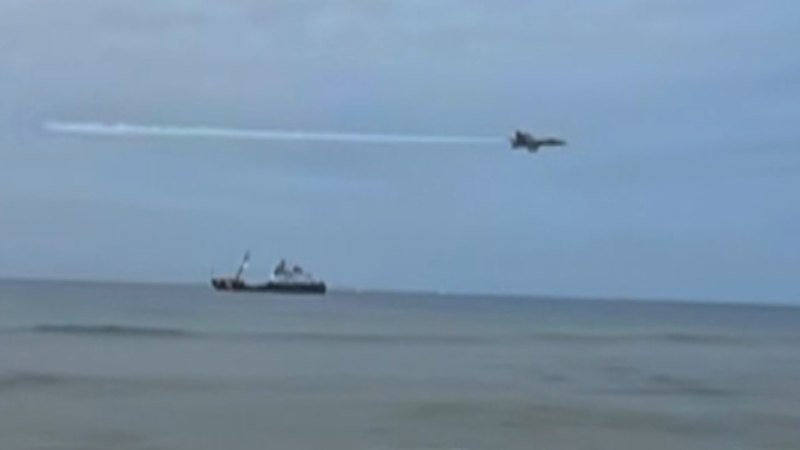
A standard afternoon on a crowded Florida beach does not typically involve diving into the sand to escape a multi-million-dollar fighter jet. Yet, that is precisely what happened when a low-flying Navy jet tore through the coastal airspace, sending beach umbrellas flying, scattering sunbathers, and triggering a wave of local panic. While initial local media reports framed the incident as a bizarre, isolated stunt or a pilot gone rogue, the reality points to a far more systemic issue. This beachside chaos is the direct result of shrinking military training zones, an aggressive push for low-altitude tactical readiness, and a widening communication gap between the Pentagon and the civilian communities directly beneath its flight paths.
The military calls it maintaining operational readiness. Residents call it a public safety hazard. For a more detailed analysis into this area, we recommend: this related article.
To understand how a routine training mission turns into a terrifying close call for hundreds of tourists, one has to examine the changing constraints of American military aviation. Pilots need realistic environments to train for modern conflicts. In the past, this meant vast, restricted military operating areas far out at sea or over uninhabited desert terrain. But the modern geopolitical landscape requires mastery over complex coastal environments and radar-evading, low-altitude navigation.
The Squeeze on Military Airspace
Military airspace is facing unprecedented pressure from civilian growth. As commercial aviation routes expand to accommodate record travel volumes and coastal real estate developments push further out, the buffer zones between military training tracks and civilian life have eroded. For additional background on this topic, comprehensive coverage can also be found at Al Jazeera.
Consider a hypothetical scenario where an F/A-18 Super Hornet squadron needs to practice low-altitude terrain masking—flying low to hide from enemy radar. If their traditional offshore box is occupied by commercial shipping lanes or civil aviation corridors, planners are forced to squeeze missions into narrow tactical routes that trace the coastline. When a pilot is flying at 400 knots just a few hundred feet above the water, a minor deviation in navigation or a sudden change in wind shear can push the aircraft directly over a public beach in the blink of an eye.
The physics of these encounters are brutal for those on the ground. A jet traveling near the speed of sound creates a massive pressure wave. When that wave hits a flat, open space like a public beach, it behaves like a physical shockwave. It knocks over gear, shatters peace of mind, and can cause permanent hearing damage in a matter of seconds.
The Illusion of Civilian Safeguards
The Federal Aviation Administration and the Department of Defense maintain strict guidelines regarding minimum safe altitudes. Generally, military aircraft are required to stay at least 500 to 1,000 feet away from congested areas or open-air assemblies of persons.
However, enforcement relies on a flawed system of self-reporting and delayed radar analysis. By the time a civilian files a complaint about a low-flying jet, the aircraft is already back at base, and the data is buried in military logs.
Furthermore, the Navy frequently utilizes exceptions for "tactical necessity." This loophole allows commanders to authorize low-level training routes that skirt the absolute edge of civilian safety margins. The justification is always the same: if American pilots do not train in high-pressure, low-altitude environments at home, they will not survive in contested airspace abroad.
The Real Cost of Coastal Overflights
The psychological impact on coastal communities is mounting. Florida's economy relies heavily on its reputation as a safe, relaxing destination. When low-flying military assets disrupt that narrative, the economic consequences can ripple through local hospitality industries.
- Acoustic Trauma: Sudden, high-decibel noise spikes cause immediate panic, particularly among children, the elderly, and veterans suffering from PTSD.
- Property Damage: The wake turbulence from a low-flying fighter jet can easily dislodge unsecured property, break lightweight structures, and create flying debris on crowded shorelines.
- Environmental Disruption: Coastal wildlife, including nesting shorebirds and marine mammals, suffer severe behavioral disruptions from low-altitude sonic profiles.
The military often treats these incidents as minor public relations headaches, issuing boilerplate apologies about "understanding the community's concerns" while quietly continuing the same flight profiles. It is a reactive posture that ignores the underlying friction between aggressive training doctrines and rapid coastal urbanization.
Bridging the Communication Gulf
Fixing this dangerous dynamic requires more than just adjusting flight schedules. The Pentagon must implement real-time geo-fencing technology that automatically alerts pilots when they approach civilian-dense coastlines during high-traffic hours.
Simultaneously, civilian authorities need a direct, transparent pipeline to military air traffic control centers. Currently, a local police department attempting to report a dangerous overflight must navigate a bureaucratic labyrinth of public affairs offices, ensuring that by the time accountability is sought, the operational momentum has moved on.
If the Navy continues to treat the skies above public beaches as an extension of its tactical playgrounds, another incident is inevitable. The margin for error at high speeds and low altitudes is zero. Without immediate, structural changes to how coastal training routes are mapped and monitored, the next low-flying jet will cause far more than just chaos on the sand.
:max_bytes(150000):strip_icc()/master-bedroom-in-new-luxury-home-with-chandelier-and-large-bank-of-windows-with-view-of-trees-1222623844-212940f4f89e4b69b6ce56fd968e9351.jpg)