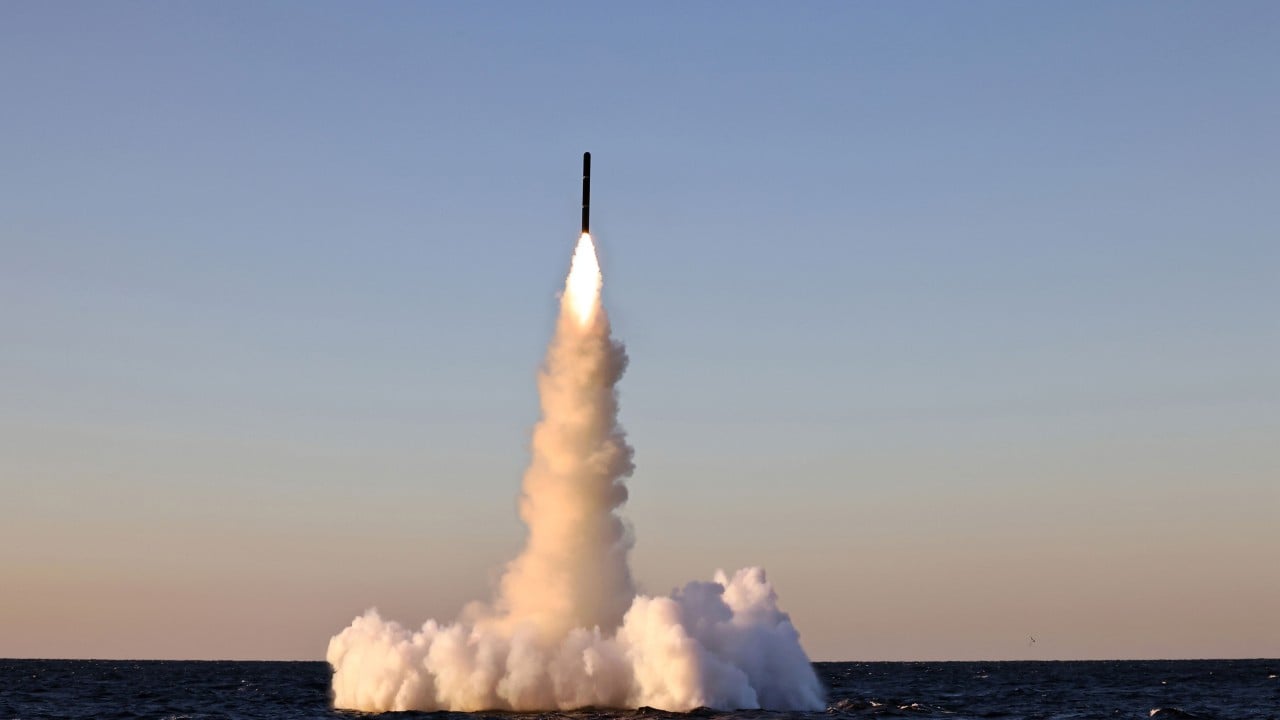
North Korea’s cruise missile launches test regional defence by exploiting a physical blind spot that billions of dollars in high-altitude interceptor batteries were never built to stop. Ballistic missiles arc high into space where radar domes can track them and kinetic interceptors can smash them apart. Cruise missiles skim the dirt and waves at subsonic speeds, hiding behind hills, buildings, and the curvature of the Earth until seconds before impact.
Watch enough defense briefings in Seoul, Tokyo, or Washington and you will hear the same rehearsed script after every launch. Analysts count the miles, map the trajectory, and warn that the regional arms race is heating up. That framing misses the real problem. The danger is not just that Pyongyang is firing more weapons. The danger is that regional air and missile defense networks were designed to win a high-altitude duel while leaving the low-altitude floor wide open.
Why Ballistic Shields Leave a Low-Altitude Gap
Missile defense is a game of geometry and physics before it is a game of politics. Ground-based radars see in straight lines. Because the Earth curves away beneath a radar beam, a low-flying object hugs the terrain and stays masked behind ridges or coastal cliffs for far longer than a high-arching warhead.
By the time a low-altitude cruise missile pops over a ridge line, the defending battery has compressed decision time. Radars have to classify a small, slow, irregular target amid ground clutter, birds, and terrain returns. Fire-control computers must calculate a firing solution, cue launchers, and guide an interceptor into a moving target that can jink or follow river valleys.
Consider a hypothetical example of a coastal radar site monitoring a mountainous border. A ballistic missile launched from inland rises steeply into view of long-range early-warning sensors within tens of seconds, giving commanders minutes to track its arc and coordinate an engagement. A cruise missile flying a hundred meters above winding valleys stays hidden behind successive terrain folds for much of its flight, appearing late on short-range sensors and forcing point-defense crews to react in compressed time.
That asymmetry explains why North Korea’s cruise missile launches have become such a persistent headache for allied planners. Even when a cruise missile flies slower than a ballistic warhead, low-altitude flight strips away warning time and complicates sensor handoffs between batteries.
Dispersal Warheads and Terminal Tricks
Recent North Korean test claims point to refinements aimed directly at the hardest part of any intercept: the final seconds over a target. State media reports on November 2026 launches highlighted a strategic cruise missile fitted with a dispersal warhead capable of affecting an area of roughly five to six hectares, alongside claims of improved terminal maneuverability for vertical strikes and route planning tailored to local geography.
Even if state claims are inflated—which defense officials routinely suspect—the operational logic is clear. A dispersal or submunition-style effect broadens the footprint over an airfield, port, logistics hub, or command post without requiring pinpoint accuracy on a single hardened bunker. Terminal maneuvering and steepening dive angles near the end of flight stress short-range air defenses that expect predictable flight paths.
A weapon does not need to defeat every interceptor in a battery to succeed; it only needs to saturate the defenders or strike while sensors are still sorting out what is real from what is clutter.
There is also a broader doctrinal shift at work. Pyongyang has spent years pairing long-range cruise missiles with tactical ballistic systems, hypersonic-style glide vehicles, and larger surface combatants that could eventually complicate maritime tracking. Mixing high-speed ballistic threats with low-flying cruise profiles forces a defender to split attention, radar beams, and interceptor magazines across two completely different engagement regimes.
The Economics of Magazines and Clutter
Hardware is only half the story. Math decides wars of attrition, and the math on missile defense has rarely favored the defender.
A single cruise missile or salvo of drones and rockets can be built at a fraction of the cost of modern interceptors. Even wealthy militaries face finite stocks of high-end missiles, constrained production lines, and complex supply chains for rocket motors, seekers, and electronics. Firing two interceptors at every incoming threat to guarantee a kill drains magazines fast during a sustained exchange.
South Korea has pushed ahead with layered defenses—spanning Patriot batteries, Cheongung-II, longer-range interceptors, and accelerated work on a Low Altitude Missile Defense system aimed at shorter-range threats—while Japan continues to expand its layered air and missile shield. Yet hardware alone cannot solve integration gaps. Radars, command-and-control nodes, and shooters from different services and allied forces must pass clean tracks to one another in real time without lag or confusion.
There is also an overlooked funding angle. Analysts tracking sanctions evasion have pointed to North Korean cyber operations—including major cryptocurrency thefts—as a key source of hard currency supporting weapons research and military modernization outside traditional banking channels. Sanctions enforcement has grown uneven across the region, making financial containment harder just as weapons testing continues.
Counter-Arguments and Overlooked Realities
Not every analyst agrees that cruise missiles are an automatic defense-breaker. Critics of alarmist commentary rightly point out that cruise missiles are subsonic, making them vulnerable to capable fighter patrols, layered surface-to-air networks, and electronic warfare if a defender has dense sensor coverage and enough time to cue assets.
Claims from Pyongyang also carry a heavy propaganda tax. North Korean announcements frequently overstate range, accuracy, or warhead effects to project strength abroad and satisfy domestic political goals. Treating every headline figure as proven battlefield reality leads to bad force planning.
Still, dismissing cruise missiles because they fly slowly is a mistake. Speed is not the only metric that matters in air defense. Persistence, terrain masking, low radar cross-section, and the ability to fly around known engagement zones give cruise missiles tactical flexibility that ballistic trajectories lack.
A few practical realities often get lost in the noise:
- Sensor density beats single-point perfection: One powerful radar on a mountaintop cannot see into every valley; distributed low-altitude sensors and airborne early-warning platforms are essential to spot low fliers early.
- Integration is harder than procurement: Buying new launchers is straightforward compared to wiring disparate radars, interceptors, and command posts into a single fast-reacting network.
- Diplomatic freeze deepens military risk: With talks stalled, sanctions enforcement fractured, and regional security attention pulled across multiple crises, deterrence relies more heavily on military readiness and fewer guardrails.
What Regional Planners Actually Face
For defense planners in Seoul and Tokyo, the core test is no longer whether they can track a textbook ballistic arc over the sea. It is whether they can detect, track, and intercept low-flying threats in messy terrain under compressed timelines without burning through their best interceptors in the opening minutes of a crisis.
Every test launch adds data to that equation, refining flight profiles for the offense while forcing defenders to plug seams in radar coverage, magazine depth, and joint command. Until low-altitude detection and cost-effective interception catch up to the threat, North Korea’s cruise missile launches will keep exposing the softest spots in regional defense.


