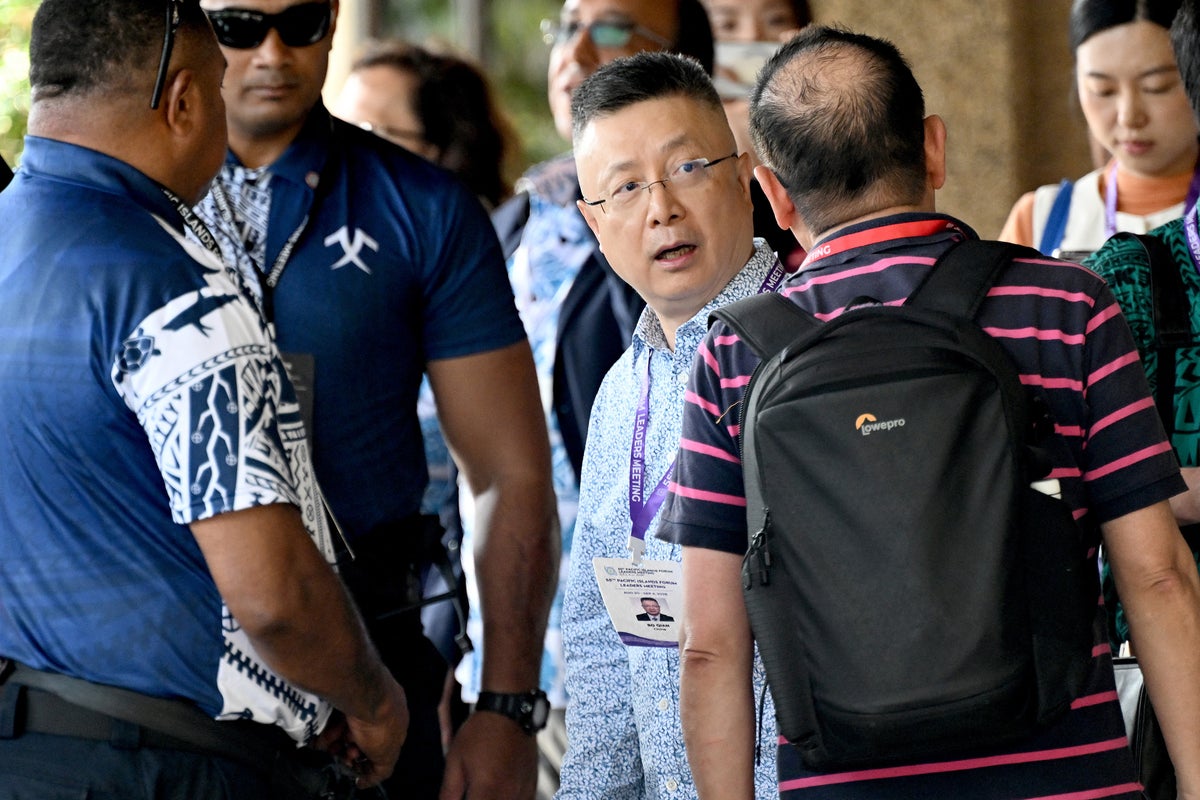
China has issued a stark warning of unspecified consequences following the attendance of a Taiwanese delegation at the Pacific Islands Forum in Palau, turning an annual regional summit into a high-stakes geopolitical contest. Beijing's special envoy for Pacific island affairs, Qian Bo, publicly condemned the participation of Taiwanese Foreign Minister Lin Chia-lung at sideline events and opening ceremonies, claiming the presence violated regional norms and insisting that accountability would follow.
The confrontation in Palau lays bare a much deeper struggle for maritime dominance across Oceania.
For decades, the Pacific Islands Forum operated as a quiet venue for discussing fisheries management, sea-level rise, and regional economic cooperation. Today, it serves as a primary chessboard for great power competition between China, Western allies like Australia and the United States, and Taipei's remaining diplomatic allies.
The Shifting Mechanics of Diplomatic Recognition
Beijing has systematically eroded Taipei's official footprint across Oceania. Through targeted economic investments, infrastructure projects, and diplomatic pressure, Beijing has convinced multiple island nations to sever ties with Taipei over the years.
Only three nations in the entire Pacific region now maintain formal diplomatic recognition of Taiwan: Palau, Tuvalu, and the Marshall Islands.
This leaves Palau in a precarious position. As the host of this year's summit, President Surangel Whipps Jr faced immense pressure from Beijing to marginalize or exclude the Taiwanese delegation. Instead, Palau chose to lean into its sovereign right to invite partners of its choosing.
The economic pressure applied to Palau prior to the summit followed a familiar script. Beijing previously issued travel warnings discouraging Chinese tourists from visiting the archipelago, weaponizing tourism revenue against a tiny nation where visitor spending historically drives a massive share of the gross domestic product. When economic coercion fails to shift foreign policy choices in small island states, diplomatic friction inevitably spills out into multilateral forums.
The Regional Pushback from Canberra and Wellington
Western powers with historical and strategic equities in Oceania quickly moved to buffer Palau against Beijing's rhetorical attacks.
Australian Prime Minister Anthony Albanese brushed off the Chinese envoy's threats, stating flatly that the regional body determines its own guest list rather than outside capitals. Canberra views the South Pacific as its primary strategic backyard. Allowing Beijing to dictate who sits in the audience at a regional summit represents a dangerous precedent that Australian and New Zealand diplomats cannot afford to normalize.
At the same time, regional unity is fracturing beneath the surface. Several key Pacific leaders chose to skip the Palau summit entirely, raising quiet alarms among traditional partners about foreign interference and the hardening of pro-Beijing factions within regional leadership structures. The absence of high-level figures from nations like the Solomon Islands and Kiribati demonstrates how deeply Chinese influence has penetrated domestic politics across the archipelago states.
The Unspoken Cost of Strategic Realignment
Behind the diplomatic posturing lies a stark financial reality. Pacific island nations face existential threats from rising sea levels and limited economic diversification. They require massive capital injections for infrastructure, port upgrades, and climate adaptation.
When major powers compete for loyalty, island governments often find themselves caught in the middle of a bidding war. Beijing offers lucrative infrastructure packages with minimal governance strings attached, while Western nations counter with transparent development aid, security partnerships, and joint initiatives like port rehabilitations.
Taiwan's presence at the forum as a development partner rather than a full dialogue member represents a compromise that allows Taipei to maintain a window to the outside world. For Beijing, however, even minor international visibility for Taiwanese officials is treated as an intolerable challenge to its sovereignty claims.
The fallout from the Palau summit will not be measured in immediate military escalations, but in quiet diplomatic maneuvers, pressure campaigns behind closed doors, and the slow shifting of alliances across the vast blue expanse of the Pacific. As Beijing draws hard lines around Taiwan's international space, the smaller nations of Oceania find themselves arbitrating a global rivalry far heavier than their populations can comfortably shoulder.