Microsoft’s newly operational Fairwater Data Center in Mount Pleasant, Wisconsin, is facing a federal class-action lawsuit from local residents who claim the facility’s massive industrial cooling infrastructure emits a relentless, disruptive low-frequency hum. The lawsuit, filed in the U.S. District Court for the Eastern District of Wisconsin, highlights a brewing national crisis. The staggering amount of physical infrastructure required to power the artificial intelligence boom is colliding directly with quiet residential neighborhoods, exposing a severe mismatch between tech ambitions and municipal zoning laws.
What is happening in Mount Pleasant is not an isolated NIMBY complaint. It is the opening salvo in a structural conflict over the sheer physical presence of the cloud.
The Hum That Broke Mount Pleasant
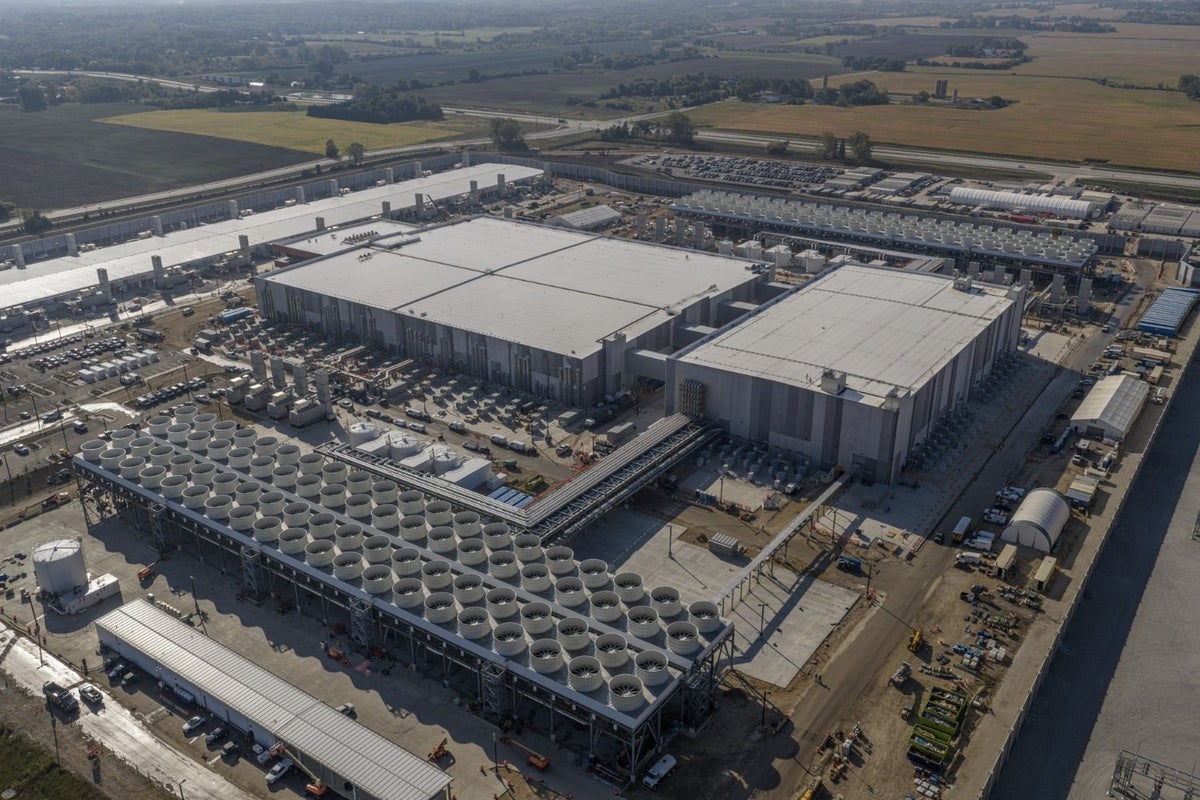
For the residents of Sturtevant and Mount Pleasant living within a mile and a half of the newly minted "AI superfactory," the cost of the technological future arrived as an unceasing, low-frequency drone. The federal lawsuit, brought forward by residents Garret Ostergaard, David Wade, and Joy Wade, paints a stark picture of life near the 315-acre campus. According to the complaint, the acoustic invasion is pervasive, inescapable, and particularly agonizing at night.
The disruption is severe enough that Ostergaard was forced to upend his life, switching his employment from the third shift to the second shift simply because sleeping during the day became impossible. The Wades report being driven indoors, unable to use their backyard due to the constant mechanical vibration vibrating through the air.
Attorneys representing the plaintiffs estimate that more than 1,000 households within a 1.5-mile radius face identical conditions. What these homeowners are experiencing is the sonic byproduct of thousands of high-density server racks processing complex machine learning models simultaneously.
Microsoft has acknowledged the issue publicly, stating that it has attempted to manually adjust cooling fan speeds and install sound reduction components. Yet the lawsuit insists the fixes have been insufficient, leaving residents trapped beside a permanent industrial neighbor that they never anticipated when Microsoft first announced its $4.7 billion investment in the region.
Why Artificial Intelligence Sounds Like an Industrial Turbine
To understand why the Fairwater facility is so loud, one must look at how the architecture of computing has changed. Traditional data centers built a decade ago primarily handled cloud storage, emails, and web hosting. Those workloads could be distributed across thousands of standard, low-power servers.
Artificial intelligence requires an entirely different animal. Training large language models requires vast clusters of graphics processing units (GPUs) packed tightly into high-density server racks. These chips draw immense amounts of electrical power and generate blistering, concentrated thermal loads.
If a server rack overheats, the chips throttle or fail entirely. To prevent this, data centers rely on massive arrays of industrial cooling fans and chillers that run around the clock. The Fairwater facility contains three buildings totaling 1.2 million square feet. When those cooling fans spin at high velocity to keep the AI chips from melting, they act as giant acoustic pumps.
The resulting sound waves are long, low-frequency tones. Unlike high-pitched noises, which are easily deflected by trees, fences, or standard home insulation, low-frequency noise travels for miles and penetrates walls effortlessly. It is felt in the chest as much as it is heard in the ear, creating a phenomenon that acoustic engineers call tonal annoyance.
The Flaw in Local Noise Ordinances
In its defense, Microsoft noted that its facility met the initial noise requirements set by local ordinances. This highlights the exact loophole tech giants rely on when building massive infrastructure near residential areas.
Most municipal noise laws measure sound using the dBA scale. The dBA weighting system mimics the human ear by filtering out low-frequency sounds. A facility can easily register within legal decibel limits on a standard meter while still emitting a low-frequency hum that drives neighbors to insomnia.
Acoustic Measurement Mismatch:
Standard Ordinance: Measures dBA (Filters out low frequencies) -> Shows "Compliant"
Actual Experience: Low-frequency hum penetrates homes -> Causes sleep deprivation
By relying on outdated zoning rules that were designed for traditional warehouses or light manufacturing, tech companies build massive computation centers right up against suburban boundaries. The regulatory frameworks governing industrial sound have simply failed to keep pace with the sheer concentration of mechanical energy required by modern computing.
A Massive Strain on the Grid and the Community
The noise is merely the audible symptom of a much deeper resource extraction. An independent analysis conducted by the environmental advocacy group Clean Wisconsin revealed a staggering reality. The Microsoft campus in Mount Pleasant, combined with a separate data center project under construction in Port Washington, will consume more electricity than every single household in the state of Wisconsin combined.
This immense appetite for power forces utilities to burn more fossil fuels or delay the retirement of coal plants, shifting the environmental burden onto the public. Neighbors are not just losing their peace and quiet; they are watching their local energy infrastructure repurposed to serve corporate computing needs, while their property values face immediate depreciation due to the ambient noise.
Tech firms frequently promise that these mega-campuses bring jobs and prosperity. While the Mount Pleasant site currently employs roughly 550 full-time workers, the long-term trade-off for the community involves a permanent degradation of their living environment. The lawsuit seeks class-action status and financial damages for the loss of property enjoyment, aiming to force a legal precedent that would compel tech companies to fully enclose their cooling infrastructure in expensive, soundproof structures rather than relying on open-air fan yards.
As the race to scale artificial intelligence accelerates, tech companies will continue to pour billions into heavy industrial zones right next to residential neighborhoods. The situation unfolding in Wisconsin proves that the cloud is not an ethereal concept. It is loud, it is heavy, and it is built right next door.