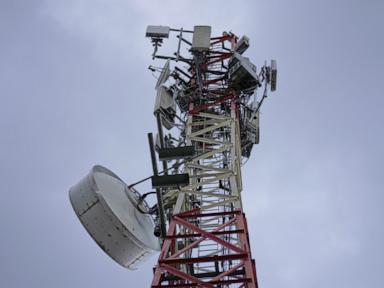
The backbone of Africa's digital economy is currently under siege by a volatile cocktail of soaring fuel prices and sophisticated criminal syndicates. While the rest of the world looks toward 5G as an inevitable evolution, telecommunications giants across the continent are fighting a more primal battle for power. Energy accounts for up to 60% of operating costs for telecom towers in off-grid areas, a figure that has become unsustainable as diesel prices spike globally.
This is no longer just a story about green energy or climate targets. It is a frantic race for survival. Companies like IHS Towers, American Tower Corporation (ATC), and Helios are aggressively pivoting toward solar power not because they want to, but because they have no other choice. The traditional model—relying on massive industrial diesel generators—is crumbling under the weight of logistics, theft, and a global fuel market that has become an unpredictable predator.
The Diesel Trap
For decades, the standard operating procedure for an African base station was simple. You build a tower, drop a 15 KVA or 27 KVA generator next to it, and hire a truck to haul fuel over unpaved roads once a week. It worked, until it didn't. In Nigeria, the removal of fuel subsidies in 2023 sent shockwaves through the industry, with diesel prices jumping as much as 200% within a single year.
Operators now find themselves spending upwards of $400 million annually just to keep the lights on in Nigeria alone. This isn't just a line item; it's a drain on the capital needed to expand 4G and 5G coverage to the 65% of the population still waiting for reliable internet.
The Hidden War of Infrastructure Theft
The transition to solar is being hampered by an irony that few industry analysts are willing to discuss openly: the very equipment meant to save the networks is the most targeted by thieves. In South Africa, the telecommunications sector lost over $20.8 million to theft and vandalism in 2025. While diesel is liquid gold for black-market traders, solar panels and lithium-ion batteries are even more lucrative.
A standard base station is a honey pot. Criminals aren't just taking the fuel anymore; they are stripping the sites of copper cables, rectifiers, and the very solar panels intended to replace the generators. In Nigeria, official data from the Nigerian Communications Commission (NCC) revealed that 656 critical power assets—including 152 generators and 504 batteries—were stolen from sites in 2025. By February 2026, the rate of cable theft had already doubled compared to the previous year.
The security cost for a "green" site is often higher than the fuel it replaces. To protect these assets, companies are forced to install motion-sensing floodlights, anti-theft fasteners, and sometimes permanent armed guards. This adds layers of complexity to an already thin margin.
The Anatomy of a Modern Tower
To understand why the shift is so difficult, one must look at the hardware. A modern hybrid tower is a sophisticated energy management system. It doesn't just "use solar." It balances inputs from multiple sources to ensure that "five nines" (99.999%) of uptime are maintained.
- Photovoltaic Arrays: Often mounted on the tower itself or in a fenced perimeter.
- Lithium-Ion Storage: Far more efficient than lead-acid, but a prime target for high-end thieves.
- Intelligent Controllers: Software that decides when to draw from the sun, when to use the battery, and when to trigger the diesel backup as a last resort.
The goal for most "towercos" (tower companies) is a carbon reduction roadmap that slashes Scope 1 and 2 emissions by 50% by 2030. IHS Towers, which manages roughly 37,000 sites, already has solar available at over 45% of its African operations. But "available" is a defensive word. It means the infrastructure exists, but the generator is still there, idling, waiting for a rainy week or a stolen battery to bring the network down.
The Economic Mirage of Green Bonds
Funding this transition has required a shift in financial engineering. Safaricom recently raised $153.6 million in green bonds specifically to transition its towers to solar. On paper, the move is brilliant. Solar-powered sites have lower long-term operating expenditures (OPEX), which should, in theory, lower data costs for consumers.
However, the capital expenditure (CAPEX) required for a solar rollout is immense. For many independent tower companies, the debt load is becoming a heavy burden. In early 2026, industry rumors intensified regarding a potential $2.7 billion buyout of IHS Towers by MTN Group, a move that would represent a massive strategic reversal. For years, mobile network operators (MNOs) sold their towers to specialist companies to get the assets off their balance sheets. Now, with energy costs spiraling, some want that control back.
The Connectivity Gap
While companies argue over balance sheets, the real-world impact is felt in the "bad-grid" and "off-grid" areas. In rural Kenya or the inland towns of South Africa, the stability of a cellphone signal determines whether a farmer can access mobile banking or a student can download a textbook.
Solar-powered towers have actually improved service stability in these regions. Unlike diesel generators, which can fail due to mechanical breakdown or a delayed fuel truck, solar arrays have no moving parts. If you can keep the thieves away, the sun is the most reliable technician in the world.
The industry is moving toward a network sharing model to mitigate these costs. In March 2025, MTN and Airtel Africa signed a landmark agreement to share infrastructure in Uganda and Nigeria. By co-locating on the same towers, they split the massive energy and security bills. It is a truce born of necessity.
The Brutal Truth
The transition to solar in Africa is not a feel-good environmental story. It is a high-stakes defensive maneuver against a collapsing energy model. The industry is currently trapped between the soaring cost of fossil fuels and the rising tide of infrastructure crime.
Every time a diesel price hike is announced in a major capital like Nairobi or Lagos, another batch of solar orders is signed. But as long as the security of these sites remains compromised, the "green revolution" in African telecoms will remain a fragile, guarded, and incredibly expensive ambition.
The success of Africa's digital future no longer depends on 5G spectrum or smartphone penetration. It depends on whether a tower in a remote province can keep its batteries through the night.
To solve this, regulators must move beyond simply "designating" towers as critical infrastructure. There must be a coordinated, pan-African crackdown on the black markets for industrial batteries and solar components. Without it, the "digital highway" will continue to run on a very expensive, very dirty, and very vulnerable tank of gas.