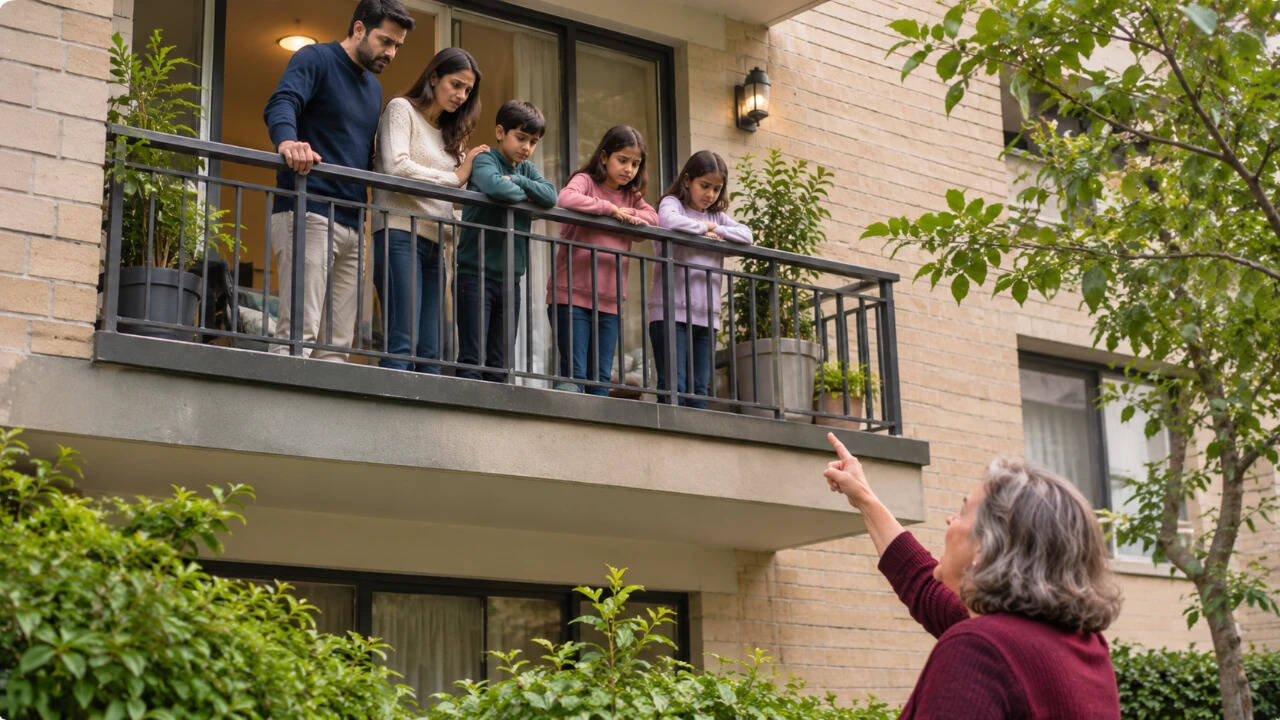
When a New York City landlord sues a single tenant for $550,000 over alleged harassment of three neighboring families, the headline reads like a neighborhood feud gone nuclear. It is not. That six-figure demand represents a calculated legal bypass around one of the most congested, tenant-protective housing court systems in the United States. Rather than waiting years in civil housing court for a standard eviction over nuisance behavior, property owners are increasingly taking disputes into New York State Supreme Court—seeking massive financial damages for lost rent, legal fees, and liability exposure when one resident drives other paying tenants out of a building.
This shift matters far beyond a single Manhattan or Brooklyn walk-up. It exposes a structural collision between statutory tenant protections, landlord liability laws, and the financial reality of operating multifamily real estate in New York City.
The Financial Anatomy of a $550,000 Demand
To understand how a dispute with one resident reaches half a million dollars, you have to look at how residential real estate math works in New York. A $550,000 claim is rarely about a single broken window or a noise complaint. It is an itemized ledger of cascading financial damage.
When one tenant engages in persistent harassment—whether through verbal threats, physical intimidation, property damage, or relentless disruption—the neighbors do not simply endure it indefinitely. They leave. In a building where three families vacate prematurely or refuse to renew their leases because of an unaddressed threat, the revenue loss compounds rapidly.
Consider a hypothetical example of a mid-market Manhattan or prime Brooklyn building where apartments rent for $4,500 a month. Losing three households simultaneously strips $13,500 a month from the building's gross operating income. If those units sit vacant for six months while the landlord attempts to resolve the situation and market the apartments, that is $81,000 in direct lost rent before accounting for turnover costs, broker fees, or concessions required to entice new renters into a building with a known problem.
Then come the legal and regulatory liabilities. Under New York law, every residential lease carries an implied warranty of habitability. This legal doctrine requires landlords to maintain safe, livable conditions. Crucially, New York courts have repeatedly held that a landlord's duty extends beyond fixing leaky roofs and broken boilers. If a landlord knows one tenant is terrorizing neighbors and fails to take meaningful action, the affected families can legally withhold rent, demand rent abatements, or break their leases without penalty. In severe cases, those harassed families can sue the landlord directly for failing to protect their quiet enjoyment of the property.
A landlord caught in the middle faces a financial vise. They lose rent from the departing families, potentially owe damages or rent refunds to the victims, and spend tens of thousands of dollars on litigation. By filing a $550,000 lawsuit in State Supreme Court—alleging claims such as private nuisance, tortious interference with contract, or breach of lease—the property owner is attempting to transfer the entire financial fallout onto the alleged aggressor.
Why Housing Court Fails Nuisance Cases
The obvious question for anyone outside the New York real estate sector is simple. Why not just evict the tenant?
In theory, New York law permits a landlord to terminate a tenancy based on nuisance—defined legally as a continuous or recurring pattern of conduct that threatens the comfort, safety, or health of other residents. Unlike a nonpayment case, where a tenant can stop an eviction simply by paying the back rent owed, a nuisance holdover proceeding is designed to remove a dangerous or disruptive occupant permanently.
In practice, proving nuisance in New York City Housing Court is an exhausting, glacial ordeal.
Housing Court was built primarily to adjudicate nonpayment disputes and protect low-income residents from arbitrary displacement. It was never designed to function as an emergency tribunal for interpersonal conflict or behavioral crises. Even before recent legislative overhauls, nuisance evictions required meticulous documentation. A landlord cannot walk into court with secondhand complaints. They need contemporaneous police reports, video surveillance, incident logs, and—most critically—live testimony from the neighbors being harassed.
That last requirement is where most cases collapse.
Neighbors who are already afraid of an aggressive tenant rarely want to take unpaid days off work to sit in a crowded courthouse hallway, take the witness stand, and testify against someone who still shares their stairwell. Fear of retaliation is real. When witnesses refuse to testify, the landlord's case evaporates on hearsay objections.
Even when neighbors are willing to testify, the procedural timeline works against the building owner. Following the passage of the Housing Stability and Tenant Protection Act of 2019, and subsequent expansions of tenant right-to-counsel programs, contested holdover cases routinely stretch from 12 to 24 months. Adjournment follows adjournment. Motions for discovery, competency evaluations, or administrative stays can freeze a case for seasons at a time. During that entire period, the alleged harasser remains in the apartment, often without paying rent, while the other families pack their boxes.
The Supreme Court Workaround
Faced with a two-year wait in Housing Court, real estate litigators have increasingly turned to New York State Supreme Court—the state's trial court of general jurisdiction.
Housing Court has strict jurisdictional limits. It can award possession of an apartment and back rent, but it cannot issue sweeping injunctions or award broad compensatory and punitive damages for tortious conduct. State Supreme Court can. By framing a tenant's behavior not merely as a lease violation, but as an intentional interference with the landlord's business relationships with the other three families, attorneys unlock a different set of legal weapons.
In Supreme Court, a landlord can seek an immediate temporary restraining order or preliminary injunction prohibiting the tenant from approaching or contacting neighbors. More importantly, attaching a $550,000 price tag changes the psychological and financial calculus of the litigation. A tenant who might happily drag out a Housing Court eviction for two years with free legal representation suddenly faces the prospect of a massive money judgment that can garnish wages, freeze bank accounts, and ruin credit for decades.
It is hardball litigation. Sometimes, the goal is not actually collecting $550,000—many individual tenants simply do not have half a million dollars in liquid assets. The goal is leverage to force a surrender agreement, vacating the apartment in weeks rather than years.
The Unspoken Tension in Tenant Protections
This dynamic sits squarely on the fault line of New York housing policy. Over the past decade, lawmakers in Albany and City Hall have erected formidable statutory walls to stop predatory landlords from weaponizing nuisance claims to clear out rent-stabilized apartments.
That history cannot be ignored. For decades, unscrupulous building owners fabricated nuisance allegations, hired aggressive law firms, and used the threat of eviction to intimidate long-term, low-rent tenants into abandoning regulated units so those apartments could be deregulated and flipped for massive profits. The procedural hurdles in Housing Court exist specifically because those abuses were widespread and well-documented.
Yet laws written to restrain bad landlords also restrain good ones when a genuine crisis erupts inside a building.
When a residential building is governed by strict rent stabilization rules or the Good Cause Eviction framework, a landlord operates more like a regulated public utility than a private club owner. They cannot simply choose not to renew a troublesome tenant's lease when it expires. Every tenancy is effectively perpetual unless the landlord proves specific statutory grounds for removal in court.
That creates a paradox for the innocent neighbors. Three families paying market rent—or three families living in rent-stabilized units of their own—expect their landlord to maintain order. When they call management to report threats, screaming, or intimidation in the hallway, they expect immediate action. They do not care about Civil Practice Law and Rules, statutory notice periods, or Housing Court calendar backlogs. They see a landlord collecting rent while failing to stop a menace down the hall.
Meanwhile, the landlord's hands are tied by the exact legal architecture designed to protect tenants' rights. If the landlord changes the locks, cuts off utilities, or confronts the tenant aggressively, they commit an unlawful eviction—a criminal misdemeanor in New York carrying treble damages. Their only lawful move is to serve formal predicate notices, wait out statutory cure periods, and file paperwork in a backlogged court system.
Where Mental Health and Housing Policy Collide
Behind many high-profile nuisance lawsuits lies an issue neither Housing Court nor Supreme Court is equipped to solve. Untreated severe mental illness and behavioral deterioration.
Veteran property managers across the five boroughs describe a familiar, tragic progression. A resident who lived quietly in a building for ten years begins exhibiting erratic, paranoid, or hostile behavior. They accuse neighbors of pumping gas through the vents, bang on walls at three in the morning, block hallways with debris, or hurl threats at families walking past their door.
In a dense urban apartment building, vertical living magnifies every disruption. Shared ventilation shafts, thin floorboards, and narrow corridors mean one person's crisis immediately becomes everyone else's daily reality.
When this happens, the city's support systems frequently pass the buck. Police officers called to the scene often decline to make an arrest unless an explicit physical assault occurs in their presence, classifying verbal hostility or erratic behavior as a civil landlord-tenant matter. Adult Protective Services (APS) can intervene if a resident is a danger to themselves or unable to care for basic needs, yet APS interventions move slowly and rarely result in permanent relocation unless the individual consents or meets strict criteria for involuntary commitment.
The landlord is left holding the bag as a de facto social worker, security guard, and litigant. If the tenant is referred for a guardian ad litem—a court-appointed advocate assigned when a litigant cannot adequately defend their own rights—the eviction timeline stretches even further while social service agencies attempt to arrange supportive housing that barely exists in a city with a near-zero vacancy rate.
The Risk of Strategic Overreach
While turning to Supreme Court for $550,000 in damages offers landlords a faster path to resolution, the tactic carries substantial legal and financial risks for property owners.
New York courts look skeptically on attempts to end-run Housing Court jurisdiction. Judges routinely dismiss Supreme Court ejectment or nuisance actions if they conclude the dispute is fundamentally a standard landlord-tenant matter dressed up in tort language to bypass statutory tenant protections. If a judge tosses the case on jurisdictional grounds, the landlord has burned $30,000 to $50,000 in Supreme Court legal fees and still has to start over from day one in Housing Court.
There is also the risk of a SLAPP counterclaim or allegations of landlord harassment. Under New York City's Tenant Protection Act, bringing baseless or exaggerated legal claims against a tenant can itself be prosecuted as unlawful harassment, exposing the property owner to civil penalties and paying the tenant's legal bills.
To survive a motion to dismiss in Supreme Court, the landlord's evidence has to be airtight. A successful complaint requires more than vague assertions that neighbors were "upset" or "uncomfortable." It demands specific, provable economic harm tied directly to the defendant's conduct—signed lease termination agreements citing the harassment, sworn affidavits from the departing families, documented police incident numbers, and clear financial records showing the exact rent lost as a result.
What Landlords and Tenants Actually Need to Know
Whether you own a multi-family building in New York or rent an apartment next door to a volatile neighbor, standard informal complaints rarely move the needle. The legal system responds only to documented, admissible evidence.
For harassed tenants, waiting passively for management to fix the problem often leaves you trapped in an unlivable situation. Protect your position systematically:
- Create a contemporaneous paper trail. Log every incident with exact dates, times, and descriptions. Send these logs to management via email or certified mail so there is an indisputable record that the landlord was placed on notice.
- Involve municipal agencies. Call 911 for threats or physical intimidation and obtain the police complaint number every single time. For chronic noise, hallway obstructions, or unsanitary conditions, file 311 complaints to generate official city inspection records.
- Use the warranty of habitability strategically. If management ignores documented threats to your safety, consult a tenant attorney before withholding rent. Putting rent into an escrow account while formally demanding a rent abatement forces the landlord to choose between losing your income or taking decisive legal action against the aggressor.
For property owners, relying on standard lease warnings when a tenant threatens neighbors exposes the entire building to financial contagion.
- Act at the first credible report. Delaying action destroys your defense against warranty of habitability claims from other residents and weakens your credibility if you eventually seek emergency injunctive relief.
- Secure witness cooperation early. Offer affected neighbors tangible accommodations—such as temporary rent credits, relocation to another vacant unit in your portfolio, or penalty-free lease breaks—in exchange for sworn affidavits detailing what they witnessed.
- Evaluate the forum carefully. Reserve high-dollar Supreme Court litigation for cases with clear, quantifiable third-party economic damages and documented safety threats where Housing Court delays would cause irreparable harm to the building's occupancy.
A $550,000 lawsuit against a single residential tenant looks extreme on paper because the underlying system is extreme. When laws make it nearly impossible to remove a dangerous occupant quickly, and liability rules punish landlords for failing to protect everyone else in the building, courtroom warfare becomes the only pressure valve left.



