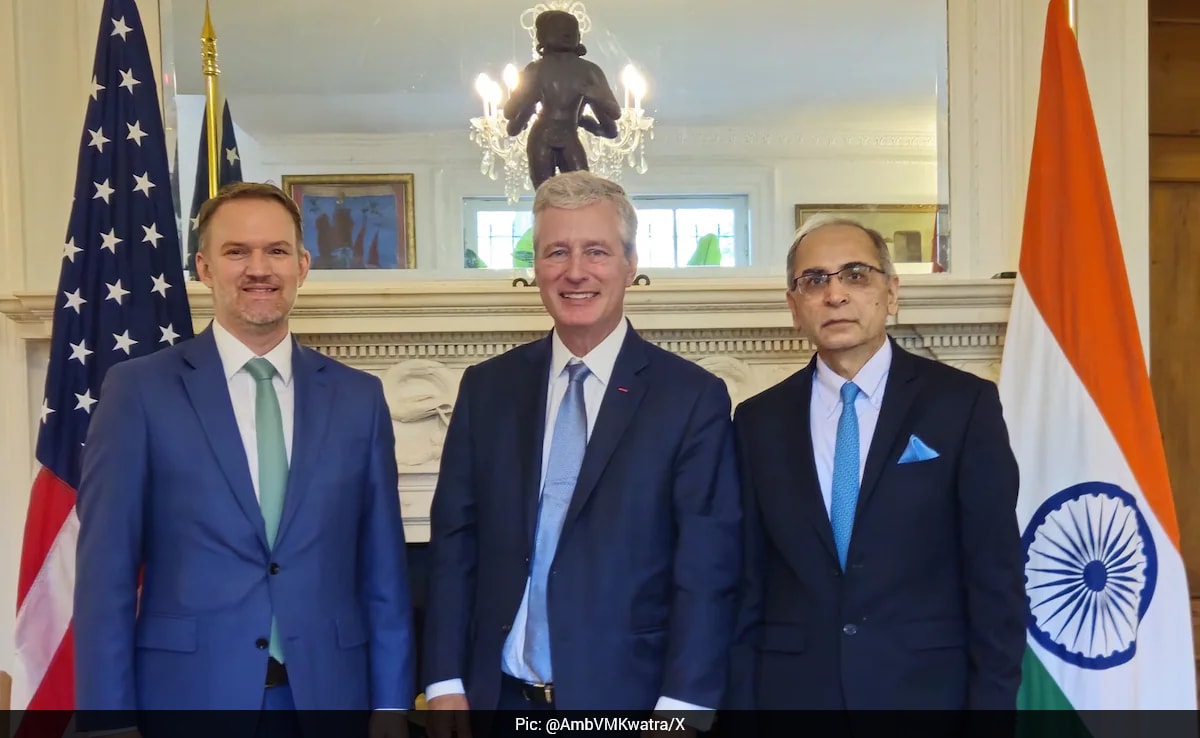
You’d think after years of handshake photos and "historic" announcements, India and the United States would’ve figured out their trade math by now. But as Indian Ambassador Vinay Mohan Kwatra’s recent meeting in Washington proves, the road to a real deal is still full of potholes. On Wednesday, Kwatra hosted US Trade Representative Jamieson Greer and former NSA Robert O’Brien at India House. It wasn't just a social call. It was a tactical huddle to salvage a bilateral trade agreement (BTA) that’s been doing a complicated dance for months.
The timing is tight. Chief negotiators are set to meet for three days starting April 20. If you’ve been following the news, you know this isn't just about spreadsheets. It’s about a massive reset. In February, there was a framework to cut US tariffs on Indian goods from 50% to 18%. But then the US Supreme Court threw a wrench in the gears, ruling certain tariff policies unconstitutional. Now, both sides are back at the table trying to "recalibrate"—which is diplomatic code for "fixing the mess."
The $500 Billion Question
The numbers being tossed around are staggering. Prime Minister Modi and President Trump previously discussed a goal for India to purchase $500 billion in US products over five years. Let’s be real: that’s a 900% jump from current levels. It’s ambitious, bordering on impossible, yet it’s the carrot keeping the US at the table.
India wants its small and medium businesses—the guys making your leather boots and jewelry—to stop getting hammered by high duties. The US wants a piece of India’s massive domestic market, specifically in sectors where India has traditionally kept the doors locked tight.
Why Milk and Chicken are Deal Breakers
You might wonder why a billion-dollar deal can get stuck on a gallon of milk. In India, it’s not just about economics; it’s about culture. US dairy farmers often use animal-derived feed—blood meal and tallow—which is a non-starter for a country where cows are sacred and "pure" vegetarianism is a massive consumer demand.
- The Certification Fight: India won't budge on requiring a certificate that US cows haven't eaten animal-based feed.
- The Farmer Factor: Over 700 million people in India depend on agriculture. If India opens the floodgates to cheap, subsidized US grain or dairy, it’s political suicide for any government in New Delhi.
I’ve seen this play out before. The US pushes for "market access," and India builds a "livelihood wall." It’s a classic stalemate. But in 2026, the stakes are different. Both countries are staring down a more aggressive China, and that shared anxiety is the glue holding these trade talks together.
Navigating the Section 301 Headache
While the diplomats are smiling for cameras, there’s a darker cloud in the room: Section 301 investigations. The US is currently looking into India’s manufacturing practices and forced labor allegations. These investigations aren't just paperwork; they’re leverage.
Commerce Secretary Rajesh Agrawal admitted that these investigations will be a core part of the April 20 talks. India has to prove it’s a "trusted partner" in the global supply chain, especially as companies like Apple and Google move more production to the subcontinent. If India can’t satisfy US concerns on labor and digital trade barriers, the tariff cuts everyone wants might just vanish.
What’s Actually at Stake for You
If you’re a business owner or a consumer, this deal matters because it dictates the price of everything from iPhones to Alphonso mangoes.
- Tech and AI: The "AI Opportunity Partnership" is already building GPU facilities in India. A solid trade deal means fewer hurdles for tech transfers.
- Visas: The H-1B situation remains a thorn. India wants more mobility for its IT pros; the US is still playing protectionist with its labor market.
- Energy: India is trying to balance its Russian oil imports with more US natural gas to avoid those "energy-linked" tariffs that spiked in 2025.
Honestly, don't expect a "perfect" deal by the end of April. We’re likely looking at a phased approach. The first phase will probably tackle the "easy" stuff—electronics and some industrial goods—while the hard conversations about "non-veg milk" and agricultural subsidies get kicked down the road.
If you’re trading between these two giants, keep your eye on the April 20-22 window. The "legal agreement" mentioned by Agrawal is the real prize. If they can finalize that text, the 18% tariff goal might actually become a reality before the summer heat hits D.C.
Watch the specific language around the Section 301 findings. If the US softens its stance there, you’ll know a deal is imminent. If the rhetoric stays sharp, expect another "recalibration" by June. Tighten your supply chains and watch the headlines; the next 72 hours of negotiations will set the tone for the rest of the decade.