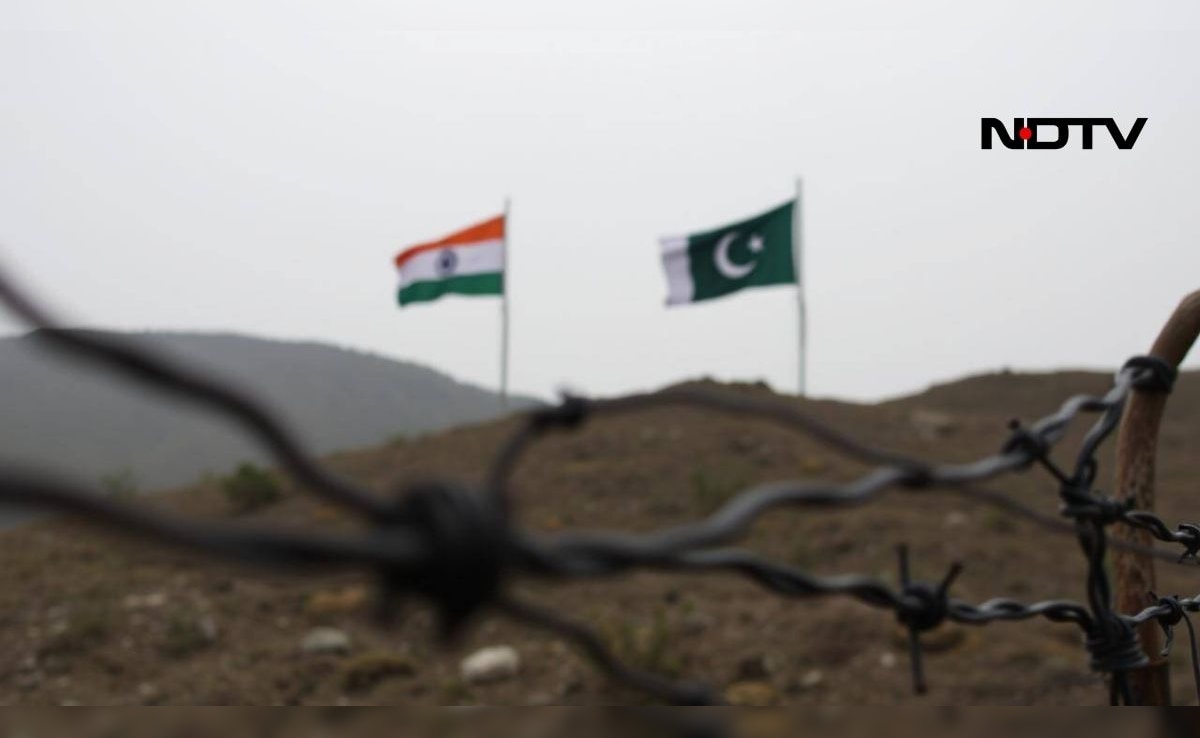
Why would anyone want to talk to a neighbor who keeps trying to burn your house down? It sounds like madness. For years, the consensus in New Delhi has been "terror and talks don't go together." It's a solid line. It's a line that won elections and defined a new, muscular Indian foreign policy. But lately, something's shifting. Even some of the most hardened hawks—people who usually want to see Islamabad isolated until it crumbles—are starting to whisper about the need for a "managed dialogue."
They haven't suddenly become peaceniks. They aren't under any illusions about the Pakistani military's nature. Honestly, it's the opposite. The urge to talk is coming from a place of cold, hard realism. As we move through 2026, the risks of a total communication vacuum are starting to outweigh the satisfaction of the silent treatment.
The Ghost of Operation Sindoor
We can't ignore what happened last year. The 2025 crisis wasn't just another border skirmish. When the Pahalgam attack killed 26 tourists in April 2025, the response was immediate. Operation Sindoor saw Indian missiles hitting targets deep inside Pakistan. We saw the suspension of the Indus Waters Treaty. We saw diplomats expelled. For two weeks in May 2025, the world held its breath, waiting for the mushroom clouds.
We got a ceasefire on May 10, 2025, but it's a fragile one. The Council on Foreign Relations recently flagged a "moderate likelihood" of the conflict reigniting this year. When you have two nuclear-armed states with zero formal lines of communication, every local commander's mistake can become a national catastrophe. You don't talk to your friends; you talk to your enemies so you don't accidentally end the world.
Pakistan Is Not a Monolith Anymore
The old argument was simple: "Who do we even talk to?" If you talk to the civilian government under Shehbaz Sharif, the boys in Rawalpindi sabotage the deal. If you talk to the generals, you undermine democracy.
But Pakistan in 2026 is a mess of competing power centers. You've got a military that's losing its grip on the narrative, a domestic population fueled by populist anger, and a border with Afghanistan that's basically a war zone. When a state starts to fracture, the danger to the neighbor increases. An unstable, collapsing Pakistan isn't a victory for India; it’s a regional nightmare.
Hardliners are realizing that a "managed" conversation allows India to:
- Identify who's actually in charge of specific levers of power.
- Communicate red lines directly, rather than through public rallies.
- Prevent third-party "mediators" from sticking their noses where they don't belong.
The China Factor and the High Cost of Distraction
Let’s be real. Every soldier India has to keep focused on the Line of Control is a soldier not focused on the Line of Actual Control. Beijing loves it when New Delhi is obsessed with Islamabad. It's the cheapest way for China to keep India "in its box."
By lowering the temperature on the western front—even by a few degrees—India gains strategic depth. You don't need a grand peace treaty. You don't need to solve the Kashmir issue tomorrow. You just need enough stability to ensure that 80% of your diplomatic and military energy can be directed toward the real existential threat in the East.
Why the Hawks are Changing Tune
You'll hear critics say that talking is a sign of weakness. They’re wrong. Talking from a position of overwhelming strength—which India clearly has in 2026—is a tactical choice.
Look at the numbers. India’s economy is sprinting while Pakistan is perpetually one IMF meeting away from default. When you’re the bigger power, you set the terms of the conversation. Refusing to talk is a defensive posture. Engaging on your own terms, at a time of your choosing, is an offensive one.
The smartest critics now realize that silence has diminishing returns. We've already proven we can strike. We've already proven we can isolate them. Now, the goal is to manage the decline of a hostile neighbor without getting caught in the blast radius.
Stop Thinking About Peace and Start Thinking About Management
If you're waiting for a "happily ever after" with Pakistan, you're going to be waiting a long time. That’s not what this is about. This is about disaster management.
- Re-establish Basic Hotlines: Military-to-military communication must be constant to prevent accidental escalation from small-scale terror attacks.
- Limited Trade Ties: Start with basics that help the common man on both sides, making the cost of war higher for the Pakistani elite.
- Direct Communication: External Affairs Minister S. Jaishankar has been blunt about Pakistan’s role in global regional politics. Using that bluntness in a room with their representatives is more effective than saying it to a camera.
The next step isn't a gala dinner in Lahore. It's a quiet, stern meeting in a neutral venue. We aren't looking for a friend; we're looking for a predictable enemy.
Latest analysis on the 2026 India-Pakistan security outlook
This video provides a detailed breakdown of the 2026 conflict risks and the specific events from 2025 that led to the current diplomatic stalemate.