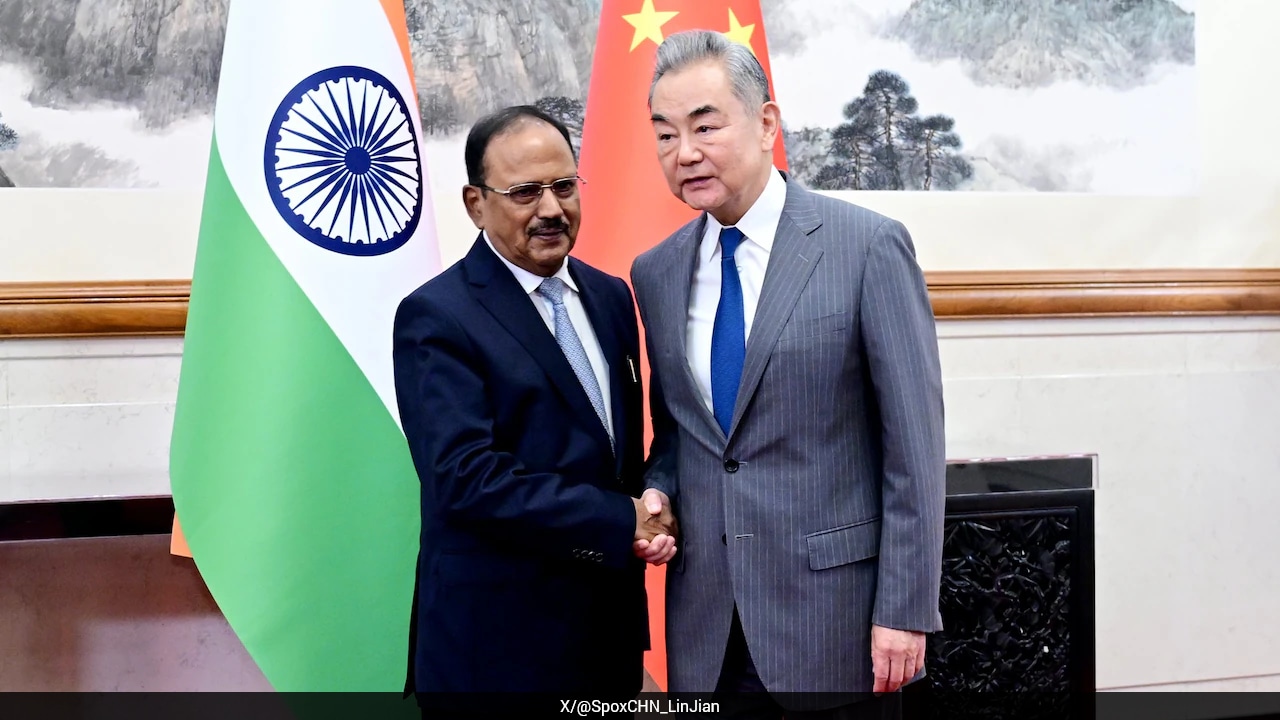
Big diplomatic breakthroughs rarely happen overnight. Yet, during the 25th round of Special Representatives talks in Beijing, India and Chinese officials quietly signaled a massive shift in how they view their shared 3,488-kilometer frontier. Instead of waiting for a magical, all-encompassing grand bargain that solves every single square inch of the disputed border at once, National Security Advisor Ajit Doval and Chinese Foreign Minister Wang Yi agreed to chase an "early and substantial harvest".
Translation? They are breaking down a decades-long stalemate into smaller, digestible pieces.
If you have watched New Delhi and Beijing trade diplomatic blows since the 2020 Galwan Valley crisis, this pivot feels counterintuitive. For years, India firmly insisted that bilateral normalization could not happen while the border remained volatile. They wanted a comprehensive package deal. Beijing, conversely, often pushed for compartmentalization—asking New Delhi to trade normal trade and ties while leaving the military standoff parked on the high-altitude ridges of eastern Ladakh.
Now, the strategy has evolved. Both capitals realize that waiting for total perfection leaves them trapped in perpetual friction.
What an Early Harvest Actually Means on the Ground
An early harvest approach isn't about surrendering strategic territory. It is a pragmatic mechanism to separate the wheat from the chaff. Along a massive border spanning three distinct sectors—eastern, middle, and western—certain pockets feature minimal friction and straightforward geography.
Instead of letting those peaceful segments stay hostage to the violently contested zones, specialized expert groups are tasked with mapping, delimiting, and eventually demarcating those low-dispute areas first.
Think of it like untangling a massive knot. You don't yank the tightest center loop first. You loosen the loose edges to build momentum.
During the Beijing meetings, this vision translated into an eight-point consensus. Both governments agreed to activate expert working groups under the existing Working Mechanism for Consultation and Coordination on India-China Border Affairs (WMCC). Their first assignment is setting strict terms of reference to identify regions ripe for early delimitation.
Guardrails to Stop Another Military Surprise
Diplomacy without enforcement is just theater. Both sides know that, especially after the bitter lessons of 2020. To ensure that a local misunderstanding doesn't balloon into a kinetic war, the latest talks introduced practical, ground-level military safeguards.
- Two additional military meeting points were established for Senior Commander-level interactions.
- Two brand-new hotline channels were secured for the eastern and middle sectors.
- Clearer protocols were outlined to address local troop movements near the Line of Actual Control (LAC) promptly through diplomatic wires.
These aren't grand peace treaties. They are emergency brakes. When troops stare each other down across freezing terrain at 15,000 feet, having a direct phone line and an extra local meeting point can prevent a tactical accident from turning into a strategic disaster.
Beyond the Borderline
Normalization is bleeding into civilian life, too. You can see the thaw in practical, everyday areas that matter to ordinary citizens and economies.
China has stepped up quotas for the traditional Kailash Mansarovar Yatra pilgrimage, easing access points that had remained locked down for years. Border trading posts are reopening, and hydrological data-sharing schedules for trans-border rivers are back on the calendar for September.
These aren't accidental gestures. They are deliberate confidence-building measures designed to reshape public psychology in both countries away from permanent hostility.
Skeptics will point out that procedural agreements have collapsed before. They are right. Agreements break when political will fades. Yet, the push for an early harvest proves that both governments are tired of running in place.
If you want to track where this goes next, ignore the loud political rhetoric on cable news. Watch how fast those technical expert groups draft their terms of reference, and check whether those new military hotlines stay active when local patrols brush shoulders in the high Himalayas. The real test of this new approach won't happen in a Beijing conference hall. It will happen on the wind-swept rocks of the LAC.