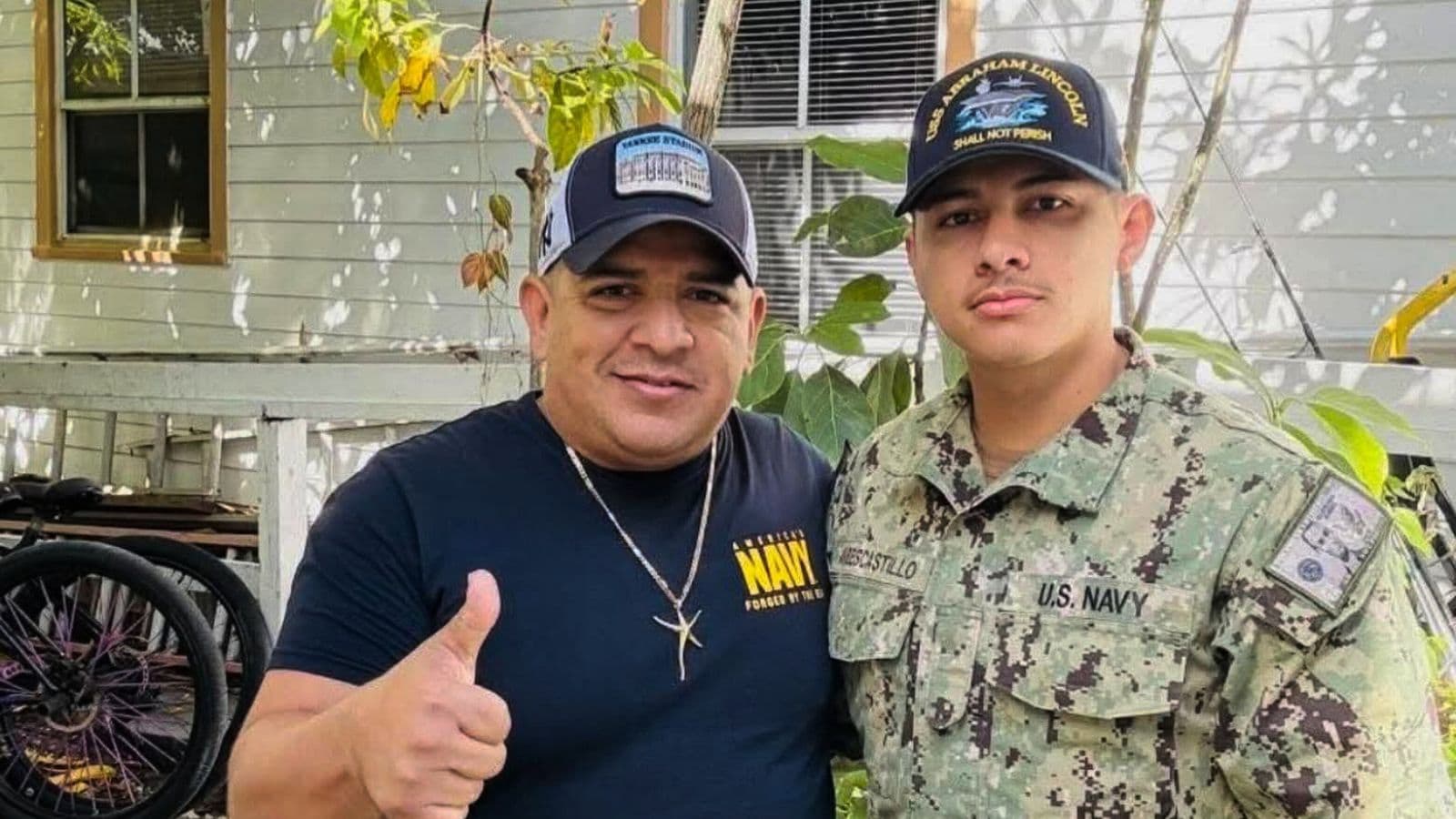
Imagine spending nine straight months working twelve-hour shifts on a floating military base. Imagine counting down the single digits until you finally hug your dad again. Then imagine getting a satellite call telling you federal agents just put handcuffs on him.
That is the nightmare Joshua Aviles faced. While serving aboard the USS Abraham Lincoln in the Middle East, he learned his father, Luis Manuel Aviles, had been detained by Border Patrol in Key West, Florida.
It is a striking collision between strict immigration policies and military family life. Stories like this force us to look past talking points and examine what happens when administrative crackdowns hit the kitchen tables of active-duty troops.
The Long Wait in Key West
Luis Manuel Aviles has lived in the United States for nearly two decades. Working as a handyman in Key West, the 48-year-old immigrant from Nicaragua held a valid work permit, a social security card, and a driver's license. His family had already started the paperwork process to secure a green card.
For months, Luis lived with the quiet anxiety shared by many mixed-status households. But he also had a anchor of pride: his son Joshua.
Joshua enlisted in the Navy. Like many children of immigrants who put on the uniform, part of his motivation was practical. He hoped military service might help shield his family from the constant fear of deportation and clear a pathway to legal status.
Instead, Luis was picked up by Border Patrol agents after stepping out of his house to take his car to a mechanic.
A Historic Deployment Meets a Hard Policy
To understand the weight of this moment, you have to look at where Joshua was when it happened. The USS Abraham Lincoln was wrapping up a brutal, record-shattering deployment in the Middle East. The aircraft carrier spent an unprecedented stretch of time at sea without a single port call, pushing sailors to their mental and physical limits.
Sailors dealt with chronic fatigue, dwindling supplies, and the constant pressure of operating in a combat zone. Joshua spent more than 250 days working grueling shifts without a break, sustained largely by the thought of coming home to his family.
When the call came through, the psychological toll broke him. Joshua posted online about the sheer impossibility of focusing on 12-hour military duties while knowing his father was locked in an ICE detention facility, treated like a common criminal.
His sister, Katherine Delgado, watched the family fracture in real time. Trying to mail care packages of basic food and hygiene items to her brother on a warship was hard enough. Coping with her stepfather's sudden arrest made it unbearable.
The Official Stance Versus Family Reality
The Department of Homeland Security didn't mince words following the arrest. Officials stated publicly that having a family member in the military does not grant anyone a free pass to violate the nation's laws. The administration made it clear that immigration enforcement would not make exceptions based on who wears a uniform.
Technically, military parole-in-place programs exist to protect certain family members of active-duty personnel from deportation. But these protections don't apply universally. Those who entered without inspection or who fall outside narrow administrative windows often find themselves entirely unprotected.
Critics argue that targeting the parents and spouses of service members actively undermines military readiness. When troops deployed overseas are forced to worry whether their aging parents will be deported while they are on watch, mission focus evaporates.
Luis remains in custody facing removal proceedings. His son's ship finally pulled out of the region to head home, but the homecoming will not look anything like what Joshua spent nine months dreaming about at sea.
Check your local representatives' stances on military family immigration protections if you want to understand how shifting federal guidelines impact everyday households. Support advocacy groups working on behalf of service members' relatives, or share these stories to keep transparency alive when administrative machinery targets the families of those defending the country.