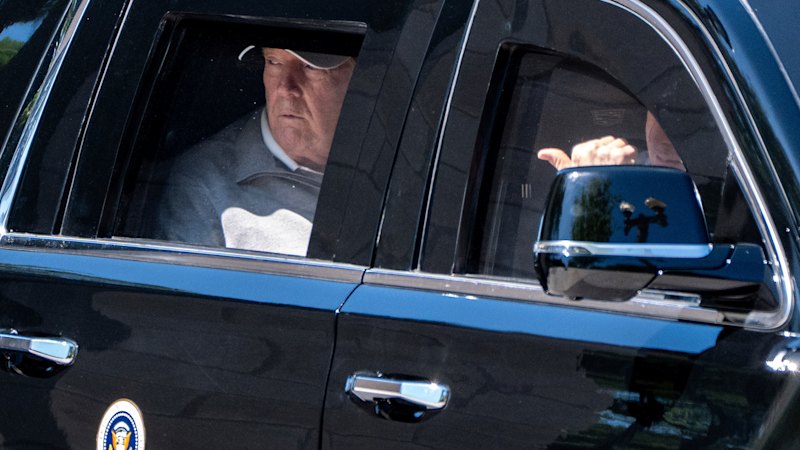
The room is usually loud, but when the losses pile up, the silence changes shape. It becomes heavy. Anyone who has ever watched a high-stakes gambler at a roulette table knows the look. The wheel spins, the ball lands on black, and the man who bet everything on red doesn’t flinch. He shrugs. He checks his watch. He smiles a tight, practiced smile that signals to the room that this was all part of the plan.
We see this same performance playing out on the grandest political stage in the world. Donald Trump is losing battles. Legal battles, political skirmishes, organizational grip. By any traditional metric of political warfare, the bleeding is obvious. Yet, the man at the center of the storm appears entirely detached, almost bored by his own defeats.
It forces a question that stops commentators in their tracks. What is the actual strategy here?
To understand it, you have to stop looking at the scoreboard and start looking at the crowd.
The Strategy of the Shrug
In traditional politics, a loss is a crisis. When a court rules against a candidate or a key ally defects, the standard playbook demands damage control. You spin, you release a statement, you regroup. You show the public that you are fighting to fix the mistake.
Trump rejects this entire framework.
Consider a hypothetical courtroom scenario, a composite of the dozens of legal challenges currently snaking through the American system. A judge bangs a gavel. A motion is denied. For any other public figure, this is a devastating blow to their credibility and their bank account. But watch the reaction closely. There is no panic. Instead, there is a deliberate display of indifference.
This indifference is not a lack of awareness. It is a highly sophisticated form of political theater. By acting as though the loss does not matter, he signals to his base that the rules of the game itself are illegitimate.
Think of it as a structural metaphor. If a referee calls a foul on a basketball player, and that player rages at the referee, they are still acknowledging the referee’s authority to make the call. But if the player simply laughs, walks off the court, and starts playing a completely different game in the parking lot, they have destroyed the referee's power entirely.
That parking lot is where the real battle is being fought.
The Economics of Grievance
Every defeat is a monetization opportunity. Every setback is a fundraising email waiting to be drafted.
When the mainstream media broadcasts a headline about a major legal setback, the traditional interpretation is that the candidate has taken a hit. But within minutes, the digital apparatus flips the narrative. The loss is repackaged not as a failure of strategy, but as proof of a conspiracy.
Look what they are doing to me, the subtext whispers. And if they can do it to me, they can do it to you.
This shift alters the psychological contract between a leader and his followers. In a standard political relationship, supporters expect victories. They want policy wins, economic growth, tangible results. In the populist arena, however, supporters are bonded by shared grievance. A loss does not weaken the bond; it strengthens the siege mentality.
The stakes are no longer about winning a specific legal motion or passing a piece of legislation. The stakes are existential.
The Fatigue of the Spectator
But this strategy carries a hidden cost, one that is slowly changing the landscape of American public life. It creates a profound, systemic fatigue.
Imagine living next to a house where the burglar alarm goes off every single night. The first week, you are terrified. You call the police. You look out the window. By month three, you don't even wake up. You just roll over and put a pillow over your ear.
The American public is experiencing that exact numbness. The constant escalation of rhetoric, the endless series of "historic" defeats that somehow result in zero material changes to the political trajectory, has exhausted the collective nervous system.
When everything is a cataclysm, nothing is.
This exhaustion works to the advantage of the indifferent warrior. When the public stops paying attention to the details of the losses, the facts lose their teeth. A complex appellate court ruling on executive immunity gets swallowed whole by the general noise of the culture war. It becomes just another Tuesday.
The Real Power of Local Spaces
While the national media focuses on the high-profile losses in federal courts and Washington committee rooms, a quiet, parallel reality is unfolding at the local level. This is where the real friction exists, far away from the cameras and the social media feeds.
Take the school board meetings in midwestern suburbs, or the precinct committee elections in rural counties. In these rooms, the abstract indifference seen on television translates into raw, localized energy. People who believe the national system is broken are focusing their attention on the machinery right in front of them.
They are changing the rules of local governance, rewriting party bylaws, and ensuring that the next generation of leaders matches the defiance of the man at the top.
This is the great paradox of the current political moment. The top-level battles are being lost, but the foundational soil is being completely tilled.
The losses in Washington do not matter to a volunteer in Arizona who believes they are fighting a holy war for the survival of the republic. To them, the judges, the prosecutors, and the establishment politicians are just ghosts in a dying system.
The Lone Man at the Table
We return to the gambler at the roulette table.
The crowd around him is arguing about the physics of the wheel, the fairness of the dealer, and the rules of the casino. They are pointing at his shrinking stack of chips, telling him he needs to change his strategy if he wants to survive the night.
But the gambler isn't looking at the chips. He is looking at the door. He knows that if he can keep the crowd engaged long enough, if he can stretch the game out just a few hours more, the casino itself might close.
The indifference we see is not a shield against reality. It is an invitation to join him in ignoring it. And as long as millions of people choose to look away from the scoreboard with him, the game will never truly end.


