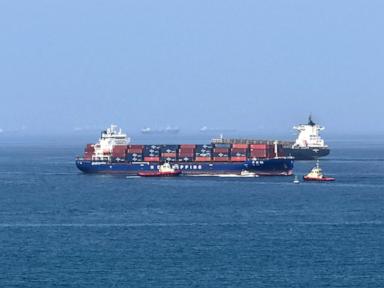
The fragile diplomatic experiment to patch over the 2026 Iran war collapsed in a matter of hours. On Tuesday, U.S. Central Command unleashed what it described as powerful retaliatory airstrikes across southern Iran, targeting missile sites, drone launch hubs, and coastal radar stations in Sirik, Qeshm Island, and Bandar Abbas. The operation was launched to impose heavy costs on Tehran after the Islamic Revolutionary Guard Corps targeted three commercial tankers transiting the Strait of Hormuz. Almost simultaneously, the Trump administration revoked the General License X waiver that permitted Iran to sell oil internationally—effectively tearing up the financial baseline of last month’s 14-point memorandum of understanding.
The immediate Western narrative frames this as a straightforward case of unprovoked Iranian aggression breaking a stabilizing ceasefire. That narrative is fundamentally incomplete.
What is actually unfolding in the Persian Gulf is not a random breakdown of a truce, but the predictable collision of two irreconcilable strategic objectives. Washington viewed the interim agreement as a performance-based test of Tehran’s submission after months of devastating warfare. Iran, reeling from the structural shock of the February assassination of Supreme Leader Ali Khamenei, viewed the agreement as a mechanism to force a permanent geopolitical retreat by Western forces from its coastal waters. When the U.S. attempted to dictate terms on shipping lanes while keeping the economic noose taut, a return to kinetic warfare became inevitable.
The Fractured Mechanics of a Performance Based Truce
The core flaw of the June memorandum of understanding was its asymmetry. Under the terms brokered following the spring escalation, the U.S. Treasury Department offered a temporary, performance-based reprieve on oil sanctions. It was a carrot dangling on a exceptionally short string.
American officials approached the truce with the posture of an occupying manager. They expected complete maritime compliance while leaving the deeper systemic grievances of the war unaddressed. For the White House, any deviation by Iran would result in immediate economic strangulation.
Tehran saw this arrangement as an insult to its sovereignty, particularly as the nation buried Khamenei amid deep domestic instability. The interim deal gave Iran a 60-day window to export oil, but it did nothing to remove the massive Western naval armada sitting just off its coast. To the clerical and military leadership in Tehran, the U.S. was demanding total capitulation in exchange for crumbs of their own revenue. The structural foundation of the truce was hollow from day one.
The Battle Lines of the Omani Coast
The specific geography of Monday and Tuesday's maritime attacks reveals the tactical game Iran is playing. The targeted tankers—including the Saudi-owned Vijian and the Qatari-owned Rakiyat—were struck by drones and unidentified projectiles while operating near the coast of Oman and the United Arab Emirates.
Iran has long claimed exclusive authority to designate the safe transit routes through the narrow choke point. During peacetime, a fifth of the world's liquefied natural gas and petroleum flows through this corridor. By pushing traffic away from the Iranian mainland and toward the southern, Omani side of the strait, international shipping companies sought a shield against aggressive IRGC boardings.
Tehran’s response was brutal and calculated. Iranian state television explicitly noted that at least one tanker was targeted because it ignored direct warnings from coast defense units. By striking vessels using the Western-approved southern corridor, Iran sent a clear signal. If Tehran does not control the rules of transit through the strait, no one will pass safely.
The International Maritime Organization noted that these incidents represented the heaviest single-day assault on merchant shipping since April. It was a demonstration of asymmetric leverage. Iran knows it cannot match the raw firepower of U.S. carrier strike groups, but it can make the cost of insurance for a single barrel of crude completely unsustainable for the global economy.
The Failed Logic of Coercive Sanctions
The rapid implementation of economic penalties alongside the military strikes exposes the limits of Western leverage. Within hours of the initial reports from the UK Maritime Trade Operations agency, the U.S. Treasury Department formally revoked the license authorizing Iranian oil sales.
"The Office of Foreign Assets Control is revoking GL X... the MOU in effect with Iran is entirely performance-based."
This swift reversion to total economic warfare demonstrates a fundamental misunderstanding of the current Iranian regime's mindset. The interim deal was designed to incentivize good behavior through financial relief. However, when economic relief is treated as a temporary privilege that can be canceled by a single administrative pen stroke, it loses all diplomatic utility.
For the IRGC commanders running the coastal defense networks, the threat of losing the oil waiver carries little weight. The Iranian economy has operated under varying degrees of isolation since 1979; the population has endured the immense destruction of the spring air campaign. Believing that a regime mourning its supreme leader would suddenly abandon its primary strategic chokepoint to save a short-term oil waiver is a profound miscalculation.
The Escalation Loop Without an Exit
The U.S. air campaign on Tuesday hit familiar targets. Sirik, Qeshm Island, and Bandar Abbas have been repeatedly struck since the outbreak of hostilities in February. The fact that the U.S. military must return to bomb the exact same coordinates reveals a stark reality. Air campaigns can degrade missile stockpiles and shatter radar arrays, but they cannot destroy the strategic intent of a nation defending its immediate littoral waters.
Every time a U.S. precision munition hits an IRGC radar installation, it reinforces the hardline faction in Tehran that argues diplomacy with Washington is an exercise in futility. Oil futures surged 5% immediately following the news of the strikes, wiping out the tentative economic stabilization achieved by June's diplomatic efforts.
The United States is locked in a reactive loop. It responds to maritime disruption with airstrikes, which prompts further asymmetric attacks on shipping, which in turn triggers harsher economic sanctions and more intense bombing. This cycle lacks a clear political end state.
The Trump administration’s insistence on a strictly performance-based framework ensures that any minor friction on the water escalates into an all-out military confrontation. Without a fundamental shift in how Washington balances economic pressure with genuine regional security guarantees, the Strait of Hormuz will remain a kinetic battleground. The truce didn't fail because Iran launched drones; it failed because the agreement itself was built on the impossible premise that economic coercion could force geopolitical surrender.