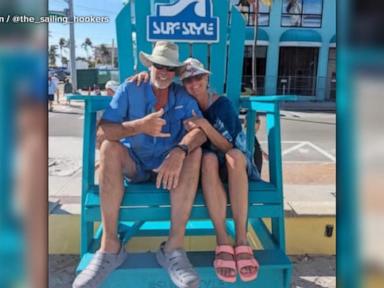
Mainstream media outlets are treating the latest update in the Lynette Hooker case like a cinematic breakthrough. Federal investigators are knocking on the door of Bahamian officials, requesting clearance to deploy a specialized dive team to the Sea of Abaco. The justification? Newly recovered GPS data from an electronic device allegedly used by her husband, Brian Hooker, showing the boat stopped in unsearched waters before returning to shore, directly contradicting his original timeline.
The public reacts exactly how the headlines want them to: with a collective sigh of hope that the deep blue will finally yield its answers.
But anyone who has actually worked maritime recoveries or negotiated the jurisdictional theater of international waters knows the truth. Sending high-tech US dive teams to scour a twenty-five-foot seabed based on delayed digital breadcrumbs is a flawed strategy. It is an expensive exercise in administrative optics, designed to show "action" while ignoring the brutal mechanics of marine forensics and international law.
The Mathematical Impossibility of the Grid
The current consensus assumes that if you have a GPS point where a device stopped, you have a precise location of interest. This completely misunderstands the fluid dynamics of the Sea of Abaco.
When a vessel halts, it does not exist in a vacuum. It is subject to tidal currents, windage, and complex underwater topography. The incident occurred on April 4. The forensic data is being weaponized nearly two months later. In that timeframe, a body or any physical evidence is not sitting neatly on a coordinate point waiting for a diver to swim by.
Imagine a scenario where a localized current moves at just 0.5 knots. Over the course of nearly sixty days, the theoretical drift radius expands exponentially, turning a "precise location" into a massive, shifting search grid. The Coast Guard is treating a dynamic marine environment like a static crime scene on solid ground. Dragging divers through twenty-five-foot depths this late in the game is looking for a needle in a haystack that has already been scattered by a leaf blower.
The Jurisdictional Theater
The media glosses over a massive roadblock with a casual phrase: "asking the Bahamas for permission."
This is not a simple administrative rubber stamp. The Bahamas is a sovereign nation fiercely protective of its legal jurisdiction, especially when it involves its lucrative tourism and maritime image. Brian Hooker was already detained by Bahamian police for five days in April and released without charges. The local authorities ran their playbook and closed their active chapter.
When the US Coast Guard Investigative Service (CGIS) steps in, seizes the couple's sailboat, the Soulmate, and demands to deploy federal divers into Bahamian waters, it creates immediate diplomatic friction. The Bahamas does not want a foreign military-adjacent entity operating autonomously in its backyard, highlighting perceived deficiencies in local investigative capabilities. By the time diplomatic clearance is negotiated, drafted, and signed, the window for finding viable physical evidence narrows even further.
The Digital Diversion
The investigation is currently obsessed with the boat's hardware, specifically highlighting an onboard FLIR infrared camera that can operate with a cloud memory system.
This is classic investigative misdirection. While tech-heavy clues make for great true-crime speculation, the reality of cloud-synced marine tech in the middle of the Caribbean is notoriously unreliable. Standard marine electronics require consistent, high-bandwidth cellular or satellite connectivity to maintain real-time cloud backups. In the outer pockets of the Abaco Islands, data connections drop constantly.
Relying on the hope that a thermal imaging camera captured a high-fidelity cloud backup of the exact moments surrounding a disappearance is banking on a technical miracle. It shifts the focus away from old-school, rigorous financial and behavioral forensics on land—where most domestic maritime mysteries are actually solved.
The Cost of False Hope
The defense will aggressively exploit the timeline lag. If a dive team uncovers anything at this stage, any competent defense attorney will dismantle the chain of custody and the environmental integrity of the evidence. Two months of exposure to shifting sands, marine life, and international maritime traffic leaves any physical discovery highly vulnerable to contamination arguments.
The state is burning immense resources on high-visibility underwater operations when the real answers are sitting in digital servers, financial records, and interview rooms back in the United States. We are watching a masterclass in bureaucratic performance art: an agency doing the most visible thing possible, rather than the most effective thing possible.
The sea does not care about federal requests or newly extracted coordinates. Long after the dive teams pack up their gear and the headlines pivot to the next tragedy, the cold truth remains: you do not solve a complex domestic mystery by staring at the bottom of the ocean. You solve it by following the money, the footprints, and the behavior of the living on dry land.