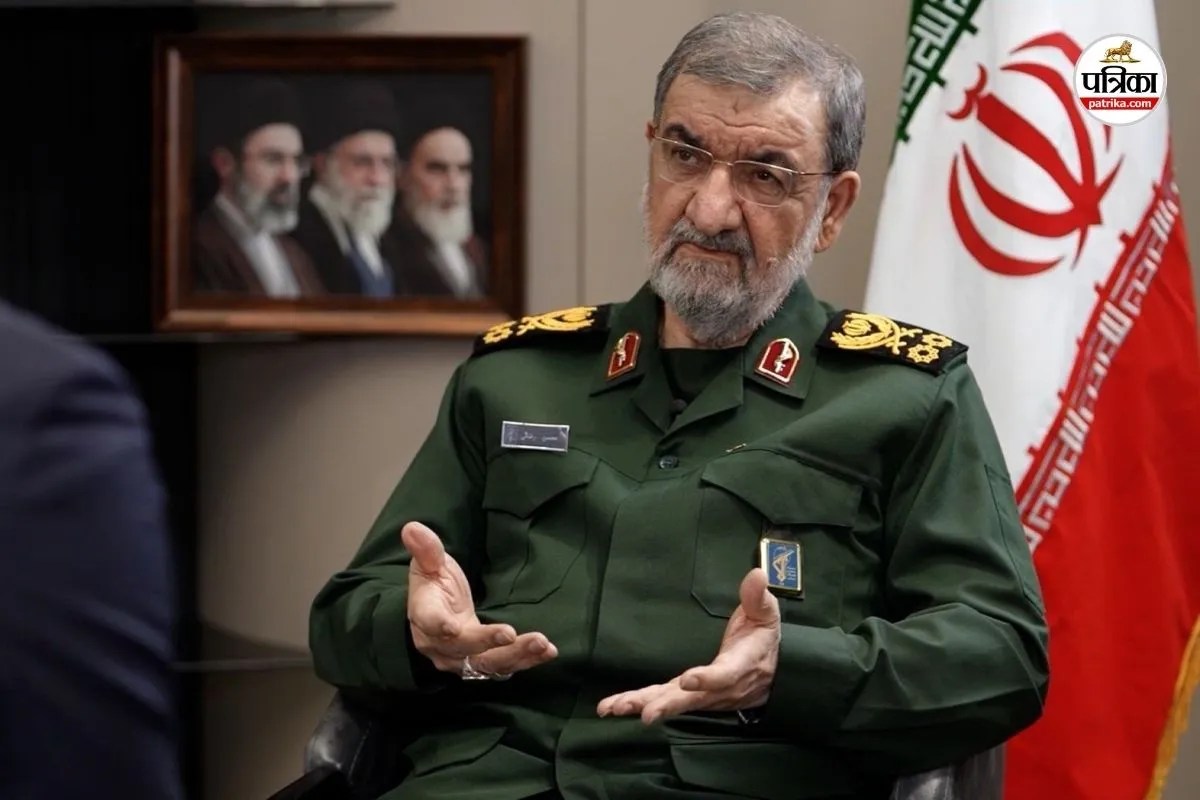
Every time a hardliner in Tehran slaps a arbitrary countdown clock on Washington, the global media turns into a panic factory. Five days. Seven days. Forty-eight hours. The headlines scream about impending doom in the Strait of Hormuz, oil prices tick upward by three percent, and desk analysts who have never looked at a regional shipping manifest start forecasting World War III.
It is lazy analysis at its absolute finest.
When Mohsen Rezaei steps up to issue an ultimatum demanding compliance before a single drop of oil flows or a single word of negotiation begins, the mainstream commentariat treats it like an immutable law of physics. They assume Iran holds an unassailable chokehold on global energy and that a total closure of the world’s most vital maritime artery is just a flip of a switch away.
They are wrong. Dead wrong.
The standard narrative ignores basic economic self-preservation, domestic political theater, and the brutal reality of gray-zone warfare. If you think the Strait of Hormuz is about to become a permanent iron gate slammed shut by angry generals, you are falling for the oldest psychological trick in the geopolitical playbook. Let us dismantle this fantasy piece by piece.
The Economic Seppuku Fallacy
The lazy consensus rests on a single, terrifying visual: warships blocking the channel, oil tankers burning, and global markets plunging into darkness. It sounds cinematic. It plays well on cable news. It completely ignores how modern Iran actually survives.
Iran does not exist in a vacuum of self-sufficiency. Its state budget, its currency stability, and its precarious domestic social contract rely on one vital artery: the export of crude oil, primarily to buyers in Asia through an elaborate shadow fleet of dark-transponder tankers. Who buys the bulk of that sanctioned oil? Beijing.
Imagine a scenario where the Islamic Revolutionary Guard Corps successfully seals the Strait of Hormuz for more than a week. What happens immediately?
First, Iran’s own exports drop to absolute zero. Every single barrel of oil sitting in Iranian storage terminals or floating off Kharg Island becomes trapped. Tehran relies on daily revenues to subsidize domestic fuel, pay public sector salaries, and prop up a crippled currency. Shutting the strait is not a weapon against the United States; it is financial suicide for the Iranian regime.
Second, closing the waterway instantly alienates Iran's primary economic lifeline. China does not fund Tehran out of ideological charity. Beijing needs predictable energy flows. If Iranian posturing threatens the Chinese economy, diplomatic tolerance evaporates overnight. A blockade does not starve Washington; it starves Tehran.
Insiders who have watched these maritime standoffs for decades know a simple truth. Chokepoints are mutual hostages. You cannot strangle global trade without choking your own breathing tube in the process.
The Domestic Audience Illusion
Why do these five-day deadlines keep appearing? Why does every few months bring a fresh theatrical warning from former commanders turned political powerbrokers?
To understand Rezaei's statement, stop looking at Washington or Brussels. Look inward at Tehran.
The Iranian political landscape is a pressure cooker of competing factions, economic despair, and public exhaustion. When inflation is rampant, when currency devaluation destroys middle-class savings, and when internal dissent simmers just beneath the surface, hardline factions face an existential crisis of legitimacy.
What is the classic playbook for an embattled political elite? Manufacture an external existential threat.
Issuing a fiery ultimatum against the Great Satan is domestic messaging 101. It shifts the national conversation away from failing infrastructure, water shortages, and skyrocketing food prices. It forces the population to rally around the flag, framing every domestic hardship as a patriotic sacrifice against foreign aggression.
When you analyze these threats through the lens of domestic survival rather than military capability, the timeline changes entirely. A five-day ultimatum is not an operational military window. It is a news cycle management tool. It buys political breathing room for actors who need to project strength at home precisely because they feel exceptionally weak.
The Myth of the Unstoppable Choke
Let us address the technical reality of the Strait of Hormuz. It is roughly twenty-one miles wide at its narrowest point, with inbound and outbound shipping lanes only two miles wide each. It looks vulnerable on a map. It looks like a bottleneck that a swarm of fast-attack boats and coastal missile batteries can shut down permanently.
Real military planners know the difference between harassment and closure.
Harassment is cheap. Mines, drone boats, and harassment fire can spike insurance premiums, panic charterers, and force a temporary suspension of traffic. We have seen this movie before. Tankers get clipped, naval escorts scramble, and markets react.
Permanent closure is an entirely different animal.
To keep the strait closed against a determined international coalition requires sustained, heavy-intensity naval combat. It requires defending fixed shore batteries, radar sites, and missile launchers against precision air and missile strikes from carrier strike groups and regional allies.
The moment Iran attempts a sustained, kinetic closure of Hormuz, the United States Navy and its partners do not negotiate. They systematically dismantle the infrastructure that made the threat possible. Tehran knows this calculus better than anyone. Their entire doctrine is built around asymmetric deterrence—keeping tensions just below the threshold that triggers total systemic destruction. They want friction, not a total war they cannot win.
What Washington Gets Wrong
The American security establishment falls into a predictable trap of its own. They treat every rhetorical outburst as an actionable intelligence metric, over-responding with carrier movements and public warnings that feed right into the regime's propaganda machine.
Washington's obsession with public red lines creates a trap of rigidity. When an official threatens retaliation for every minor provocation, they lock themselves into a corner where inaction looks weak and action risks escalation spirals nobody actually wants.
The real game is not fought with ultimatums or aircraft carriers. It is fought in the murky depths of financial intelligence, cyber operations, and quiet, backchannel diplomacy. While the public watches Rezaei wave an imaginary clock, diplomats and intelligence officers are quietly cutting deals, shifting exemptions, and managing the pressure dials behind closed doors.
Public bluster is noise. Follow the money, watch the tanker tracking data, and look at where the oil is actually moving.
The Uncomfortable Reality of Gray-Zone Standoffs
If you want a working framework for how this situation actually resolves, abandon the Hollywood fantasy of sudden war or total peace. We are living in an era of permanent, low-grade friction.
The status quo is messy, dangerous, and expensive, but it suits all major players just fine. The US maintains a forward-deployed posture in the region, justifying defense budgets and regional alliances. Tehran keeps its hardline base energized while quietly smuggling enough oil to keep the lights on. Shipping companies bake risk premiums into their freight rates and pass the cost down the line.
Nobody wants the table flipped. An ultimatum is just a chip pushed forward in a poker game where everyone knows the deck is rigged.
Stop treating every political rant from Tehran as the opening salvo of Armageddon. Real actors do not broadcast their operational timelines with a five-day warning. When a regime gives you a countdown, they are asking for attention, not preparing for war.
Ignore the clock. Watch the balance sheets. That is where the real story unfolds.


